
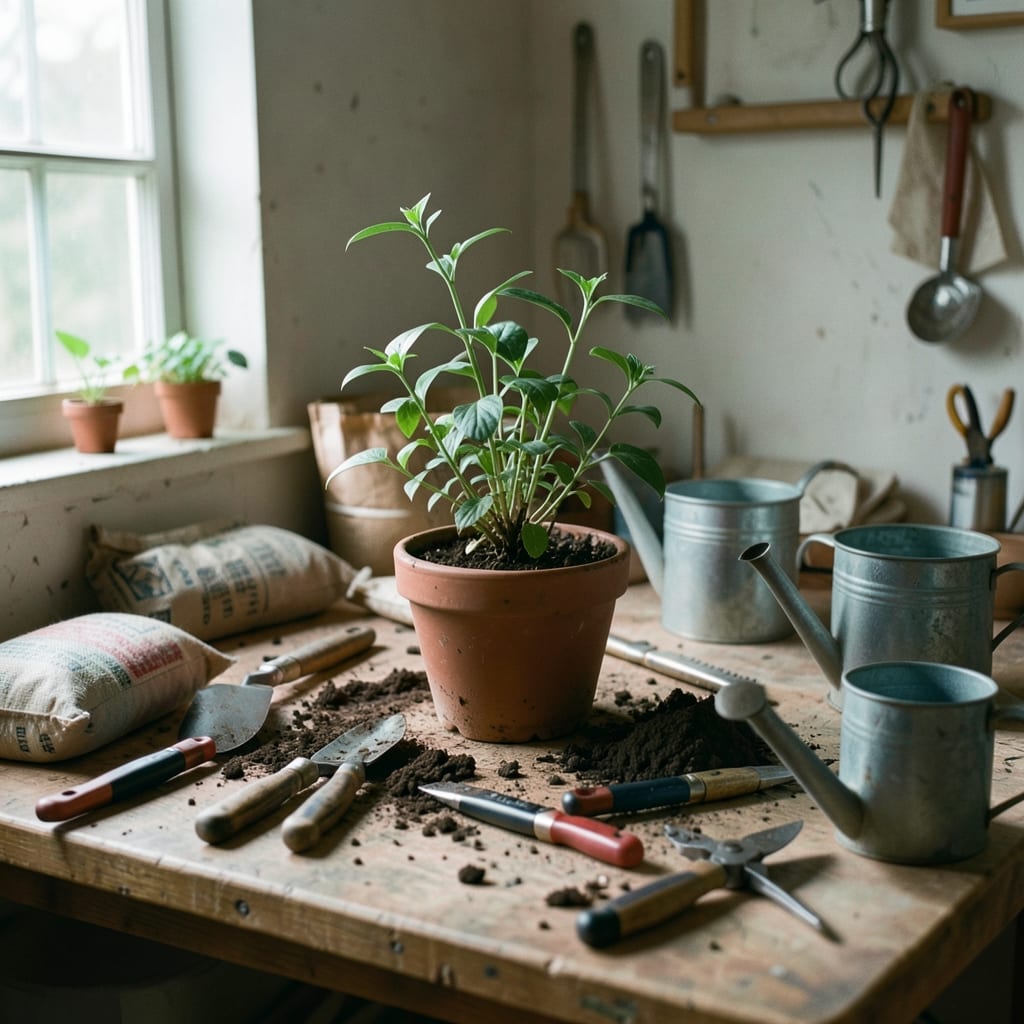
Welcome to Flowering Bushes
There’s a quiet moment in early spring when the soil still holds the memory of winter’s chill, but the first shoots of green begin to push through. That’s when the real work of gardening starts—not just planting, but waiting, watching, and learning what the earth remembers.
This site exists for those moments: the ones where a seedling surprises you, where a drought-stressed plant defies the odds, or where the difference between a thriving bush and a struggling one comes down to something as simple as the hour you turned the compost.
We’re here for gardeners who want more than just instructions. Whether you’re wrestling with black thumb syndrome, chasing the perfect bloom time, or trying to coax life from a patch of stubborn soil, you’ll find the details that actually matter.
No vague advice, no overpromised results—just the kind of gardening knowledge that comes from real dirt under real nails.
Our story
The first post here was written at 3:17 AM, under a single porch light in a rented house where the previous tenant had left a half-dead hydrangea in a cracked pot.
Lamar Carmichael had spent the evening trying to revive it with a mix of coffee grounds and hope, and by midnight, the bush had put out three new buds. That small victory became the first draft of what would later turn into this site.
The idea wasn’t to solve every gardening problem at once, but to document the ones that stumped *us*—and to share the fixes that actually worked.
For years, gardening advice was either too technical (written by people who’d never struggled with aphids in August) or too simplistic (the kind that told you to ‘just add water’ without explaining *how much* or *when*).
This site started as a way to fill that gap: a place where the answers came from someone who’d once killed a cactus by overwatering it, then brought it back to life by letting it sit in a paper bag for three weeks.
The mistakes matter just as much as the successes.
The turning point came on a rainy afternoon in late May, when an email arrived from a reader in Oregon who’d used a technique from an old post to save her dying lavender.
She’d sent a photo of the revived plant, and in the corner of the image, her granddaughter’s hand was visible, holding a magnifying glass.
That’s when it became clear this wasn’t just about sharing tips—it was about passing along the quiet satisfaction of seeing something grow, one stubborn season at a time.
What we stand for
We believe gardening is equal parts science and patience, and that the best advice comes from people who’ve gotten their hands dirty—literally. This site exists to cut through the noise of perfect Instagram gardens and the overhyped promises of seed catalogues.
Here, you’ll find the unvarnished truth: what works, what doesn’t, and why.
What you will always get here
- Honest answers—even when the solution is ‘dig it up and start over’.
- Details that matter: soil pH, exact watering schedules, the best time to prune (and why).
- A focus on resilience: how to fix a problem *before* it becomes a disaster.
- Stories behind the advice—because the best gardening lessons come from real failures.
You will *not* find here: step-by-step guides that ignore your climate, ‘top 10’ lists based on aesthetics alone, or advice that treats gardening like a competition.
This isn’t a place for perfection—it’s for the rest of us, the ones who’ve lost a season’s worth of tomatoes to blight or spent an hour weeding only to realize the ‘weeds’ were actually edible. The garden is messy, unpredictable, and sometimes frustrating.
We’re here to make it a little less so.
Meet the team

Behind *Flowering Bushes* is a small group of gardeners who’ve spent more time wrestling with soil than writing about it. We’re not academics, not professional horticulturists, and definitely not immune to the occasional gardening disaster.
What we are is a mix of longtime growers, former black-thumb reformers, and people who’ve turned their backyard experiments into lessons worth sharing.
Our work starts in the dirt and ends up here—stripped of jargon, tested for real-world conditions, and written for anyone who’s ever wondered why their basil keeps bolting or how to keep squirrels from digging up their bulbs.
Lamar Carmichael
Lamar Carmichael is the founder and editor of *Flowering Bushes*, and his approach to gardening is equal parts instinct and stubbornness.
He’s the kind of gardener who’ll prune a rose bush at 2 AM if he thinks he’s spotted a canker worm, and who keeps a jar of ‘emergency compost’ on the kitchen counter for when a seedling needs a last-minute nutrient boost.
Before this site, he spent years running a small urban nursery where he learned that the best advice often comes from the questions customers asked after their plants had already died—usually involving overwatering or ‘not enough sun’ (the latter being the real culprit 90% of the time).
His desk is a temporary home for a half-empty coffee mug, a magnifying glass, and a notebook filled with half-finished sketches of garden layouts that will *definitely* be tried next season.
He’s notoriously bad at remembering to water his houseplants, which is why the site’s indoor gardening section exists in the first place.
But he’s also the one who’ll send you a photo of a single, stubborn dandelion pushing through cracked concrete just to prove that life finds a way—even in the worst conditions.
I still remember the first time I saw a seedling break through soil. It was a sunflower, and I’d planted it in a pot on my windowsill because I’d read somewhere that ‘they grow fast.’ Three weeks later, there it was—this tiny, defiant green shoot, like the universe was saying, *‘Here we are again.’* That’s the kind of magic gardening holds, if you’re willing to wait for it.
Lamar Carmichael
How we create our content
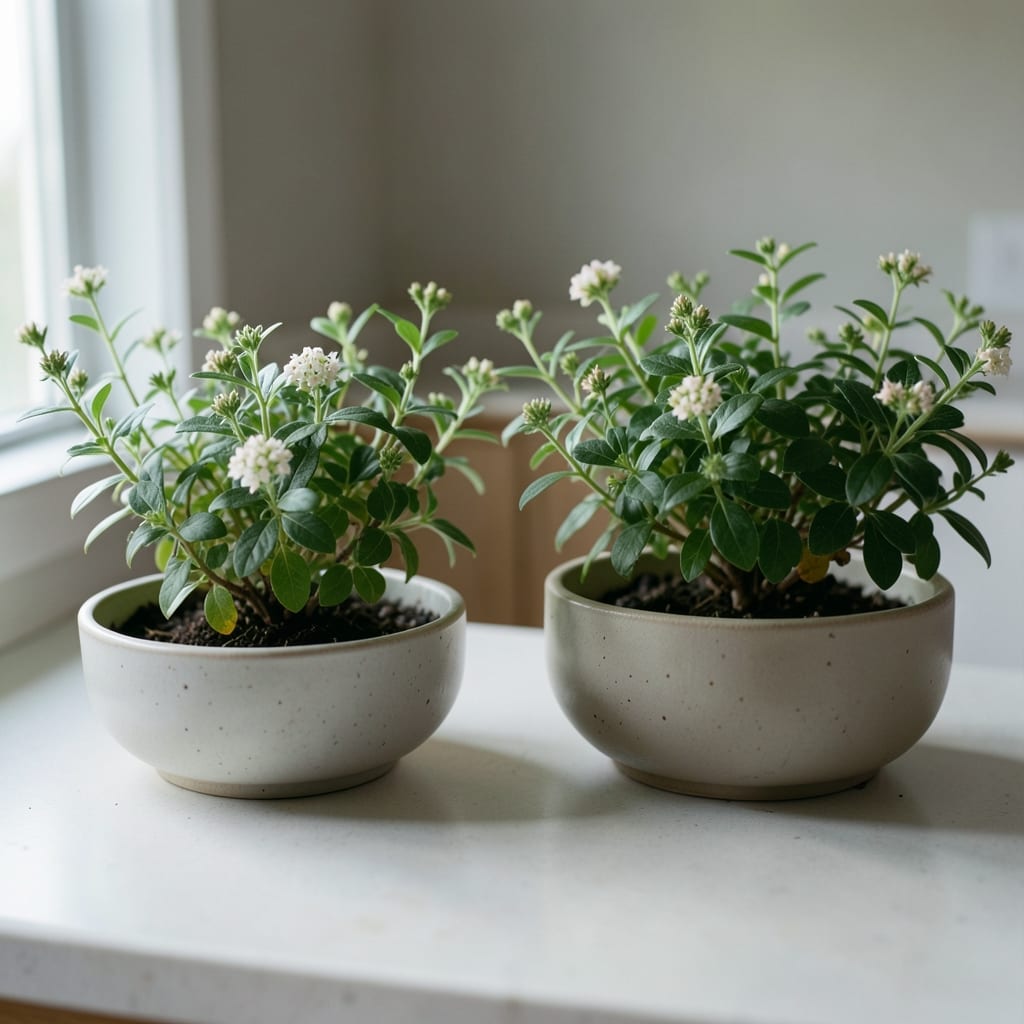
Every piece on this site begins with a problem—something that stumped us, a reader’s question that didn’t have a clear answer, or a gardening myth we wanted to test.
The process doesn’t start at a desk; it starts in the soil, the greenhouse, or the back corner of a garden where the conditions are just harsh enough to reveal what *really* works.
We plant, we observe, we fail, and then we write—not about the ideal outcome, but about what actually happened, and how to fix it next time.
The first stage: testing in the real world
There are no controlled environments here. If we’re writing about drought-resistant succulents, we test them in a pot left on a balcony for three weeks with no water—then we check which ones survive and which ones don’t.
If it’s about pruning hydrangeas, we do it in three different ways: early spring, late summer, and the ‘wrong time’ (just to see what happens). Every ‘how-to’ is tried at least twice, in two different climates, with two different soil types. The results?
Sometimes they’re dramatic (like the time a ‘hardy’ rose died in Zone 5 but thrived in Zone 8). Other times, they’re subtle—a single degree difference in soil temperature that makes the difference between a successful transplant and a wilted mess.
We keep detailed notes: the exact hour we planted, how many inches of water we gave, the temperature when the first buds appeared. No guesswork.
No ‘approximately.’ Just the numbers that matter, because gardening isn’t about generalities—it’s about the specific moment when the soil, the plant, and the season all align.
The second stage: refining the advice
The first draft of any post is a messy mix of observations, half-finished theories, and the occasional ‘I have no idea what just happened.’ The real work comes next: sifting through the data to find the patterns, the exceptions, and the ‘why’ behind every result.
If 80% of the test plants died from overwatering but the other 20% thrived, we don’t just say ‘don’t overwater.’ We explain *how much* is too much, what signs to look for, and how to adjust based on your local humidity.
The goal isn’t to give you a rulebook—it’s to give you the tools to make your own decisions.
We also send every draft to a small group of volunteer gardeners across different zones. Their feedback isn’t just about clarity—it’s about whether the advice works in their conditions. If a pruning guide fails in a high-altitude garden, we rewrite it.
If a composting method confuses someone with heavy clay soil, we add a note. The final version isn’t just tested; it’s *proven*.
Join our community
This site exists because gardening is better when you’re not doing it alone.
Here, you’ll find answers to questions like *‘Why is my tomato plant suddenly wilting?’* or *‘How do I keep rabbits from eating my lettuce?’*—and more importantly, you’ll see the solutions that other gardeners have tried (and which ones actually worked).
We also collect reader-submitted tips: the ‘grandma’s trick’ that saved someone’s dying azalea, the unexpected use for coffee grounds, or the one pruning cut that changed a bush’s shape forever. If you’ve got a gardening win—or a lesson learned the hard way—we want to hear about it.
Let's connect
We love hearing about your gardening triumphs, your stubborn plants that refuse to die, and the ‘I can’t believe this worked’ moments.
Whether it’s a photo of a revived bush, a question about soil amendments, or just a story about the time your compost pile caught fire (we’ve all been there), you can share it on the contact page.
Think of us as the gardening friends you’d invite over for a beer and a debate about whether marigolds really repel nematodes—or as the ones who’ll hand you a shovel and say, *‘Let’s figure it out together.’* Now go check the soil. It’s waiting.
The guides are grouped by category: Advice, Aphids, Blooming, Companion Plants, Container Gardens and Flowers.