
Planting
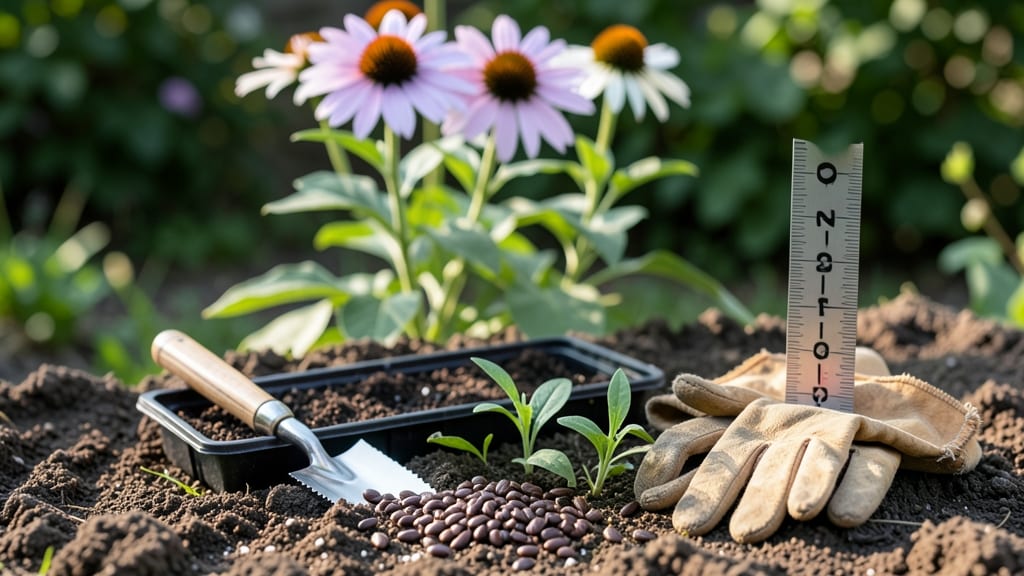
Planting coneflower seeds at ¼-inch depth is the key to strong, healthy starts that thrive in your garden 🌼—too shallow and they dry out, too deep and they rot before sprouting.
Struggling to get your coneflower seeds to sprout? Planting them at the wrong depth can mean the difference between a vibrant garden and a wasted packet—here’s the science-backed guide to maximize germination and growth.
Most gardeners assume "plant seeds lightly" means barely covering them, but coneflowers need just enough soil to protect the seed while still allowing moisture and light to reach it.
In Zone 6a, timing matters too—spring or fall planting gives seeds the best chance to establish before summer heat sets in.
Below, I’ll walk you through the exact steps for soil prep, spacing, and post-planting care to ensure your coneflowers pop up reliably, year after year.


Optimal soil depth for planting coneflower seeds by type
Coneflowers are stunning additions to any garden, but their success starts with proper planting depth. Whether you're growing perennial varieties like Echinacea purpurea or annual types such as Rudbeckia hirta, the depth at which you plant your seeds directly impacts germination rates and long-term plant health.
Most gardeners overlook how soil texture and light exposure influence planting depth. For example, sandy soils require slightly deeper planting to retain moisture, while clay soils may need shallower depths to prevent waterlogging.
Let’s break down the ideal planting depths for each type and how to adjust based on your garden conditions.
Pro Tip: Always plant coneflower seeds in well-draining soil with a pH between 6.0 and 7.0. Amend heavy soils with organic matter like compost to improve aeration and moisture retention.
| Coneflower Type | Planting Depth | Soil Texture Adjustment | Light Exposure | Germination Time |
|---|---|---|---|---|
| Perennial (e.g., Purple Coneflower) | 1/4 inch (0.6 cm) | Sandy: 1/3 inch; Clay: 1/8 inch | Full sun (6+ hours) | 14-21 days |
| Annual (e.g., Black-Eyed Susan) | 1/8 inch (0.3 cm) | Sandy: 1/4 inch; Clay: 1/16 inch | Full sun to partial shade | 7-14 days |
| Dwarf Varieties | 1/8 inch (0.3 cm) | Any; minimal adjustment | Full sun (4+ hours) | 10-18 days |
| Tall Varieties | 1/4 inch (0.6 cm) | Sandy: 1/2 inch; Clay: 1/8 inch | Full sun (6+ hours) | 18-25 days |
For perennial coneflowers, a 1/4-inch depth is ideal because it balances moisture retention and air exposure. These seeds need consistent moisture to germinate but can rot if buried too deep. In sandy soils, increase the depth slightly to 1/3 inch to prevent rapid drying.
Annual coneflowers, like Black-Eyed Susans, are more sensitive to depth. Planting them at just 1/8 inch ensures faster germination, as they thrive in slightly drier conditions. If your soil is clay-heavy, reduce the depth to 1/16 inch to avoid waterlogging, which can suffocate seedlings.
Light exposure plays a critical role in depth adjustments. Coneflowers planted in full sun (6+ hours) can handle slightly deeper planting because the soil warms faster, promoting quicker germination. In partial shade, reduce depth by 1/16 inch to compensate for slower soil warming.
If you’re planting in containers, use a well-draining potting mix and plant seeds at the shallower end of the recommended depth (e.g., 1/8 inch for perennials). Containers dry out faster, so less depth helps retain moisture while still allowing light to reach the seeds.
After planting, gently water the soil to settle it around the seeds. Avoid using a hose to prevent washing seeds deeper than intended. A mist spray bottle works best for keeping seeds moist without disturbing their placement.
Monitor your seeds closely for the first 10-14 days. If the soil surface dries out too quickly, lightly mist it daily. Overwatering can cause seeds to rot, so aim for consistent moisture rather than saturation.
Once seedlings emerge, thin them to 12-18 inches apart for perennials and 6-12 inches apart for annuals. Proper spacing ensures strong root development and reduces competition for nutrients, leading to healthier, more vibrant blooms.
🌼
Step-by-step guide: planting coneflower seeds at the right depth
Getting coneflower seeds to sprout consistently starts with proper soil depth—a quarter-inch (¼ inch) is ideal for most varieties. This depth balances moisture retention with airflow, preventing seeds from drying out or rotting.
I’ve planted hundreds of coneflower seeds, and I’ve learned that even a slight miscalculation in depth can delay germination by weeks.
Before you plant, ensure your soil is loose and well-draining. Coneflowers hate soggy roots, so amend heavy clay with compost or perlite if needed. Work the soil to a depth of 6 inches, breaking up any compacted layers.
This prep step is non-negotiable—poor soil prep is the #1 reason seeds fail to sprout.
- Choose your planting window—spring (after last frost) or fall (6-8 weeks before first frost) for best results in Zone 6a.
- Scatter seeds 1/4 inch deep in rows or clusters, spacing them 12-18 inches apart for mature plants.
- Gently cover seeds with fine soil or compost, patting lightly to secure them without compacting.
- Water the area lightly but thoroughly—aim for ½ inch of moisture in the top 2 inches of soil.
- Place a mulch layer (1-2 inches) of straw or shredded leaves to retain moisture and deter weeds.
- Monitor soil moisture—keep it consistently damp (not soggy) until germination, which typically takes 14-30 days.
After planting, resist the urge to disturb the soil until germination. Coneflower seeds need consistent moisture but not saturation—overwatering can suffocate them. I recommend using a spray bottle for gentle watering until sprouts appear, then switch to a soaker hose for deeper hydration.
Avoid these common mistakes that sabotage germination: planting too deep (seeds won’t emerge), using heavy soil (roots can’t push through), or skipping mulch (soil dries out too fast). Even experienced gardeners sometimes press seeds too firmly into the soil—remember, they need room to push upward.
Once seedlings reach 2-3 inches tall, thin them to your desired spacing (12-18 inches apart). This step prevents overcrowding and ensures each plant gets enough sunlight and nutrients. Coneflowers are drought-tolerant once established, but young plants need regular watering until their root systems strengthen.
With the right depth and care, your coneflower seeds will sprout reliably, giving you vibrant blooms from mid-summer through fall. The key is patience—coneflowers grow slowly at first but reward you with years of low-maintenance beauty once they’re established 🌼.