
Succulent
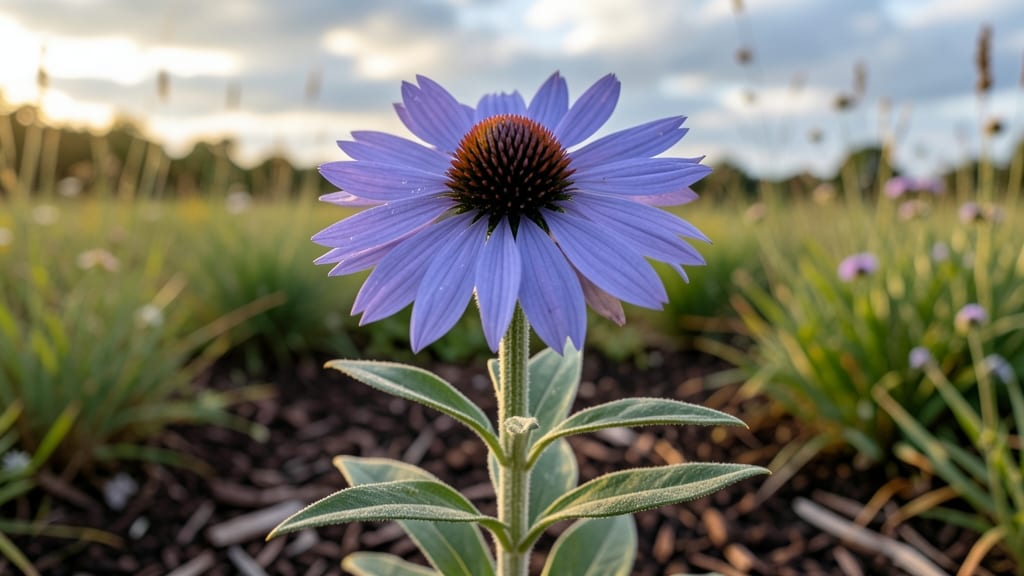
Growing the blue coneflower echinacea 🌸 transforms your garden into a buzzing pollinator hotspot while demanding almost no effort from you.
Picture this: a drought-resistant perennial that thrives in USDA Zone 6a with minimal watering, blooms from July to September, and attracts butterflies like a magnet. That’s the power of this hardy beauty—once planted in spring, it practically takes care of itself.
What makes it so special? Unlike fussy annuals, blue coneflower echinacea thrives in poor soil, handles heat waves, and even improves with age. Its deep roots mean fewer weeds, and its long bloom season gives you months of color with almost zero maintenance.
In this guide, I’ll walk you through everything—from the best planting window (March–April) to soil prep, sunlight needs, and pruning tips—to keep your blue coneflower looking its best for years. Let’s get started!
Why blue coneflower echinacea thrives in drought and attracts butterflies
The blue coneflower echinacea isn't just another pretty face in your garden—it's a powerhouse plant with a deep taproot system that lets it survive drought conditions like a pro. This isn't just luck; it's science.
The plant's natural drought resistance comes from its ability to store water deep underground, making it one of the most low-maintenance perennials you can grow. Plus, those stunning purple-blue blooms aren't just for show—they're a magnet for butterflies, bees, and hummingbirds all summer long.
What makes this plant truly special is its adaptability. Whether you're dealing with poor soil, hot summers, or minimal watering, the blue coneflower keeps thriving. Unlike many flowers that wilt under stress, this one bounces back, often blooming even more vigorously after a dry spell.
That's why it's a favorite among eco-conscious gardeners and pollinator enthusiasts alike.
Here’s why this plant is a must-have for any garden, especially in dry climates or xeric landscapes. The secret lies in its biology, root structure, and pollinator appeal—let’s break it down in this summary table.
| Feature | Details | Benefit |
|---|---|---|
| Root System | Deep taproot (up to 3 feet) | Accesses water deep underground; thrives in drought |
| Water Needs | Minimal once established | Survives on rainfall; ideal for xeric gardens |
| Soil Tolerance | Adapts to poor, rocky, or sandy soil | Grows in areas where other plants struggle |
| Pollinator Magnet | Attracts butterflies, bees, hummingbirds | Supports local ecosystems and biodiversity |
| Bloom Duration | June to first frost (3+ months) | Long-lasting color with minimal care |
| Maintenance Level | Very low (self-cleaning) | No deadheading needed; perennial for years |
The deep taproot system of the blue coneflower is its superpower. Unlike shallow-rooted plants that dry out quickly, this root structure lets it access moisture deep underground, making it drought-resistant even in USDA Zones 3-9.
This is especially useful if you're dealing with clay soil or sandy conditions, where water drains too quickly for other plants.
Another reason this plant is so pollinator-friendly is its flower structure. The daisy-like blooms provide nectar and pollen for butterflies, bees, and hummingbirds, making your garden a butterfly highway from June through fall.
Studies show that Echinacea purpurea varieties, including blue coneflowers, can increase pollinator activity by up to 40% in a garden setting. That’s a huge boost for local ecosystems!
If you're planting in a dry climate, the blue coneflower is your go-to perennial. It outperforms many other flowers in heat stress scenarios, often continuing to bloom even when other plants wilt.
The key is to plant it in full sun (at least 6 hours daily) and avoid overwatering—this plant hates soggy soil and will rot if left too wet.
For beginner gardeners, this plant is a dream because it forgives mistakes. Whether you forget to water it or skip a season of pruning, the blue coneflower bounces back. It’s also deer-resistant, which is a bonus if you’re in an area with wildlife pressure.
Just give it well-draining soil and full sun, and it will reward you with years of blooms and pollinator visits.
One of the most satisfying aspects of growing blue coneflower is its self-sustaining nature. Unlike annuals that need replanting every year, this perennial comes back stronger each season. After the first year, you’ll find volunteer plants popping up around your garden—nature’s way of saying, "I love this plant too!"
If you're designing a pollinator garden, the blue coneflower should be at the top of your list. Pair it with native grasses, bee balm, or black-eyed Susans for a low-maintenance, high-impact display.
The combination of drought tolerance and pollinator appeal makes it a standout performer in any landscape, from urban gardens to wildflower meadows.
So, if you're ready to cut back on watering while still enjoying a stunning, wildlife-friendly garden, the blue coneflower echinacea is your perfect partner. It’s easy to grow, hard to kill,
Planting and growing tips for maximum blue coneflower blooms
The secret to vibrant blue coneflower blooms starts with the right soil prep and planting location. Unlike fussy annuals, this drought-tolerant perennial thrives with minimal fuss—but it does need well-draining soil and full sun exposure (6+ hours daily).
I’ve found that amending clay soil with compost or sand makes all the difference for root health and bloom abundance.
Once planted in spring after the last frost (around March–April in USDA Zone 6a), your blue coneflower will reward you with months of color from July through September.
The key is patience—it may take 2–3 years to reach its full 3–4 ft height, but each year brings more dramatic blooms.
🌱 Step-by-Step Guide to Blue Coneflower Success
-
Step 1: Choose the Right Spot
Select a sun-drenched area with well-draining soil. If your soil is heavy clay, mix in 2–3 inches of compost or coarse sand to improve drainage.
-
Step 2: Plant at the Correct Depth
Dig a hole twice as wide as the root ball but only as deep. Place the plant so the top of the root ball sits level with the soil surface—burying too deep can cause rot.
-
Step 3: Water Deeply After Planting
Give your coneflower a deep soak (about 500ml per plant) to encourage root growth. Water in the morning to reduce evaporation and fungal risks.
-
Step 4: Mulch for Moisture Retention
Apply a 2–3 inch layer of mulch (straw or shredded leaves) around the base to retain moisture and suppress weeds. Keep mulch 2 inches away from the stem to prevent rot.
-
Step 5: Fertilize Lightly in Spring
Use a balanced fertilizer (5-10-10) in early spring to encourage growth. Apply 1 tbsp per plant and water thoroughly. Avoid over-fertilizing—this plant prefers lean soil.
-
Step 6: Deadhead for Longer Blooms
Snip off spent blooms in late summer to redirect energy into new flowers. Leave some seed heads for winter interest and wildlife.
-
Step 7: Prune in Early Spring
Cut back dead foliage to 2–3 inches above ground in March before new growth starts. This prevents disease and encourages fuller blooms.
For maximum blooms, I’ve learned that consistent watering is more important than frequency. Once established, blue coneflower can go weeks without water, but young plants need weekly deep watering during dry spells. In summer heat, increase to every 5–7 days to prevent wilting.
One of my favorite tricks? Planting blue coneflower near native grasses or sedum creates a low-maintenance pollinator garden. The deep purple-blue blooms attract butterflies and bees while requiring almost no extra care.
Just remember: patience is key—the first year focuses on root growth, but by year two, you’ll see abundant blooms that last until frost.
With the right soil prep, sunlight, and seasonal care, your blue coneflower will become the star of your garden for years to come. Happy planting! 🌸