
Fertilization
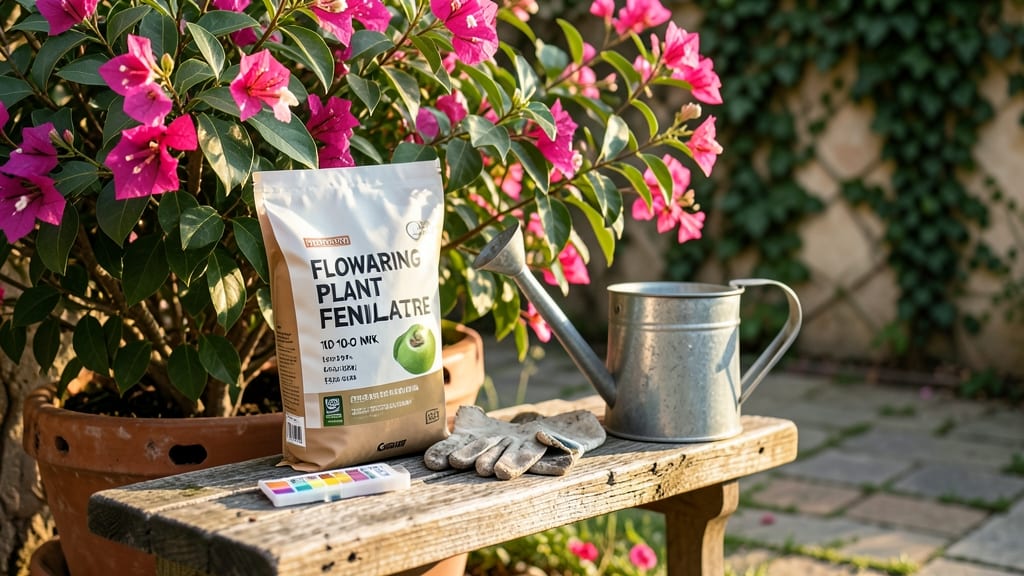
To get your bougainvillea 🌸 flowering like a pro, the right fertilizer blend and timing are the game-changers—think of it as a bloom-boosting nutrient cocktail tailored for your tropical vine.
Struggling with sparse blooms despite all your care? You’re not alone. The secret lies in a phosphorus-rich formula applied at the right moments—pre-bloom for energy, post-bloom for recovery—while avoiding the pitfalls of over-fertilizing.
In this guide, I’ll break down the exact NPK ratios bougainvilleas crave, the seasonal feeding schedule that keeps them flowering year-round, and how to spot (and fix) the common mistakes that leave your plant looking more like a leafy wall than a floral masterpiece.
Ready to transform your bougainvillea from a sleepy vine into a non-stop blooming powerhouse? Let’s dive into the science—and the schedule—that makes it happen.
Optimal bougainvillea fertilizer ratios for maximum flowering power
Bougainvillea thrives when fed the right nutrients at the right time. Unlike many plants, bougainvillea responds dramatically to phosphorus-rich fertilizers because phosphorus directly fuels flower production.
The key lies in understanding NPK ratios—nitrogen (N) for leaves, phosphorus (P) for blooms, and potassium (K) for overall health—and adjusting them seasonally.
Most bougainvillea growers struggle with leafy growth but few flowers because they overemphasize nitrogen. A balanced 7-7-7 or 10-10-10 NPK ratio works well, but phosphorus should dominate during flowering stages. For example, a 5-10-5 ratio in spring primes the plant, while a 2-10-5 ratio in summer maximizes blooms.
Micronutrients like magnesium, calcium, and iron also play critical roles. Bougainvillea often shows yellowing leaves when deficient in magnesium (a sign of chlorosis), so a chelated iron supplement can be a game-changer. Organic options like fish emulsion or bone meal provide phosphorus naturally, while synthetic blooming formulas offer precise control.
| Growth Stage | Recommended NPK Ratio | Phosphorus Focus | Micronutrient Boost | Fertilizer Type |
|---|---|---|---|---|
| Early Spring (New Growth) | 5-10-5 | High (for root development) | Magnesium, Calcium | Balanced organic (fish emulsion) |
| Late Spring (Pre-Bloom) | 3-12-6 | Very High (flower priming) | Iron, Zinc | Bloom booster (synthetic) |
| Summer (Peak Blooming) | 2-10-5 | High (sustained blooms) | Potassium, Boron | Slow-release granules |
| Fall (Late Blooms) | 4-8-4 | Moderate (extended season) | Phosphorus, Calcium | Bone meal or compost tea |
| Winter (Dormancy) | 0-0-0 | None (rest period) | None (unless potted) | None (or minimal organic) |
Adjusting NPK ratios seasonally is non-negotiable. For instance, a 5-10-5 blend in spring encourages root and foliage growth, while a 2-10-5 in summer ensures continuous blooms. If your bougainvillea produces more leaves than flowers, it’s likely getting too much nitrogen—switch to a low-N, high-P formula immediately.
Organic gardeners swear by compost tea or worm castings for micronutrients, while synthetic users prefer water-soluble blooming fertilizers like Miracle-Gro Bloom Booster. Both work, but synthetics offer faster results for show-stopping displays. Always water deeply after fertilizing to prevent root burn.
One common mistake is over-fertilizing in winter, which stresses the plant. Bougainvillea enters a semi-dormant state in cooler months, so skip fertilizer entirely unless you’re growing it in a heated greenhouse. Even then, use a very light organic feed like diluted fish emulsion.
For container-grown bougainvillea, reduce fertilizer amounts by half since roots have limited space. Potted plants also benefit from monthly foliar sprays of diluted seaweed extract, which provides trace minerals without overloading the soil. Test your soil’s pH annually—bougainvillea prefers 6.0-7.0—and amend with lime or sulfur if needed.
Pro tip: Prune lightly after flowering to redirect energy to new growth. Pair this with a phosphorus-heavy feed to kickstart the next bloom cycle. With the right ratios and timing, your bougainvillea will reward you with non-stop color from spring to frost.
Seasonal fertilizing schedule: when to feed for non-stop blooms
Bougainvillea thrives on a precise fertilizing rhythm that mirrors its natural growth cycles. Unlike many plants, it responds dramatically to seasonal shifts in nutrition—too much fertilizer at the wrong time can actually reduce blooms instead of boosting them.
The key lies in understanding when to push growth, when to support flowering, and when to let your plant rest.
Think of bougainvillea's year as a four-act play: spring awakening, summer flowering, fall revival, and winter dormancy. Each act requires a different nutrient approach. For example, high-phosphorus feeds in early spring trigger robust root systems, while balanced formulas in summer maintain those show-stopping bracts.
Let's break down the exact timing and products for each season.
Switch to a 7-7-7 or 10-10-10 NPK formula every 4 weeks. Organic options like fish emulsion or compost tea work well. This kickstarts root growth and sets up for summer blooms.
Use low-dose feedings every 6 weeks with 5-10-10 NPK. Synthetic blooming formulas like Miracle-Gro Blooms or organic kelp meal prevent nutrient burnout while extending flower life.
Return to 7-7-7 NPK every 4 weeks through October. Avoid fertilizing after first frost—this encourages tender new growth that won't survive winter.
Zero fertilization during dormancy. Focus on water reduction (every 10-14 days) and light pruning to remove dead branches. This mimics natural winter conditions in tropical climates.
One common mistake I see is over-fertilizing in summer when plants are already stressed by heat. Bougainvillea actually needs less frequent feeding during peak bloom season—think of it as a maintenance dose rather than a growth boost.
For organic gardeners, worm castings make an excellent slow-release option that won't burn roots.
Timing matters just as much as what you feed. Always apply fertilizer in the early morning when temperatures are cooler. This gives roots 6-8 hours to absorb nutrients before the heat of the day.
I've found that bougainvillea responds best when fed after a light rain or thorough watering—this helps prevent root burn.
For those in USDA zones 9b-11, this schedule works year-round. If you're in cooler microclimates, adjust winter care by moving potted plants to unheated garages or protected porches where they can remain dormant without freezing. The key is consistency—bougainvillea rewards predictable care with prolonged, vibrant blooms.
Remember, bougainvillea's colorful bracts (the parts we call flowers) are actually modified leaves. To keep them popping, maintain balanced soil pH between 6.0-7.0 and avoid nitrogen-heavy fertilizers, which promote leafy growth at the expense of bract production.
With this seasonal approach, you'll transform your bougainvillea from a sparse green vine into a year-round flowering powerhouse.