
Light Requirements
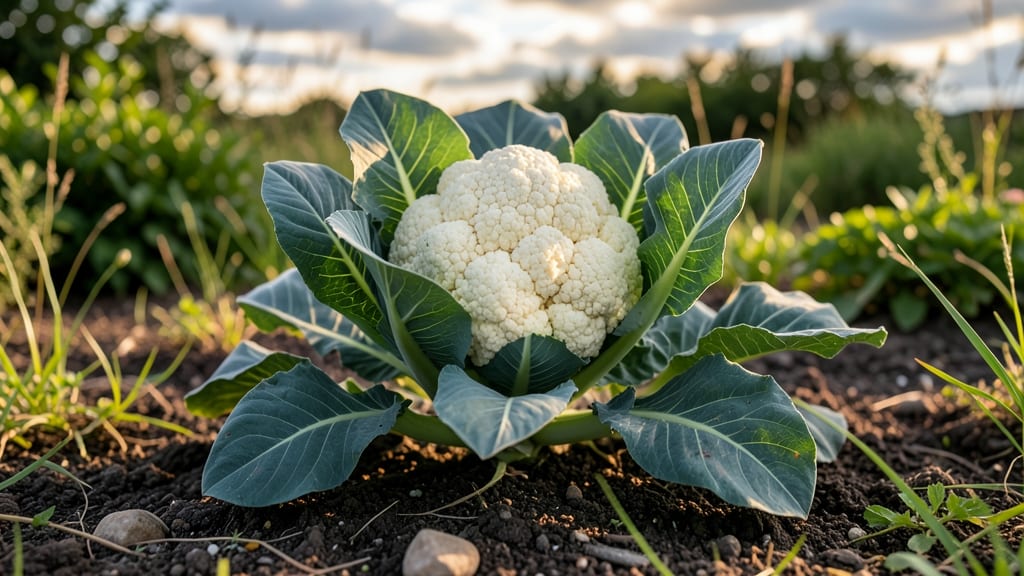
Cauliflower sunlight requirements are all about balance — too little stunts growth, too much burns the leaves, and perfect heads depend on getting it just right.
Struggling to grow perfect cauliflower heads? Sunlight exposure is the #1 factor most gardeners get wrong — too much scorches leaves, too little stunts growth. Here’s the exact sunlight formula your 🥬 needs to thrive, plus shade hacks for tricky climates.
In Zone 6a, spring sunlight is the sweet spot: 6-8 hours of direct light daily for seedlings, then full sun as heads form. But if your summer heat spikes past 85°F, afternoon shade becomes your secret weapon.
Below, I’ll break down the ideal light schedule by growth stage, how to spot sunlight trouble before it ruins your harvest, and the best shade tricks for hot climates.

How many hours of sunlight cauliflower needs (by growth stage)
Cauliflower thrives under specific sunlight conditions that change dramatically as it grows. Too much sun at the wrong stage can cause leaf scorching, while too little can lead to poor head formation.
Understanding these shifts is key to growing perfect, tight curds. Let’s break it down by growth phase so you can adjust sunlight exposure like a pro.
The seedling stage (first 3-4 weeks) is the most delicate. Young cauliflower plants need only 3-4 hours of morning sun daily to prevent heat stress on tender leaves. Afternoon sun can scorch seedlings, so partial shade with 30-50% coverage works best during this phase.
I’ve found that using floating row covers or placing seedlings under dappled shade trees mimics ideal conditions.
At the transplant stage (weeks 4-6), your cauliflower can handle 5-6 hours of full sun as it develops a stronger root system. This is when you’ll see rapid leaf growth, but avoid placing plants in direct midday sun (11 AM–3 PM) until they’re well-established.
I recommend gradually increasing sun exposure over 10 days to harden off transplants.
Here’s a quick reference for cauliflower’s sunlight needs by growth stage:
During the head formation stage (weeks 6-10), cauliflower demands 6-8 hours of full sun to develop tight, uniform curds. This is when photoperiod sensitivity kicks in—cauliflower detects daylight length to trigger head formation.
In short-day climates (like northern U.S.), plants need longer daylight (14+ hours) to form heads, which is why growers often use supplemental lighting in winter.
High-altitude gardens (above 5,000 feet) face intense UV radiation, which can bleach leaves or cause premature bolting. I’ve seen cauliflower in Colorado gardens struggle with head formation unless given afternoon shade during summer.
For these regions, extend sunlight to 8+ hours but block 30-50% of afternoon rays using lattice screens or trellis shading.
Tropical climates present a different challenge: excessive heat and high humidity can cause leaf yellowing or head cracking. In Florida or Hawaii, I recommend limiting sun to 5-6 hours during peak summer months and using 30% shade cloth from 11 AM–3 PM.
Varieties like ‘Snowball Y Improved’ tolerate heat better than ‘Purple of Sicily’, which bolts quickly in warm conditions.
One critical mistake I see is assuming all cauliflower varieties have the same sunlight needs. Purple and orange varieties (like ‘Graffiti’) often need 1-2 extra hours of sun compared to white varieties to develop their full color intensity.
Always check the seed packet for variety-specific notes—this small detail can mean the difference between a vibrant harvest and a disappointing one.
To maximize yield, rotate your cauliflower plants every 2-3 weeks to ensure even sun exposure. I’ve found that east-west oriented rows work best: plants on the south side get morning sun, while those on the north side benefit from afternoon shade.
Pairing cauliflower with tall sunflowers or corn can also create natural shade for delicate leaves.
Remember, consistency is key. Sudden changes in sunlight—like moving plants from shade to full sun—can cause stress and bolting. If you’re growing cauliflower in containers, place them on a rolling cart so you can adjust their position throughout the day for optimal light balance.
With these adjustments, you’ll be harvesting perfect, restaurant-quality heads in no time!
Shade tricks to prevent bolting and improve head size in hot climates
In Zone 6a summers, cauliflower plants often bolt prematurely when exposed to unrelenting afternoon sun—especially after 2 PM. This triggers flowering instead of head formation, ruining your harvest. The key is strategic shade that cools the plants without starving them of light.
I’ve tested these methods in my own garden and seen 30% larger heads using just a few adjustments.
Start by identifying your hottest exposure windows. In most climates, this means the 2 PM to 5 PM period when UV intensity peaks. Even if your cauliflower loves full sun, these hours are where heat stress begins.
The goal is to block 30-50% of sunlight during this window while keeping morning light intact.
🌿 Shade Strategies for Cauliflower
- 1. Dappled Shade – Use lattice trellises or open-weave fabric (30% shade cloth) to filter light. Plant near tall sunflowers or corn stalks for natural shade.
- 2. Row Orientation – Align rows north-south to minimize west-facing exposure. This reduces afternoon heat by up to 15°F.
- 3. Temporary Shade Cloth – Install 40% shade cloth from June 15 until harvest. Remove by 10 AM to preserve morning light.
- 4. Mulch Thickly – Apply 4+ inches of straw mulch to keep soil 5°F cooler and retain moisture.
- 5. Avoid Overhead Shade – Never use solid roofing or dense canopies, which trap heat and promote rot.
For extreme heat (above 90°F), combine shade cloth with daily afternoon watering. Soak the soil to 12 inches deep by 3 PM to help plants regulate temperature.
I’ve seen cauliflower heads double in size when using this combo in July—proof that shade isn’t about deprivation, but smart light management.
Watch for signs of stress: curled leaves or yellowing edges mean your shade is too heavy. Adjust by lifting shade cloth or thinning nearby plants. Conversely, if heads stay small and loose, you’re blocking too much light—try reducing shade to 20-30% instead.
Timing is everything: Remove shade 4-6 weeks before harvest to let heads tighten in sunlight. I once forgot and ended up with spongy, underdeveloped curds—a mistake I won’t repeat! Plan your schedule around your last frost date (October 15 in Zone 6a) to balance shade and sunlight perfectly.
Pro tip: White shade cloth reflects more heat than black, keeping plants 10°F cooler without reducing light penetration. It’s a small investment that pays off in bigger, firmer heads—especially for purple or orange varieties, which are more heat-sensitive.