
Pruning
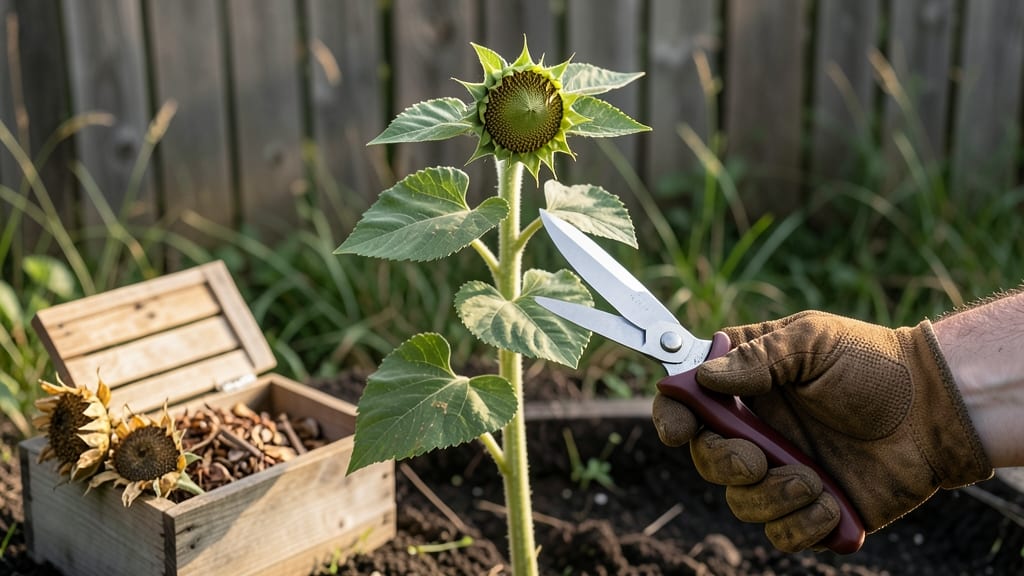
Cutting your sunflower heads off after they’ve finished blooming is the key to preventing unwanted seeds from popping up everywhere next spring.
Those towering 🌻 sunflowers you planted with such care can become a headache if you let their seed heads go to waste. One minute, they’re adding height and drama to your garden; the next, you’re battling a field of volunteer sunflowers you never asked for.
The good news? A little strategic pruning at the right time keeps your garden tidy and gives you control over what grows where.
Timing matters more than you might think. Cut too early, and you’re wasting the plant’s energy; too late, and you’ve already lost the battle against seed spread.
Below, I’ll walk you through the exact moment to make the cut—whether you’re aiming to keep your garden neat, save seeds for next year, or simply avoid the mess of scattered seeds taking over your space.
You’ll also discover how to do it the right way, from the tools you’ll need to what to do with those seed heads once they’re off the plant.
Whether you’re a first-time gardener or a seasoned pro, these tips will help you make the most of your sunflowers without the unwanted surprises.
The best time to cut sunflower heads off for seed prevention
Sunflowers are one of the most rewarding plants to grow, but those towering heads can become a seed-spreading nuisance if left unchecked.
The key to preventing unwanted sunflower volunteers next year lies in timing your cuts perfectly—not too early (which wastes the plant's energy) and not too late (when seeds have already dispersed).
I've learned from experience that cutting at the wrong time can leave your garden littered with unwanted seedlings for seasons to come.
Most gardeners make the mistake of cutting sunflower heads too early, often when the petals are still vibrant. This removes the plant's chance to store nutrients back into its roots for next year's growth.
On the other hand, waiting too long means the seeds have already spread, and you'll be battling sunflower sprouts in your garden beds or walkways. The sweet spot comes when the petals have drooped and turned brown, but before the seed head becomes fully dry and hard.
Here's my foolproof timing guide based on years of growing sunflowers in USDA Zone 6a and beyond. The exact timing varies slightly by variety and climate, but these visual cues will help you decide:
The ideal window for cutting sunflower heads is when the petals have completely drooped and turned brown, but the seed head still feels firm to the touch. This typically occurs in late August through September in most climates, just before the first frost.
I've found that cutting at this stage allows the plant to redirect nutrients to its roots while preventing seed dispersal. For taller varieties like 'Mammoth' or 'Russian Giant', this timing is crucial—their heavy heads can topple over if left too long.
Seasonal timing plays a huge role in your decision. In warmer climates (Zones 7-10), you might need to cut heads as early as mid-August to prevent seed spread before winter rains.
Meanwhile, in cooler northern zones (Zones 3-5), you have until late September or early October before frost becomes a concern.
I always check my local frost dates and aim to remove heads at least 2-3 weeks before the first expected frost—this gives me time to clean up while still allowing the plant to benefit from the head's nutrients.
One common question I hear is whether to cut heads in fall vs. late summer. The answer depends on your goals: if you want to prevent seed spread entirely, late summer (when petals first brown) is best.
However, if you're growing heirloom varieties you want to save seeds from, wait until the seed heads are fully dry and brown.
For most gardeners aiming to control sunflower volunteers, late summer cutting is the way to go—it's when the heads are heavy enough to cause problems but haven't yet released seeds.
Pro tip: If you're growing sunflowers for cut flowers, you can leave the heads on the plant until they're fully mature (seed heads dry and brown), then cut the entire stem. But for seed prevention, timing is everything.
I've seen gardens where sunflower seeds spread so aggressively that they choked out other plants—don't let that happen to you! The 1-2 inch cut below the head is important too; it helps prevent regrowth from the stem while allowing the plant to recover nutrients.
Remember that sunflowers are annuals, so their energy is focused on seed production. By cutting at the right time, you're essentially telling the plant, "Thanks for the blooms, but it's time to wind down."
This approach not only prevents unwanted seedlings but also helps your sunflowers put more energy into next year's growth cycle through their roots. It's a small effort that pays off big time in garden control and plant health.
🌻
How to cut sunflower heads properly: tools, techniques & what to avoid
Once you’ve identified the right time to cut your sunflower heads, the next step is doing it correctly to avoid damaging the plant or leaving behind unwanted regrowth. Using the wrong tools or technique can stress your sunflower, weaken its stem, or even leave behind seed heads that continue spreading.
I’ve learned this the hard way—skipping these steps can turn a simple pruning job into a messy cleanup later.
Start by gathering your pruning tools. A sharp pair of bypass pruners or clean garden shears is ideal for cutting through the thick stems without crushing them. Avoid using dull scissors or your hands, as this can tear the stem and invite disease.
For taller varieties, a hand pruner with a long handle or even a small saw can make the job easier and safer.
When you’re ready to cut, make your incision about 1-2 inches below the seed head. This ensures you remove the entire head while leaving enough stem to support the plant’s remaining foliage.
Angle your cut slightly downward to prevent water from pooling on the stem, which can lead to rot. Always cut just above a leaf node or side branch if possible—this encourages healthier regrowth from the base.
⚠️ callout-warning
If you wait until the seed head is fully dried and brown, you risk scattering seeds everywhere as you cut. On the flip side, cutting too soon (when petals are still vibrant) removes the plant’s energy source before it’s fully utilized. Aim for the golden window: when petals start drooping but haven’t yet turned completely brown.
Another pitfall? Leaving a stubby stem that encourages new growth. Always cut at a 45-degree angle just above a leaf node to promote healing.
After cutting, decide what to do with the seed head. If you’re not saving seeds, compost the heads immediately to prevent any seeds from falling into your compost pile and sprouting.
For seed-saving, hang the heads upside down in a dry, well-ventilated space (like a garage or shed) until the seeds are fully mature and rattle easily when shaken. This usually takes 2-4 weeks, depending on humidity.
One mistake many gardeners make is ignoring the stem after cutting. Always inspect the remaining stem for signs of disease or pests. If you notice any discoloration or unusual spots, trim those areas out immediately to protect the rest of the plant.
For large sunflowers, you might also want to stake the remaining stem if it’s top-heavy, especially in windy conditions.
Finally, don’t forget to sterilize your tools before and after pruning. Wipe them down with rubbing alcohol or a 10% bleach solution to prevent the spread of bacteria or fungi between cuts. This simple step can make a huge difference in keeping your sunflowers—and your entire garden—healthy and thriving.
With these techniques, you’ll not only keep your garden neat but also ensure your sunflowers put their energy into next year’s growth instead of wasted seeds. Happy pruning!