
Light Requirements
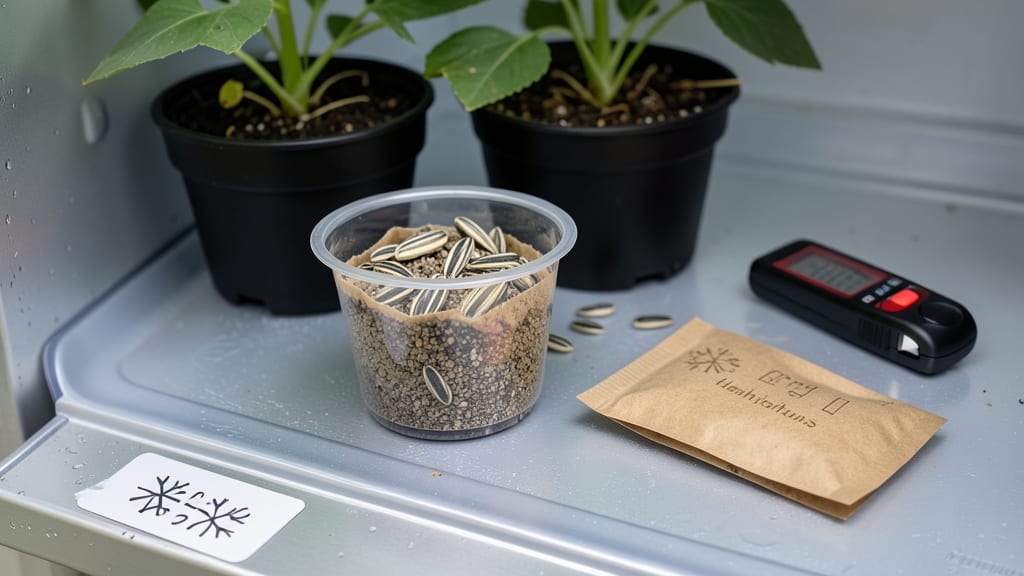
Sunflower seeds don’t need cold stratification to germinate—unlike many native wildflowers, they’re happy sprouting straight from the soil in warm spring conditions.
That said, I’ve seen gardeners swear by soaking seeds overnight or chilling them for a few days, convinced it speeds things up. The truth? For most varieties, stratification is optional, but it can help in cooler climates or when starting seeds indoors too early.
Here’s what you need to know: whether you’re in USDA Zone 6a or further south, the key to success lies in soil temperature, moisture, and timing—not cold treatment. I’ll break down the science, regional tweaks, and when to skip this step entirely.
By the end, you’ll know exactly how to handle your 🌻 seeds for the fastest, most reliable germination—no guesswork, no wasted time.
What is cold stratification and why it matters for sunflower seeds
Cold stratification is a natural process where seeds experience a period of cold, moist conditions to break dormancy and trigger germination. For many wild plants, this mimics their native winter cycle, preparing them to sprout when spring arrives. But when it comes to sunflower seeds, the story is different.
Unlike native wildflowers, sunflowers originally hail from temperate and subtropical regions, where extreme cold isn’t part of their natural growth cycle. This makes cold stratification unnecessary for most sunflower varieties—and sometimes even counterproductive.
Many gardeners assume that "hard" seeds—those with thick outer shells—always need stratification, but this isn’t true. Sunflower seeds fall into the "soft" seed category, meaning their germination is triggered by warmth, moisture, and proper soil conditions rather than cold exposure.
In fact, subjecting them to cold stratification can delay germination or even reduce viability, especially if the seeds aren’t properly dried afterward.
That said, climate plays a crucial role. Gardeners in cooler regions (USDA Zones 3-5) might see slightly faster germination if they stratify seeds for 1-2 weeks before planting, as it can soften the seed coat.
However, in warmer climates (Zones 6-10), stratification is rarely needed and can even harm the seeds if done incorrectly. The key is understanding your local soil temperature—sunflowers thrive when soil reaches 60-70°F (15-21°C).
The myth that all seeds benefit from cold stratification stems from the success it brings to native wildflowers and trees, like maples or oaks, which rely on winter’s chill to break dormancy. But sunflowers, as a non-native annual, have evolved differently.
Their seeds are designed to germinate quickly when conditions are warm, which aligns with their short growing season. In fact, many commercial sunflower seeds are pre-treated to ensure rapid germination without stratification.
If you’re still unsure whether to stratify, consider this: sunflowers planted directly in warm soil (60°F+) will germinate just as well—often faster—than stratified seeds. The only exception is if you’re starting seeds indoors in early spring and your home is too cold.
In that case, a 1-week cold treatment in a damp paper towel can help, but it’s not mandatory. Always prioritize soil warmth over cold exposure for sunflowers.
Another common misconception is that stratification "hardens" seeds, making them more resilient. For sunflowers, this isn’t the case. Their natural resilience comes from their ability to adapt to drought and poor soil, not from cold exposure.
Over-stratifying can actually weaken the seed by drawing out moisture, leading to mold or rot before planting. Always err on the side of minimal treatment—if any.
For gardeners in USDA Zones 6-10, cold stratification is unnecessary and can even harm your seeds. Instead, focus on planting sunflower seeds in well-drained soil when temperatures consistently stay above 50°F (10°C).
A simple soil thermometer can help you gauge the right time. In cooler zones (3-5), a brief stratification period (up to 2 weeks) might help, but it’s not a guarantee of better results.
One final tip: if you’re growing sunflowers from homegrown seeds, they may have slightly different germination traits than store-bought varieties. In this case, a quick 24-hour soak in warm water can soften the seed coat without the risks of long-term stratification.
This method mimics natural weathering and is far safer for sunflowers than cold treatment.
In summary, cold stratification is not required for sunflower seeds and can even be detrimental if overdone. Focus instead on warm soil, proper moisture, and patience. Sunflowers are remarkably forgiving, and with the right conditions, they’ll germinate reliably without any pre-treatment.
The key is understanding their natural growing habits and adapting your methods accordingly. 🌻
When and how to stratify sunflower seeds for faster germination
Sunflower seeds are one of the easiest plants to grow from seed, but many gardeners still wonder if cold stratification can speed up germination. The short answer is no, sunflowers typically don’t require cold treatment.
Unlike native wildflowers or northern plants, sunflowers originate from warm climates and have minimal dormancy. However, if you're in a cool climate or planting early, a short stratification period can help break stubborn seed coats and ensure more consistent sprouting.
That said, over-stratifying can cause mold or rotting, especially with wet methods. The key is using the right technique for your climate. For warm regions, stratification is unnecessary—just plant seeds directly in well-drained soil after the last frost.
But if you're in USDA Zones 1-5 or planting in early spring, a brief cold treatment can give your sunflowers a head start.
How to Stratify Sunflower Seeds for Best Results
- Choose your method: Wet (moist paper towel) or dry (sand/peat moss).
- Wet method: Place seeds between damp paper towels in a sealed bag. Store at 34–40°F (1–4°C).
- Dry method: Mix seeds with moistened sand or peat moss in a container. Keep at 35–40°F (2–4°C).
- Duration: 7–14 days max. Check weekly for mold—discard if fuzzy growth appears.
- Plant immediately after stratification. Press seeds 1 inch deep in warm soil.
- Warm-climate tip: Skip stratification entirely. Direct-sow after soil reaches 60°F+ (15°C+).
⚠️ Troubleshooting: If seeds develop mold, reduce moisture or shorten stratification time.
For gardeners in warm climates, stratification isn’t just unnecessary—it can be harmful. Sunflower seeds germinate best when soil temperatures are consistently above 60°F (15°C). If you’re in USDA Zones 7-10, simply plant seeds directly in the garden after the last frost.
The natural warmth will trigger germination faster than any cold treatment.
If you’re still unsure, test a few seeds without stratification first. Sunflowers are forgiving, and most varieties—like 'Mammoth' or 'Autumn Beauty'—will sprout reliably in 5–14 days when conditions are right. Only resort to stratification if you notice slow or uneven germination in cool soils.
Remember, the goal of stratification is to mimic natural conditions that break seed dormancy. For sunflowers, that means warmth and moisture—not cold. By understanding your climate and seed needs, you’ll avoid unnecessary steps and get those cheerful sunflower sprouts popping up faster than ever! 🌱🌻