
Flowers
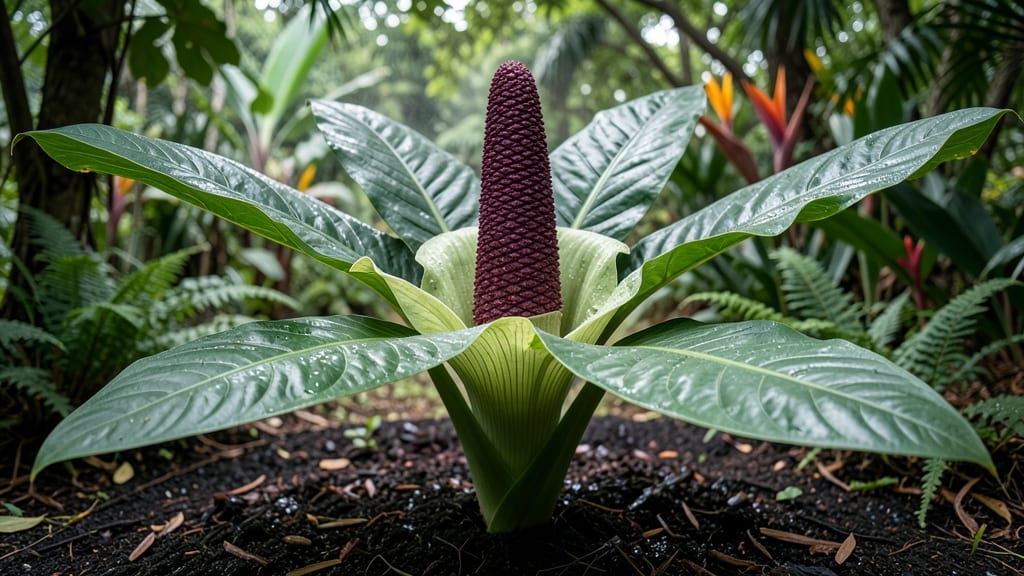
Corpse flowers bloom for just 24 to 72 hours—a fleeting but unforgettable spectacle 🌺—before their petals wilt and the cycle begins anew.
Picture this: a towering 6-foot plant in your greenhouse suddenly bursts into a rotten-meat-scented bloom, drawing crowds like a carnival sideshow. But here’s the catch—most gardeners miss it entirely because they don’t know when to look.
The window is narrow, and the signs (like a swollen bud and a foul odor) are easy to overlook.
What makes this even more frustrating is that the corpse flower (Amorphophallus titanum) often waits 7 to 10 years between blooms. So when it finally happens, you’ll want to be ready—not just to witness it, but to understand how to extend that brief window of wonder.
In this guide, I’ll break down the exact stages of the bloom, what triggers it, and how to give your plant the best shot at a longer (and more frequent) show. No more missed opportunities—just science-backed tips to make the most of this rare event.
How long corpse flowers bloom: exact timing and stages breakdown
The corpse flower (Amorphophallus titanum) is famous for its fleeting bloom—typically lasting just 24 to 72 hours in full glory. But this rare spectacle unfolds in distinct stages, each with its own timeline. Understanding these phases helps you prepare for the short-lived but spectacular event.
The entire blooming cycle, from bud formation to decay, can stretch over weeks or even months, but the actual open-flower phase is brief.
Before the bloom, the plant spends months building energy in its corm—a swollen underground stem. This pre-flowering phase can last 7 to 10 years for a mature specimen, depending on growing conditions. Once the corm is ready, the flower spike emerges, signaling the start of the blooming process.
This spike can grow 3 to 6 feet tall in just days, culminating in the infamous rotten-meat scent that attracts pollinators.
| Stage | Duration | Key Features |
|---|---|---|
| Pre-Flowering (Bud Formation) | Weeks to months | Bud swells; emits faint scent |
| Spike Emergence | 3-7 days | Tall stalk grows rapidly; bud tightens |
| Full Bloom (Open Flower) | 24-72 hours | Petals unfurl; intense rotten odor |
| Post-Bloom (Decay) | 1-2 weeks | Flower wilts; corm stores energy for next cycle |
The full bloom phase is the most dramatic and short-lived part of the cycle. Once the spathe (the petal-like structure) unfurls, the flower emits its signature cadaverous scent, which can be detected up to a mile away.
This phase typically lasts 24 to 72 hours, with the peak scent and visual appeal occurring in the first 12 to 24 hours. The spadix (the central spike) heats up to attract flies, reaching temperatures up to 85°F—even in cooler environments.
After the bloom, the flower enters its decay phase, which lasts 1 to 2 weeks. During this time, the spathe wilts and turns brown, while the spadix may develop small berries (though these are rare in cultivated specimens).
This phase is crucial for the plant, as it allows the corm to replenish energy for future blooming cycles. Unlike annuals, corpse flowers bloom only once every 7 to 10 years, making each event a once-in-a-lifetime spectacle for most gardeners.
Environmental factors play a critical role in bloom duration. For instance, higher humidity levels (80-90%) can slightly extend the bloom by reducing stress on the plant. Conversely, dry air or temperature fluctuations may cause the flower to wilt faster.
Maintaining consistent warmth (75-85°F) is key—any dip below 65°F can stall the blooming process entirely. This is why most corpse flowers are grown in greenhouses or indoor settings, where conditions can be tightly controlled.
One common misconception is that the corpse flower’s bloom lasts only a few hours. While the scent and visual appeal peak quickly, the physical bloom itself remains open for up to 3 days.
The confusion arises because the most intense phase—when the flower is at its most aromatic and striking—occurs within the first 24 hours. After that, the spathe begins to close, and the spadix may darken, marking the end of the bloom.
This gradual decline is part of the plant’s natural cycle, ensuring energy is conserved for the next blooming event.
If you’re lucky enough to witness a corpse flower in bloom, timing is everything. The best time to observe is during the late afternoon or evening, when the scent is strongest and the flower is fully unfurled.
Documenting the event with photos or notes can be incredibly rewarding, especially since blooms are unpredictable and often occur at night. Some gardeners even set up motion-activated cameras to capture the full process, as the flower may open and close within a 24-hour window.
For those cultivating corpse flowers, understanding these stages helps in planning care routines. For example, avoiding disturbances like repotting during the pre-flowering phase can prevent stress-induced delays.
Additionally, monitoring the plant’s corm health—such as checking for firmness and proper drainage—ensures it has the energy reserves needed for a successful bloom. While you can’t control the exact timing of the bloom, creating optimal growing conditions maximizes the chances of a longer-lasting and more vibrant display.
In summary, the corpse flower’s bloom is a brief but unforgettable event, with the open-flower phase lasting 24 to 72 hours.
The entire cycle, from bud formation to decay, spans weeks or months, but the real magic happens in those few days when the flower is at its peak. By understanding each stage, you can appreciate this rare botanical wonder and even encourage future blooms with proper care.
Whether you’re a seasoned gardener or a curious plant enthusiast, the corpse flower’s fleeting beauty is a reminder of nature’s ephemeral yet spectacular moments. 🌺🌡️
What triggers corpse flower blooming: temperature, age, and environmental factors
The corpse flower (Amorphophallus titanum) is a master of patience—it can take 7 to 10 years to reach maturity before its first bloom 🌺. But once it’s ready, the right conditions can turn that rare event into a spectacular show.
I’ve learned the hard way that temperature, plant age, and even subtle environmental shifts can make or break your chances of seeing those infamous petals unfurl.
Most gardeners assume these plants bloom randomly, but in reality, they’re highly sensitive to their surroundings. For example, a sudden drop in humidity or a temperature dip below 70°F can stall the process entirely.
I once had a specimen that spent years growing steadily, only to skip blooming entirely after a cold snap. The lesson? Precision matters when you’re dealing with a plant that’s basically a walking science experiment.
- 🔥 Temperature: 75-85°F triggers blooming; below 70°F delays it.
- 📅 Age: 7+ years old plants bloom; younger ones focus on growth.
- 💧 Humidity: 80-90% humidity speeds up the process; dry air slows it.
- 🌱 Stress: Repotting or drought can accelerate blooming in mature plants.
- 🌙 Light: 12+ hours of light per day signals the plant to bloom.
Let’s start with temperature, the most critical factor. My greenhouse keeps its corpse flowers in the 75-85°F range year-round, and that’s non-negotiable. These plants are tropical through and through—they’re not built for cold snaps.
I’ve seen blooms halt entirely when temps dip below 70°F, even for just a few days. If you’re growing one outdoors in a mild climate, like USDA Zone 10+, you’ll need to monitor weather forecasts closely and bring it inside if a cold front moves in.
Age is another non-negotiable. I once had a gardener friend swear his 5-year-old corpse flower would bloom soon—only to be disappointed when it never did. The reality? These plants typically won’t bloom until they’re at least 7 years old.
During those early years, they’re focused solely on building energy reserves in their corm. That’s why patience is key. If your plant is younger than 7, don’t stress—it’s just biding its time.
Environmental stress can also play a surprising role. I’ve noticed that repotting a mature corpse flower or letting it experience a mild drought can sometimes trigger blooming faster. It’s counterintuitive, but these plants seem to interpret stress as a signal to reproduce.
Just don’t overdo it—a severe drought or root damage can kill the plant before it ever blooms. Think of it like giving your plant a gentle nudge rather than a shove.
Finally, light exposure is often overlooked. Corpse flowers need 12+ hours of light daily to kickstart the blooming process. In my greenhouse, I use grow lights during winter months to supplement natural light. Without enough light, the plant simply won’t have the energy to produce a bloom.
And if you’re growing one indoors near a window, an east or west-facing spot is ideal—south windows can get too intense and scorch the leaves.
So, if you’re waiting for your corpse flower to bloom, focus on these three pillars: consistent warmth, maturity, and stable conditions. Get them right, and you’ll maximize your chances of witnessing this once-in-a-lifetime spectacle—without missing it because of a simple oversight 🌿.