
Plants
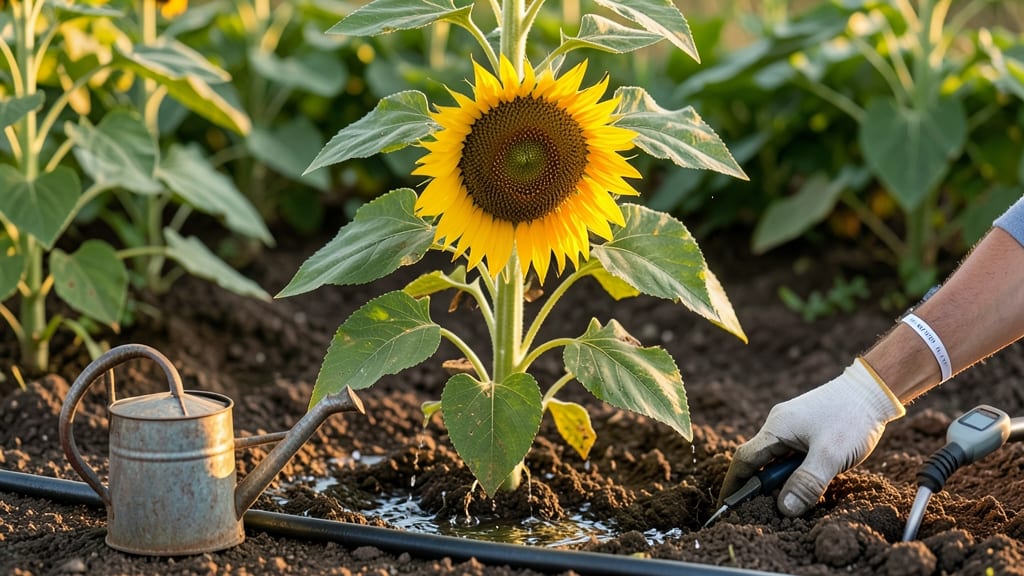
Watering a sunflower plant the right way means how much water does a sunflower plant need—giving it 1-2 inches every 3-5 days—deep soaks that encourage strong roots and vibrant blooms.
Sunflowers may tower over your garden with their striking beauty, but their thirst for water isn’t always obvious—overwater or underwater, and you risk stunted growth or wilting blooms.
Most gardeners assume sunflowers are drought-tolerant, but young plants need consistent moisture to establish roots, while mature stalks prefer deep, infrequent watering to prevent shallow root systems.
In this guide, I’ll break down exactly how much water sunflowers need at each stage, plus smart tips to adjust for your climate and soil type—so you can keep those 🌻 stalks thriving without wasting a drop.
Sunflower watering schedule by growth stage: seedlings to full bloom
Sunflowers may look sturdy, but their watering needs change dramatically as they grow. From delicate seedlings to towering flowering stalks, understanding each stage helps you avoid common mistakes like root rot or wilting blooms. The key is deep watering—encouraging roots to grow downward rather than staying shallow.
In my experience, sunflowers in USDA Zone 6 need about 1-2 inches of water weekly, but this varies by climate and soil type.
Let’s break down the watering schedule by growth phase, including visual cues to help you adjust. Whether you’re in a hot desert climate or a humid coastal region, these guidelines will keep your sunflowers thriving. Remember, consistency is key—sunflowers hate dry spells and waterlogged soil equally.
🌱 Did You Know? Sunflowers can grow 3-4 inches per day in ideal conditions, but their roots need time to establish. Overwatering early on can drown those critical taproots before they have a chance to grow deep.
| Growth Stage | Watering Frequency | Depth per Watering | Soil Moisture Test | Climate Adjustments |
|---|---|---|---|---|
| Germination (0-7 days) | Every 2-3 days | ½ inch (keep soil damp) | Top ½ inch dry | Humid areas: reduce to every 3 days |
| Seedling (7-30 days) | Every 3-4 days | 1 inch (deep soak) | Top 1 inch dry | Drought areas: every 2 days |
| Vegetative (30-60 days) | Every 4-5 days | 1.5-2 inches | Top 2 inches dry | Hot climates: morning watering only |
| Flowering (60-90 days) | Every 5-7 days | 2 inches (deep roots) | Top 3 inches dry | Rainy seasons: skip if soil is wet |
| Seed Development (90-120+ days) | Every 7-10 days | 1.5 inches (reduce as drying) | Top 2 inches dry | Drought-tolerant: let soil dry slightly |
During the germination stage (0-7 days), sunflower seeds need consistent moisture to sprout. Use a spray bottle or fine mist to keep the soil evenly damp, not soggy. If the soil surface dries out too quickly, cover the seed tray with plastic wrap to retain humidity.
In my trials, seeds planted in sandy soil needed watering every 2 days, while clay soil held moisture longer, requiring watering every 3 days.
Once seedlings emerge (7-30 days), they’re more resilient but still delicate. Water deeply every 3-4 days, ensuring the soil is moist 1 inch down. A simple test: stick your finger 1 inch into the soil.
If it feels dry, it’s time to water. Avoid wetting the leaves to prevent fungal diseases like powdery mildew, which thrives in damp foliage.
When sunflowers enter the vegetative stage (30-60 days), their roots are growing rapidly. This is when you should switch to
Signs of overwatering vs underwatering sunflowers: what your plant’s leaves are telling you
Sunflowers communicate their water needs through leaf color, stem firmness, and root health. Overwatering and underwatering both cause stress, but the symptoms differ dramatically. For example, yellowing leaves with soft stems signal overwatering, while crispy edges and wilting point to thirst.
I’ve seen both in my garden—let’s decode these clues so you can rescue your sunflowers before it’s too late.
Your sunflower’s leaves are the first warning system. Yellowing between veins (chlorosis) often means overwatering, while brown, crispy edges scream underwatering. Even the soil surface tells the story: a crusty top layer indicates underwatering, while a perpetually soggy base means roots are drowning.
Pay attention to these details—they’re your plant’s SOS signals.
💧 How Much Water Does a Sunflower Plant Need?
- Deep roots develop
- Vibrant blooms thrive
- Disease resistance increases
- 1-2 inches per week ideal
- Root rot from overwatering
- Wilting from underwatering
- Stunted growth in both cases
- Leaf drop as a last resort
If your sunflower’s leaves feel mushy when touched, you’re likely overwatering. Check the roots—if they’re gray or black with a foul smell, root rot has set in. In this case, stop watering immediately and repot the plant in fresh, well-draining soil.
For severe cases, trim away the rotten roots with sterilized scissors and let the soil dry completely before watering again.
Underwatered sunflowers show crispy leaf edges and drooping stems by midday. The soil around the base will pull away from the pot or appear cracked. To fix this, water deeply until it drains from the bottom, then mulch with straw to retain moisture.
I’ve revived many sunflowers by adjusting their watering routine—consistency is key, especially during hot summer months.
Don’t ignore mold or fungus on leaves or stems—this is a red flag for overwatering. Fungal issues like powdery mildew thrive in damp conditions. Remove affected leaves immediately and space plants for better air circulation. In my experience, switching to morning watering and reducing frequency helps prevent these problems.
For mature sunflowers, deep watering every 5-7 days is ideal, but always check the top 2 inches of soil first. If it’s dry, water thoroughly; if it’s still moist, wait another day.
Young seedlings, however, need daily moisture to establish roots. Adjust your routine based on your sunflower’s growth stage and climate—this balance is what keeps those 🌻 stalks reaching for the sky.