
Flowers
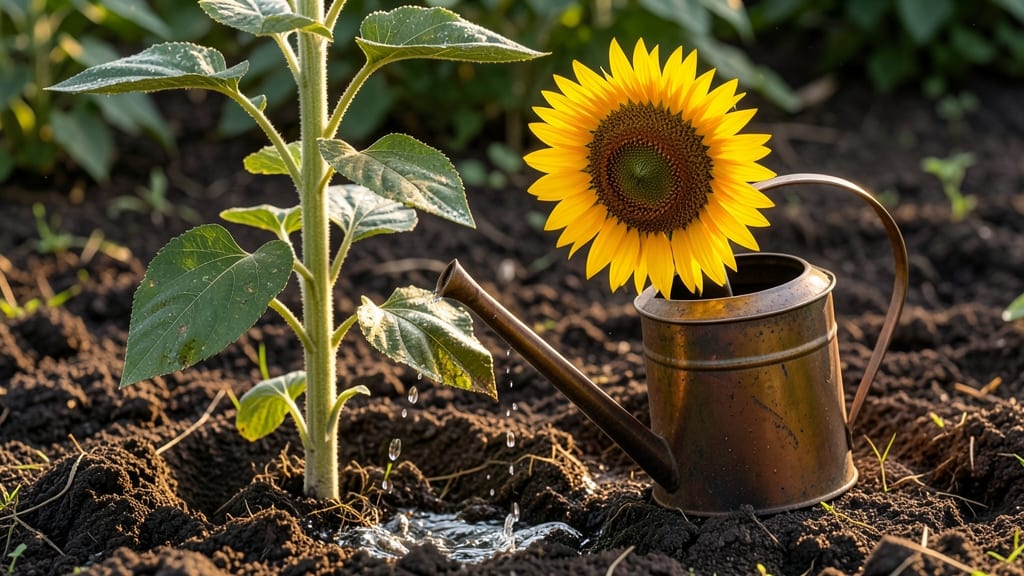
Watering sunflowers the right way keeps them thriving from seedling to towering bloom 🌻 — but most gardeners either drown or dehydrate them by guessing.
Sunflowers are the cheerful giants of any garden—but their thirsty roots demand precision. Water too little, and they wilt; too much, and you risk rot. Here’s the science-backed method to keep your sunflowers blooming strong all season.
You’ll learn how to adjust watering by growth stage, from delicate seedlings to mature plants reaching 10 feet tall. We’ll cover the finger test for soil moisture, seasonal tweaks for USDA Zone 6a, and how to spot overwatering before it’s too late.
By the end, you’ll have a custom watering schedule that saves time, prevents stress, and ensures your sunflowers stay lush from April planting through September harvest.
The exact watering schedule for sunflowers by growth stage
Sunflowers thrive with the right balance of moisture, but their watering needs change dramatically from seedling to full bloom. Young plants need frequent, shallow watering, while mature giants prefer deep, infrequent drinks. Climate matters too—arid regions demand more attention than humid zones.
Let’s break it down by growth stage so you never guess again.
Start with consistent moisture during germination. Sunflower seeds need soil that stays damp but not soggy—think of a wrung-out sponge. Overwatering now can cause rot before your seedlings even poke through the soil. Aim for light daily misting until sprouts appear, then adjust as they grow.
Here’s your stage-by-stage watering guide, including climate adjustments and plant signals to watch for:
| Growth Stage | Watering Frequency | Depth | Climate Adjustments | Signs of Stress |
|---|---|---|---|---|
| Seedling (0-2 weeks) | Every 1-2 days | ¼ inch | Humid: Every 2 days; Arid: Daily mist | Wilting leaves, dry soil crust |
| Vegetative (3-6 weeks) | Every 3-4 days | 1-2 inches | Humid: Every 4 days; Arid: Every 2 days | Drooping stems, yellowing lower leaves |
| Budding (7-10 weeks) | Every 5-7 days | 2-3 inches | Humid: Every 7 days; Arid: Every 4 days | Flower buds shrinking, brown leaf edges |
| Mature (11+ weeks) | Every 7-10 days | 3-4 inches | Humid: Every 10 days; Arid: Every 5 days | Stem base softness, premature seed drop |
During the seedling stage, focus on keeping the top ¼ inch of soil moist. Use a spray bottle for gentle watering to avoid disturbing delicate sprouts. Arid climates may require daily misting, while humid areas can stretch to every 2 days.
Watch for wilting leaves—this is your first sign to water.
As sunflowers enter the vegetative stage (3-6 weeks), deepen your watering to 1-2 inches. This encourages strong root development. Morning watering is critical here—it reduces fungal risks and gives leaves time to dry. In hot, dry climates, increase frequency to every 2-3 days.
When buds form (7-10 weeks), reduce frequency but increase depth to 2-3 inches. This supports flower development. Yellowing leaves or drooping buds signal underwatering, while mushy stems mean overwatering. Adjust based on your local humidity—humid zones can wait longer between waterings.
Mature sunflowers (11+ weeks) are drought-tolerant but still need deep, infrequent watering. Aim for 3-4 inches deep every 7-10 days. In arid regions, water every 5 days to prevent stress. Premature seed drop often means the plant is thirsty—don’t ignore these signals!
Pro tip: Mulch around the base with straw or wood chips to retain moisture and regulate soil temperature. This reduces your watering workload by 30-50%. Just keep mulch 2 inches away from stems to prevent rot.
Always water at the base of the plant, not the leaves. This prevents fungal diseases like powdery mildew, which loves damp foliage. Early morning is the best time—it gives plants a full day to absorb moisture before evening heat evaporates it.
🌻
How to perform the finger test for perfect sunflower watering
Mastering the finger test is the simplest way to determine when your sunflowers need water without guessing. This method lets you check soil moisture 1-2 inches deep—right where sunflower roots actively absorb water.
Unlike rigid schedules, this approach adapts to your local climate and soil type, preventing both drought stress and root rot.
Start by selecting a representative spot near your sunflower’s base—avoid areas where water pools or mulch sits. Use your index finger to gently probe the soil. The key is consistency: always test the same depth and location to track moisture trends accurately over time.
For most gardeners, the ideal moisture level feels like a slightly damp sponge. If your finger comes out clean, it’s time to water. If it’s sticky or muddy, you’re overwatering—especially in clay-heavy soil, where excess moisture suffocates roots.
This test works for all sunflower stages, from seedlings to mature plants.
⚠️ CALLOUT WARNING: Overwatering Sunflowers
⚠️ Warning: Watering sunflowers every 2-3 days in clay soil can drown roots within 48 hours. Yellowing leaves and a musty smell at the base signal overwatering. Reduce frequency to every 5-7 days in summer and bi-weekly in fall—unless your finger test shows dryness.
For extra precision, pair the finger test with a moisture meter (digital or analog). These tools measure moisture at multiple depths, which is especially helpful in sandy soil, where water drains too quickly.
Insert the probe 2 inches deep near your sunflower’s drip line—this mimics where roots actively seek hydration.
Adjust your watering routine based on seasonal shifts. During summer heatwaves, sunflowers may need watering every 2-3 days, but the finger test will confirm if the soil has dried.
In fall, reduce frequency to once a week as growth slows. Always water deeply—1-2 gallons per plant—to encourage strong root development.
Remember, sunflowers are resilient but not drought-proof. If you miss a watering day, don’t overcompensate by drowning the soil. Instead, rely on the finger test to gauge how much moisture your plants truly need.
With this method, you’ll avoid both wilting and root rot, ensuring your sunflowers reach their full 10-foot height with vibrant blooms.