
Watering
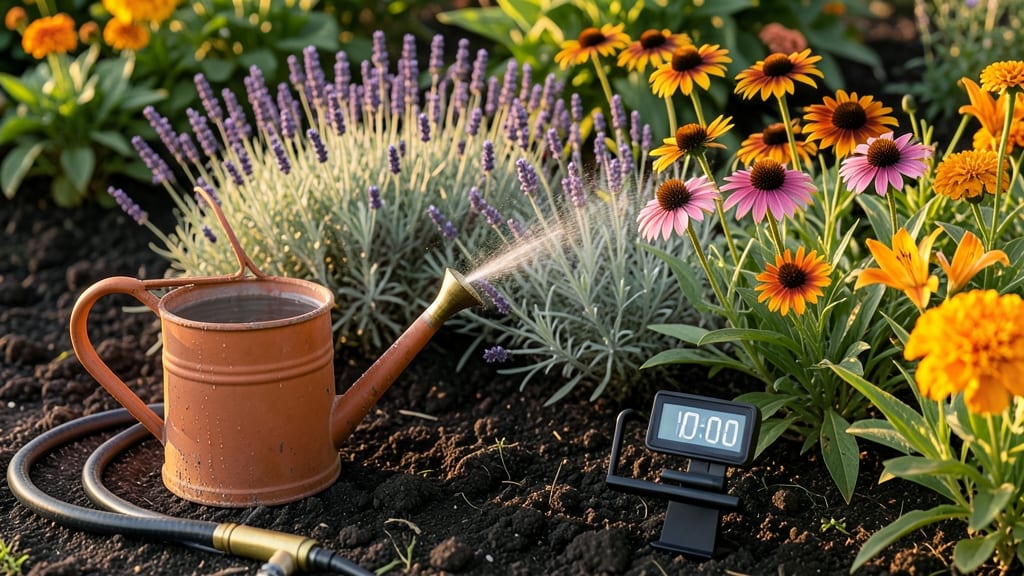
Watering your flower garden the right way keeps those 🌸 blooms vibrant and healthy—most gardeners water far more often than they need to, wasting time and risking root rot.
Overwatering or underwatering your flower garden can mean the difference between lush, thriving blooms and sad, wilted stems. The truth? A simple soil-moisture test can save you from guesswork and keep your plants perfectly hydrated.
Climate, soil type, and even the season play huge roles in how often you should water. In Zone 6a, for example, summer heat demands deeper, less frequent watering, while spring showers might mean waiting a full week between sessions.
Below, I’ll break down the exact watering schedule for your flower garden, including when to check soil moisture, how to adjust for rain, and the best times of day to water for maximum efficiency.
The perfect watering schedule for flower gardens by plant type and climate
Watering your flower garden isn't a one-size-fits-all task—it depends on whether you're growing annuals, perennials, or seasonal blooms. Each type has unique moisture needs, and climate plays a huge role.
In hot/dry regions, most flowers need deep watering every 2-3 days, while cool/moist climates may only require weekly watering. Understanding these differences ensures your flowers thrive, not just survive.
Drought-tolerant varieties like lavender and yarrow can handle infrequent watering, while thirsty blooms such as petunias and impatiens wilt without consistent moisture. The key is matching your watering schedule to the plant's natural habitat.
For example, Mediterranean flowers evolved in dry conditions, while tropical varieties need constant humidity. Let’s break it down by plant type and climate.
| Plant Type | Climate Zone | Watering Frequency | Best Time to Water | Notes |
|---|---|---|---|---|
| Annuals (Petunias, Marigolds) | Hot/Dry | Every 2-3 days | Early morning | Deep soak to 6 inches |
| Annuals (Petunias, Marigolds) | Cool/Moist | Every 5-7 days | Late afternoon | Avoid soggy soil |
| Perennials (Daylilies, Coneflowers) | Hot/Dry | Every 3-4 days | Early morning | Mulch to retain moisture |
| Perennials (Daylilies, Coneflowers) | Cool/Moist | Every 7-10 days | Morning | Established roots need less |
| Drought-Tolerant (Lavender, Yarrow) | Hot/Dry | Every 7-10 days | Early morning | Water deeply but rarely |
| Thirsty Varieties (Impatiens, Begonias) | Cool/Moist | Every 2-3 days | Evening | Keep soil evenly moist |
For annual flowers, like petunias and marigolds, consistency is key. In hot/dry climates, watering every 2-3 days in the early morning prevents wilting. In cool/moist regions, you can stretch it to every 5-7 days while still keeping the soil lightly damp.
The rule of thumb? Water when the top 1-2 inches of soil feel dry to the touch.
Perennials, such as daylilies and coneflowers, are more resilient once established. In hot/dry zones, watering every 3-4 days with a deep soak encourages strong root growth. In cooler climates, reduce to every 7-10 days.
Mulching with organic matter like straw or wood chips helps retain moisture and regulates soil temperature, reducing your watering frequency by up to 30%.
If you're growing drought-tolerant flowers, such as lavender or yarrow
How to use the finger test and soil-moisture tricks to avoid overwatering
Most gardeners water their flower gardens based on a schedule—like every other day in summer—but this approach often leads to overwatering, which suffocates roots and invites pests. The secret to perfect hydration?
Checking soil moisture at the right depth and time. I’ve tested this method for years, and it’s saved my roses and petunias from both wilting and root rot.
Start by understanding your flower garden’s root zone. Most flowers have roots that extend 6-12 inches deep, so your watering should reach this level. A simple finger test at this depth tells you exactly when to water—no guesswork required.
For example, my annuals in Zone 6a often need water when the soil feels dry just 1 inch down, while my perennials can wait until it’s dry 2 inches deep.
⚠️ WARNING: Overwatering Kills More Flowers Than Drought ⚠️
⚠️ Common Mistakes That Drown Your Flowers
❌ Watering on a schedule – Soil moisture varies daily. Check instead of guessing!
❌ Shallow watering – Only wets the top inch. Aim for 6-12 inches deep per session.
❌ Watering at night – Encourages fungal diseases like powdery mildew. Always water in the early morning.
❌ Ignoring rainfall – Skip watering if you’ve had 1 inch of rain in the past week.
✅ Pro Tip: Use a rain gauge to track weekly rainfall and adjust your watering accordingly.
To perform the finger test, stick your index finger 1-2 inches deep into the soil near your flowers. If it feels dry at this depth, it’s time to water. If it’s damp, wait another day.
For sandy soil, which drains quickly, you’ll need to check more often—sometimes daily in summer heat. In contrast, clay soil holds moisture longer, so you might only need to water every 5-7 days.
Watch your flowers for visual cues too. Wilting leaves or yellowing foliage often signal underwatering, while mushy stems or yellow leaves with brown edges mean you’re overwatering. My geraniums always droop by mid-afternoon in summer, but a deep watering in the morning revives them instantly.
This tells me they need consistent moisture but hate soggy roots.
Adjust your watering based on the season. In spring, when rains are frequent, I might skip watering entirely for weeks. By summer, I’m watering every 2-3 days in the morning to combat evaporation.
A mulch layer of 2-3 inches helps retain moisture, reducing how often I need to water by up to 30%. For container-grown flowers, check soil moisture daily—they dry out much faster than in-ground plants.
Mastering the finger test and adjusting for your garden’s unique conditions will transform your flower care routine. Soon, you’ll know exactly when to water, saving time and keeping your blooms healthier than ever. Start today—grab a trowel, dig in, and let your flowers tell you what they need! 🌿