
Shrubs
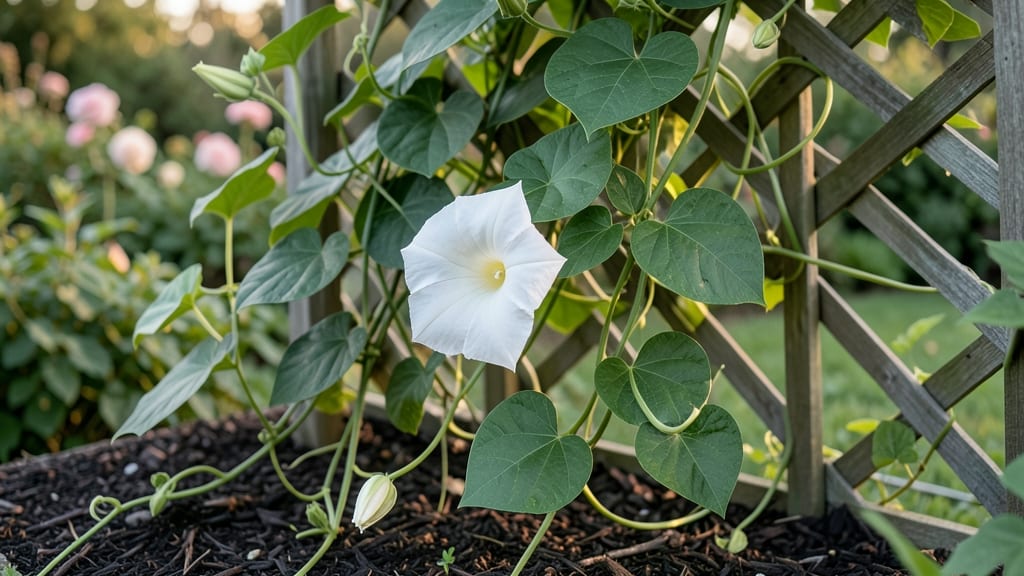
The moonflower’s preference for sun or shade is the key to unlocking its stunning nighttime blooms 🌙—but most gardeners get it wrong, leading to leggy vines and sparse flowers.
Picture this: your moonflower (Ipomoea alba) thrives in dappled light, where morning sun warms the leaves but afternoon shade keeps roots cool. Too much direct sun scorches the delicate foliage, while too little shade stunts growth and delays those magical evening displays.
In this guide, I’ll break down the ideal light balance, how to spot light-stress symptoms, and which varieties handle shade best—so you can finally enjoy those fragrant, ghostly-white blooms every night.
From partial shade in Zone 6a to morning sun tolerance, you’ll learn exactly where to plant your moonflower for peak performance, plus seasonal adjustments to keep it happy all summer long.
 Best Window Placement
Moonflower sunlight requirements: how much light does it need?
The moonflower (Ipomoea alba) thrives in partial shade, where it gets morning sunlight but escapes the harsh afternoon rays. This delicate balance is crucial—too much sun causes leaf scorch, while too little shade leads to weak, leggy growth.
Most gardeners mistakenly assume these vines love full sun, but that’s a fast track to failure.
Think of moonflowers like shade-loving tea roses—they need bright but indirect light to fuel their rapid growth and nighttime blooming.
In USDA Zone 6a, where I’ve grown mine, the ideal spot gets 4-6 hours of morning sun (6 AM–12 PM) followed by afternoon shade from trees or a trellis. This mimics their natural habitat in tropical forests, where dappled light filters through the canopy.
Here’s the golden rule: Morning sun = good, afternoon sun = bad. The intense midday heat (especially in July and August) can bleach leaves and stress the plant. Even in cooler climates like Zone 7+, afternoon shade is non-negotiable for consistent blooms.
Now, let’s break down the exact light needs in this summary-table—because every hour of sun matters for those ghostly-white night blooms.
If you’re in a hot, dry climate (like Zone 8+), even morning sun can be too intense. In my Southern California garden, I use a 30% shade cloth to filter sunlight during peak hours (10 AM–2 PM).
This mimics the dappled light of their native forests and prevents leaf bleaching.
For cooler climates (like Pacific Northwest), moonflowers can handle slightly more sun—up to 6 hours total—as long as the afternoon hours are shaded. Test your spot by placing a white sheet over half the area for a week.
If the shaded side grows faster with darker green leaves, you’ve got the right balance.
Avoid planting moonflowers under dense evergreens, like pine trees, which block all light. Instead, choose spots near deciduous trees (like maples or oaks) that provide natural afternoon shade.
If you’re container growing, place pots 2–3 feet from an east-facing window and rotate them weekly for even light exposure.
Seasonal adjustments are key: in spring (April–May), when days are shorter, moonflowers tolerate full morning sun (up to 6 hours). But by summer (June–August), reduce exposure to 3–4 hours max to prevent stress. In fall (September–October), they can handle more light as temperatures drop.
Pro tip: Watch the leaves—if they develop yellow patches or brown edges, it’s a cry for shade. Conversely, deep green, glossy leaves mean your moonflower is basking in the perfect light balance.
With the right spot, you’ll be rewarded with dozens of night-blooming flowers that smell like vanilla and jasmine.
Now that you’ve got the light down, your next challenge is keeping those vines trellised and blooming all summer—stay tuned for my next tips on support structures and pruning tricks! 🌙
Signs your moonflower isn’t getting the right light exposure
Your moonflower might be silently screaming for help if its leaves are turning yellow or its vines stretch leggy toward the light 🌱. These are classic signs your plant isn’t getting the perfect balance of morning sun and afternoon shade.
Unlike sun-loving flowers, moonflowers avoid harsh midday rays, which can scorch their delicate foliage.
Another red flag? Fewer blooms than usual or flowers that close prematurely by dawn. When light conditions are off, your moonflower prioritizes survival over producing those magical nighttime blossoms. The good news? Adjusting its environment is often as simple as relocating the plant or adding shade cloth.
🚨 WARNING: Light Stress Can Kill Your Moonflower 🚨
Start by checking your moonflower’s leaves—healthy ones should be dark green and glossy. If they’re yellowing between veins, it’s a classic sign of too much sun. Conversely, pale or purple-tinged leaves mean it’s not getting enough light. Both extremes stress the plant, reducing its ability to produce those fragrant evening blooms.
Leggy growth is another light-deficiency symptom. When moonflowers stretch toward light, they’re reaching for more energy, resulting in weak stems that can’t support the weight of blooms. To fix this, trim back the longest vines and move the plant to a brighter spot with indirect light.
A south-facing window with sheer curtains works perfectly for indoor moonflowers.
For outdoor plants, observe the direction of sunlight in your garden. If your moonflower is planted in a west-facing spot, it’s likely getting too much afternoon heat. Relocate it to the east side of a structure or under a tree canopy that filters light.
In containers, rotate the pot quarter-turns weekly to ensure even growth and prevent leaning.
Finally, pay attention to bloom frequency. A healthy moonflower should produce 1-2 new flowers per vine every few weeks during peak season. If you’re seeing fewer than 5 blooms total, it’s time to reassess light exposure.
Combine proper lighting with evening watering and balanced fertilizer (5-10-10) every 4-6 weeks to encourage robust growth and abundant nighttime displays.