
Watering
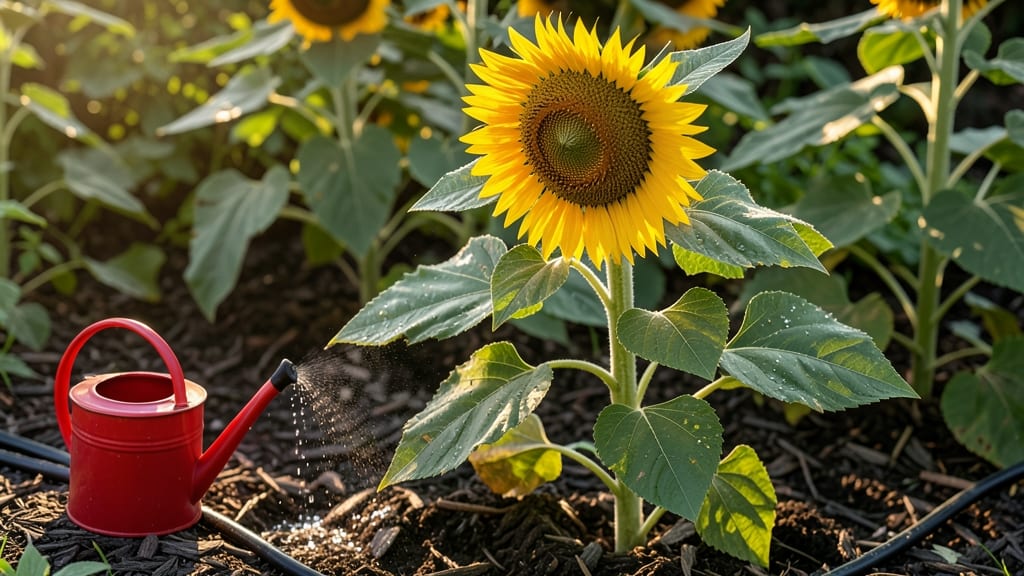
To water sunflower plants correctly means giving them deep, infrequent drinks that encourage strong roots and towering growth 🌻.
Sunflowers may reach for the sky, but their roots need the right hydration to support their towering ambitions—overwater or underwater, and you’ll end up with floppy stems or stunted growth.
This guide breaks down the exact schedule for sunflowers in 6a zones, how to tell if your plants are thirsty or drowning, and the one watering trick that makes all the difference.
Whether you’re growing them in garden beds or containers, you’ll learn how to keep your sunflowers stable, healthy, and reaching new heights—without wasting a drop.
How often to water sunflower plants for maximum growth and stability
Sunflowers thrive when their watering schedule matches their rapid growth phases. Unlike drought-resistant succulents, these towering beauties need consistent moisture to develop strong stems and vibrant blooms. The key is understanding their three distinct growth stages—seedling, vegetative, and flowering—each with unique hydration needs.
Overwatering can rot delicate roots, while underwatering causes wilting and weak stems that snap under their own weight.
Your sunflower's watering needs shift dramatically as it grows. A newly sprouted seedling requires frequent moisture to establish roots, while a mature plant can handle longer dry spells once its taproot develops. Soil type plays a crucial role too: sandy soil drains quickly, while clay holds moisture longer.
Let's break down the science-backed approach to keep your sunflowers hydrated without drowning them at every growth phase.
🌱 GROWTH STAGE WATERING GUIDE
| Growth Stage | Watering Frequency | Depth per Watering | Soil Moisture Goal | Key Tips |
|---|---|---|---|---|
| Seedling (0-2 weeks) | Daily (light misting) | 1/2 inch | Consistently moist | Use humidity dome or shade cloth |
| Vegetative (3-6 weeks) | Every 3-4 days | 1-2 inches | Top 2 inches moist | Deep water at soil level |
| Flowering (7+ weeks) | Every 5-7 days | 2-3 inches | Top 3 inches moist | Reduce water as seeds mature |
| Mature (Post-flowering) | Bi-weekly | 1-2 inches | Top 1 inch moist | Only water for seed heads |
During the seedling stage, your sunflowers need gentle but frequent hydration. Think of it like watering a sponge—keep the soil evenly moist but never soggy. A simple test is to stick your finger an inch into the soil; if it feels dry, it's time to water.
For container-grown sunflowers, check the soil moisture daily as pots dry out faster than garden beds. Mulching with straw helps retain moisture and keeps roots cool during hot afternoons.
As your sunflowers enter the vegetative stage (typically 3-6 weeks after germination), their water needs increase dramatically. This is when they're putting all their energy into growing that iconic tall stem. Aim for deep watering sessions every 3-4 days, soaking the soil down to 2 inches.
Morning watering is ideal because it allows foliage to dry quickly, reducing fungal risks. If you notice the leaves wilting by midday, your plant is thirsty—water immediately and provide afternoon shade until it recovers.
The flowering stage requires careful balance—too much water can cause buds to rot, while too little stresses the plant when it's already diverting energy to blooming. Reduce frequency to every 5-7 days and increase depth to 2-3 inches.
Pay special attention to the soil's texture: clay soils hold moisture longer and may need less frequent watering, while sandy soils dry out quickly and demand more attention. Always water at the base to avoid wetting the leaves, which can promote mildew.
Adjust your watering schedule based on weather conditions. During hot, dry spells, increase frequency by 20-30% and water in the early morning to prevent evaporation. After heavy rains, skip watering entirely and let the soil dry slightly between sessions.
In humid climates, reduce watering to prevent fungal diseases like powdery mildew, which thrives in damp conditions. Always prioritize consistency over quantity—sunflowers hate moisture fluctuations more than occasional dry spells.
For container-grown sunflowers, the rules change slightly due to limited root space. Water every 2-3 days in summer, checking the soil daily. Containers dry out faster, especially in black plastic pots that absorb heat.
Use self-watering pots or add a moisture meter to track soil conditions accurately. Dwarf varieties may need slightly more frequent watering than their towering counterparts, as their smaller root systems can't access deep moisture.
Watch for visual cues that reveal your watering strategy's success or failure. Healthy sunflowers have deep green leaves with a slight waxy sheen, indicating proper hydration. Yellowing leaves at the base suggest overwatering, while crispy edges mean underwatering.
A strong stem that holds its shape when gently pressed is another sign of optimal moisture balance. If your sunflowers start leaning or developing weak stems, they're either thirsty or getting too much water—both scenarios require immediate adjustment.
As your sunflowers near harvest time, reduce watering significantly to allow seeds to dry properly on the stalk. Cut back to bi-weekly watering once the flower heads turn yellow and seeds become plump.
This final drying phase is crucial for seed viability and flavor. Store harvested seeds in a cool, dry place with good ventilation to prevent mold growth. With the right watering strategy, your sunflowers will
Deep-soak watering technique: the key to strong sunflower roots
Sunflowers thrive when their roots grow deep and strong, but shallow watering creates weak stems that can't support their towering 6-16 foot ambitions 🌻. The deep-soak method mimics natural rainfall, encouraging roots to extend downward for better stability and drought resistance.
Unlike light surface watering, which only wets the top inch of soil, deep-soaking delivers water to 12-18 inches below the surface. This forces roots to grow deeper, creating a self-sufficient plant that can handle USDA Zone 6a heat waves without wilting.
How to Deep-Soak Water Sunflowers
- Step 1: Water in the morning (before 10 AM) to prevent fungal diseases from evening moisture. Use a soaker hose or drip irrigation for precise delivery.
- Step 2: Apply water until the soil is saturated 12-18 inches deep. For seedlings, use a spade to check moisture—if the soil is dry at 6 inches, keep watering.
- Step 3: Water at the base of the plant, avoiding leaves to reduce disease risk. For container-grown sunflowers, ensure water drains completely to prevent root rot.
- Step 4: Space waterings 3-5 days apart (adjust for summer heat—every 2-3 days). Let the top 2-3 inches of soil dry between sessions to encourage deep root growth.
- Step 5: Mulch with 2-3 inches of straw to retain moisture and regulate soil temperature. This reduces evaporation and keeps roots consistently hydrated.
Pro Tip: Use a moisture meter to track soil depth—aim for 40-60% moisture at 12 inches down.
For hand-watering, insert a garden trowel into the soil and pour water slowly until it seeps to the handle's depth. This method works well for small gardens or container sunflowers, but drip irrigation is ideal for larger plots.
Deep-soaking also prevents nutrient leaching by keeping the root zone consistently moist. During flowering stage (60-80 days after planting), increase frequency to every 2-3 days to support seed development and prevent heads from drying out prematurely.
By mastering this technique, your sunflowers will develop anchored roots capable of supporting their 16-foot stature—no more toppling in summer breezes! 🌿