
Planting
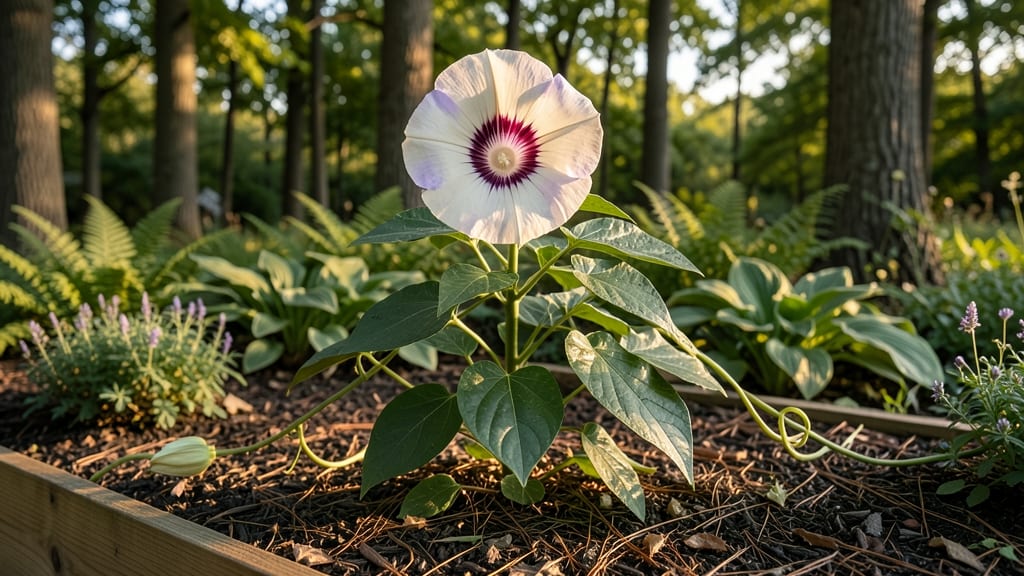
The moonflower plant looks like a mysterious, silvery-white dream come to life 🌙—its broad, heart-shaped leaves and twining vines are just the beginning of its nighttime magic.
Imagine a plant that stays hidden all day, only revealing its stunning, silvery-white blooms under the moonlight—this is the moonflower, a rare and enchanting vine that thrives in the shadows. But before it unfurls its nocturnal beauty, what clues can you spot in its leaves and stems to identify it?
Unlike many vines, the moonflower’s leaves are large, glossy, and arranged in a spiral pattern along its sturdy stems, making it easy to distinguish from look-alikes like morning glories.
Its flowers, which can grow up to 6 inches wide, open only after sunset, releasing a sweet, intoxicating fragrance that attracts night-flying moths.
In this guide, you’ll learn how to recognize a healthy moonflower from its leaf shape, stem texture, and growth habit—plus how to tell it apart from other white-flowered vines.
Whether you’re planting one in your garden or just curious about its night-blooming secrets, these visual cues will help you spot it instantly.


Moonflower plant identification: key leaf and stem characteristics
Identifying a moonflower (Ipomoea alba) before it blooms is all about studying its leaves and stems. This fast-growing vine hides its silvery-white nighttime flowers until dusk, so its foliage gives away its presence long before the magic unfolds.
The first clue? Its heart-shaped leaves with smooth edges and a waxy texture that sets it apart from other vines.
Moonflowers grow 3 to 10 feet tall in a single season, climbing trellises or sprawling across fences with a twining growth habit. Unlike morning glories, their stems are hairless and slightly succulent, storing water for those dry summer nights when their blooms emerge.
The leaves are alternate (one per node) and arranged in a spiral pattern up the vine.
Key identification traits: Look for 3- to 5-inch heart-shaped leaves with prominent veins that fade into the leaf’s surface. The undersides are often lighter green than the top, a subtle but telling detail. Young leaves may appear furry at first, but they quickly smooth out as the plant matures.
Here’s a quick visual guide to distinguish moonflowers from other vines by their foliage and stems:
| Characteristic | Moonflower (Ipomoea alba) | Look-Alikes (e.g., Morning Glory) |
|---|---|---|
| Leaf Shape | Heart-shaped, 3–5 inches | Heart-shaped but smaller (1–3 inches) |
| Leaf Arrangement | Alternate, spiral pattern | Alternate but more clustered |
| Stem Texture | Smooth, slightly succulent, hairless | Hairy or rough, especially near nodes |
| Leaf Underside | Lighter green, waxy | Duller, sometimes pubescent |
| Growth Speed | 3–10 ft in one season | Slower, 5–8 ft in one season |
| Bloom Timing | Opens at dusk, closes by dawn | Opens in morning, wilts by afternoon |
The stem texture is your best friend when distinguishing moonflowers from morning glories or sweet potato vines. Moonflower stems are glossy and smooth, almost like a light green water pipe, while other vines often have rough or hairy stems.
Run your fingers along the vine—if it feels silky or fuzzy, it’s probably not a moonflower.
Another tell-tale sign is how the leaves attach to the stem. Moonflower leaves have petioles (leaf stems) that are 1–2 inches long and connect at a sharp angle to the vine. This creates a zigzag pattern as you trace the vine upward, a hallmark of the Ipomoea genus.
Young moonflower plants may look delicate, but don’t be fooled—they’re hardy climbers once established. Their roots are shallow but aggressive, sending out long, fibrous tendrils to latch onto trellises or neighboring plants.
If you spot a vine with large, waxy leaves and no visible thorns, you’re likely looking at a moonflower.
Pro tip: Check the leaf veins under bright light. Moonflower leaves have 5–7 prominent veins that fade into the leaf tissue rather than standing out sharply. This subtle veining helps differentiate them from sweet potato vines, which have thicker, more pronounced veins.
If you’re still unsure, wait until evening and watch for buds that swell dramatically as night falls. Moonflowers double in size within an hour of dusk, a spectacular transformation that’s hard to miss once you know what to look for. Until then, trust your eyes—and those heart-shaped leaves.
🌱
How moonflower blooms differ from day-blooming flowers: nighttime beauty explained
Moonflowers (Ipomoea alba) are nature’s nighttime stars, designed to bloom only after sunset when most flowers are closed for the day. Their silvery-white petals and fragrant scent create a magical display that attracts nocturnal pollinators like moths.
Unlike day-blooming flowers, moonflowers have evolved to thrive in the dark, with petals that reflect moonlight and emit a sweet, musky aroma that peaks around midnight.
While day-blooming flowers like roses or sunflowers rely on bees and butterflies, moonflowers have adapted to moth pollination. Their blooms are larger and lighter to maximize visibility in low light, and their scent is strongest when moths are most active.
This nocturnal strategy also protects them from daytime predators and harsh sunlight, which can damage delicate petals.
Here’s how moonflower blooms stand out from their daytime counterparts:
| Feature | Moonflower (Night-Blooming) | Day-Blooming Flowers |
|---|---|---|
| Bloom Time | Dusk to dawn | Morning to evening |
| Petal Color | Silvery-white | Bright hues (red, yellow, pink) |
| Scent Strength | Strongest at night | Peaks in daylight |
| Pollinators | Moths, bats | Bees, butterflies |
| Petal Size | 4-6 inches wide | 1-3 inches wide |
| Sunlight Tolerance | Thrives in shade after blooming | Needs full sun |
The moonflower’s throat tubes are longer than those of day-blooming flowers, allowing moths to access nectar without damaging the petals. This adaptation ensures efficient pollination while minimizing damage.
Additionally, their petals close by dawn, conserving energy and protecting them from morning dew, which can cause fungal issues in delicate blooms.
If you’ve ever wondered why your garden feels quieter at night, moonflowers are the answer—they’re the nocturnal gardeners of the plant world. Their blooms not only add beauty but also support the ecosystem by providing food for night-flying pollinators when other flowers are asleep.
To spot a moonflower in action, visit your garden after sunset. Look for large, silvery-white blooms unfurling on vines, accompanied by the hum of moths. Their unique timing and appearance make them a standout feature in any nocturnal garden setting 🌙.