
Blooming
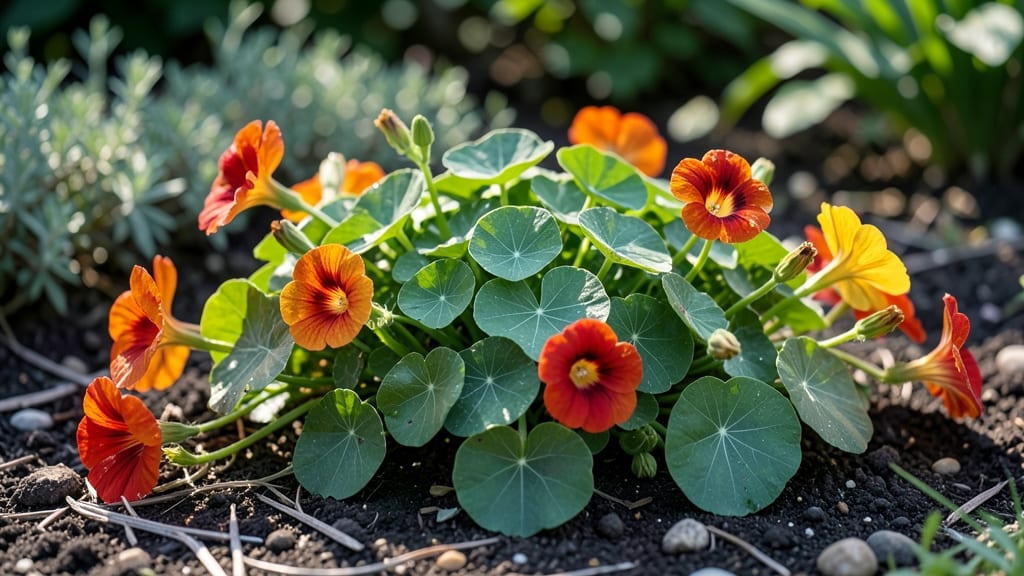
Nasturtiums flower between late spring and early fall, with the first blooms often appearing just 6-8 weeks after planting—a burst of color that turns heads in any garden.
If you’ve ever wondered why your vibrant nasturtiums 🌸 seem to vanish from your garden only to reappear in a colorful explosion, you’re not alone—timing is everything when it comes to these fast-growing annuals.
In cooler climates like USDA Zone 6a, expect your nasturtiums to kick off their flowering show in June, while warmer regions may see early blooms as soon as May. The key to prolonging those cheerful faces? A little deadheading and the right growing conditions.
Below, I’ll break down the month-by-month timeline, share tips to keep your nasturtiums blooming all season, and troubleshoot why yours might be taking a break from the show.
Nasturtium flowering timeline by USDA hardiness Zones
Timing is everything when growing nasturtiums, and their flowering periods vary dramatically depending on your USDA hardiness zone.
Whether you're in the cold Zone 3 or the warm Zone 11, understanding these patterns helps you plan for a garden bursting with vibrant blooms from early spring to late fall.
Nasturtiums are fast-growing annuals that thrive in cool weather, making them perfect for early-season color. However, their blooming windows shift based on temperature, daylight, and variety. In cooler zones (3-6), expect flowers as early as May, while warmer zones (7-11) may see blooms year-round with proper care.
Below is a zone-by-zone breakdown of when nasturtiums typically flower, including early bloomers, mid-season performers, and late-season varieties. Use this as your guide to time plantings for continuous color.
| USDA Zone | Early Bloomers | Peak Blooms | Late Bloomers | Notes |
|---|---|---|---|---|
| 3-4 | Late May | June-August | September | Cold-sensitive; plant after frost |
| 5-6 | Early May | June-September | October | Ideal for cool-season blooms |
| 7-8 | April-May | May-October | November | Year-round blooms possible with succession planting |
| 9-10 | March-April | April-November | December | Tropical varieties thrive year-round |
| 11 | Year-round | Year-round | Year-round | Continuous blooms with proper care |
In Zones 3-4, nasturtiums are late spring bloomers, often waiting until soil warms to 55°F before bursting into color. Alaska varieties like 'Dwarf Alaska' are perfect for these regions, offering compact blooms that handle cooler temperatures better than their southern cousins.
Gardeners in Zones 5-6 enjoy the longest blooming season, with flowers appearing as early as May and lasting through September. This makes nasturtiums ideal for cutting gardens or container displays, as they provide continuous color throughout summer.
Varieties like 'Empress of India' thrive here, producing large, showy blooms.
For Zones 7-8, nasturtiums are early spring stars, often flowering by April if planted in protected microclimates. These zones also support succession planting, allowing you to stagger blooms from spring to fall.
Try trailing varieties like 'Black Velvet' for hanging baskets that spill over with deep purple flowers.
In warmer climates (Zones 9-11), nasturtiums can flower year-round with minimal care. Tropical varieties like 'Pearl Bush' produce dense clusters of blooms and handle high humidity beautifully. In Zone 11, treat them as perennial-like annuals, planting new seeds every 3-4 months for uninterrupted color.
Regional variations also play a role. For example, Pacific Northwest gardeners in Zone 7 may see earlier blooms due to cooler summers, while Southern California gardeners in Zone 10 might experience winter dormancy without proper water management. Always check your local frost dates and adjust planting times accordingly.
Pro tip: Use cool-season varieties in Zones 3-6 and heat-tolerant types in Zones 7-11 to maximize blooms. For example, 'Jewel Mix' handles hotter climates better than 'Alaska', which prefers cooler temperatures. Match your nasturtium type to your zone for the best results.
With this zone-specific timeline, you can plan your <
How to extend nasturtium blooms all season long
Nasturtiums thrive on attention, and the secret to their prolonged blooming lies in a few simple yet effective techniques. First, deadheading spent blooms is non-negotiable—this redirects the plant’s energy from seed production back to producing more flowers.
I’ve found that pinching off faded blooms every 2-3 days keeps my nasturtiums in full bloom for weeks longer than those left to their own devices.
Another game-changer is seasonal pruning. In early spring, trim back any leggy growth by one-third to encourage bushier, more compact plants. This not only improves airflow but also stimulates new growth and more abundant blooms.
I swear by this method—my nasturtiums go from sparse to spectacular in just a few weeks!
Don’t overlook the power of companion planting. Nasturtiums pair beautifully with tomatoes, cucumbers, and radishes, but they also benefit from being planted near basil or marigolds. These companions deter pests like aphids and whiteflies, which can stress your nasturtiums and reduce flowering.
I always tuck a few nasturtiums around my veggie patch—they’re like little edible bodyguards!
🌱 When Do Nasturtiums Flower?
Timing is key: Most nasturtiums bloom 6-8 weeks after planting, typically starting in late spring (May-June) and continuing until first frost (October). Early varieties like 'Alaska' may flower as soon as April in warm climates, while trailing types like 'Black Velvet' often bloom later but produce flowers all season with proper care.
For soil nutrition, nasturtiums prefer lean conditions—too much nitrogen leads to lush foliage but fewer blooms. Instead, I use a balanced, low-nitrogen fertilizer (5-10-10) every 4-6 weeks during the growing season.
A handful of compost around the base in early summer gives them a gentle boost without overwhelming them. Over-fertilizing is a common mistake—I’ve seen it happen!
Watering plays a subtle but crucial role too. Nasturtiums hate soggy roots, so I water deeply once every 3-5 days rather than frequent shallow waterings. Mulching with straw or shredded leaves helps retain moisture and keeps roots cool, which is especially important in hot summer months.
I’ve noticed my nasturtiums bloom more vigorously when their roots stay consistently moist but never waterlogged.
Finally, seasonal adjustments are key. In late summer, when days shorten, I reduce watering slightly and stop fertilizing to encourage the plant to focus on blooming rather than new growth.
This simple shift has extended my nasturtiums’ flowering season by 3-4 weeks in the past. With these techniques, you’ll enjoy those cheerful faces from spring to frost!