
Plants
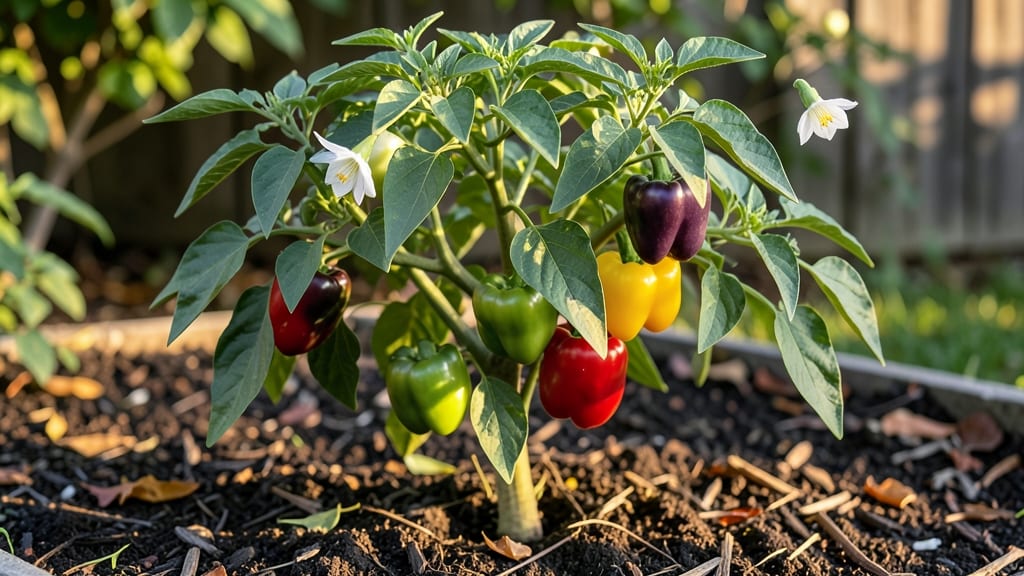
Pepper plants flower when they’ve accumulated enough heat-days—typically 500-1,000+ depending on the variety—so timing your planting matters more than you might think.
Wondering why your 🌶️ pepper plants are just growing leaves instead of flowers? The answer lies in heat-days—a precise formula that determines when peppers bloom—and mastering it could mean the difference between a bountiful harvest and empty vines.
In Zone 6a, most peppers planted in April-May hit their flowering window by late June to early July, but cooler springs or shade can delay it by weeks. That’s why tracking heat-days (not just days) is the key to predicting blooms.
Below, I’ll break down the exact heat-day targets for common varieties, how to calculate them for your climate, and three simple tricks to speed up flowering if your plants are running behind.
Understanding the heat-days formula for pepper flowering
Pepper plants don’t bloom on a strict calendar—they follow a heat-days formula, a precise calculation combining temperature and time to trigger flowering. This formula explains why your jalapeños might stay leafy in cool weather or why bell peppers suddenly sprout flowers when temperatures climb.
Mastering heat-days helps you predict—and even accelerate—when your plants will flower for a bountiful harvest.
The heat-day formula is simple: add up daily temperatures (in °F) above a 50°F baseline until you reach the variety’s minimum heat-day requirement. For example, if your average daily high is 75°F, that’s 25 heat-days (75°F - 50°F = 25).
Track this daily until your peppers hit their threshold—typically between 800 and 1,200 heat-days for most varieties.
Here’s how it works for three popular peppers:
| Variety | Heat-Days Requirement | Typical Flowering Window | Notes |
|---|---|---|---|
| Jalapeño | 800–1,000 | 60–75 days after transplant | Fastest to flower; thrives in 70–85°F days. |
| Bell Pepper | 1,000–1,200 | 75–90 days after transplant | Needs consistent warmth; 80–90°F days ideal. |
| Habanero | 900–1,100 | 55–70 days after transplant | Heat-loving; flowers faster in 85–95°F ranges. |
To calculate heat-days for your climate zone, start tracking daily maximum temperatures after transplanting. Subtract 50°F from each day’s high, then sum the results until you hit the variety’s threshold.
For example, in USDA Zone 8, where average summer highs are 88°F, you’d accumulate 38 heat-days daily (88°F - 50°F = 38). A jalapeño would flower in about 21 days (800 ÷ 38 ≈ 21).
If your peppers aren’t flowering by their expected heat-day count, check for temperature fluctuations. Pepper plants need consistent warmth—drops below 60°F at night or spikes above 95°F can delay blooms.
Use a soil thermometer to monitor root-zone temperatures, which should stay between 70–85°F for optimal flowering. In cooler climates, consider row covers or greenhouse growing to maintain warmth.
Light also plays a role, but heat-days are the primary trigger. Pepper plants need 12–14 hours of daylight, but without enough accumulated heat, they’ll focus on leaf growth instead of flowering.
If your days are short (e.g., 10 hours of sunlight), supplement with a grow light for 4–6 hours in the evening to extend the photoperiod. This won’t replace heat-days but can help if light is the limiting factor.
Once your peppers hit their heat-day threshold, you’ll see white or purple flowers appear within 1–2 weeks. These flowers will develop into peppers 6–8 weeks later, depending on the variety. For example, bell peppers take longer to mature than jalapeños, so plan accordingly.
Keep an eye out for flower drop—a sign of stress—if temperatures spike above 90°F or drop below 65°F during flowering.
Pro tip: Use a heat-day calculator or spreadsheet to track progress. Many gardening apps (like Gardenate or Farmers’ Almanac) include built-in tools. Input your transplant date and average highs, and the app will estimate when your peppers should flower.
This takes the guesswork out of timing and helps you adjust care (like fertilizing or pruning) to support blooms.
Understanding heat-days isn’t just about patience—it’s about strategic planning. By knowing your variety’s requirements and your local climate, you can time transplants for optimal flowering, avoid common pitfalls, and maximize your harvest.
Whether you’re growing spicy habaneros or sweet bell peppers, mastering this formula puts you in control of your garden’s timeline.
🌶️
How to accelerate pepper plant flowering with heat management
If your pepper plants are still leafy without flowers, you’re not alone—many gardeners miss the heat-day targets needed to trigger blooms. The good news? You can manipulate your growing conditions to speed up flowering by 2-4 weeks, especially in cooler climates.
Start by focusing on soil warmth, air temperature, and light exposure, since these directly influence heat-day accumulation.
For example, bell peppers typically need 1,000+ heat-days to flower, while jalapeños require just 800-900. If your spring is chilly, you might need to extend the growing season or use supplemental heat. Below are my top strategies to jumpstart blooms, even if your plants are running behind.
- Use black plastic mulch to raise soil temps by 5-10°F. Lay it down 2-3 weeks before transplanting for instant warmth.
- Move plants to a greenhouse or cold frame if nights dip below 55°F. Even a 4°F warmer night can trigger blooms faster.
- Add a heat mat under containers if growing in pots. Aim for 70-80°F soil temps to mimic tropical conditions.
- Supplement with LED grow lights (full spectrum) for 14-16 hours/day if daylight is limited. Focus on blue light for vegetative growth first, then shift to red light to encourage flowering.
- Prune lower leaves to reduce shade and improve airflow. This helps the plant focus energy on flower production rather than foliage.
One of my favorite tricks is combining black plastic mulch with a mini greenhouse (even a simple hoop tunnel). This creates a microclimate that can add 200+ heat-days in just a few weeks. For example, in Zone 6a, I’ve seen jalapeños flower 3 weeks early using this combo.
For container growers, soil temperature is the biggest bottleneck. Use a soil thermometer to monitor temps—peppers need roots in the 70-85°F range to thrive. If your soil is cooler, bury containers in straw mulch or use a heat mat for 2-3 hours daily.
Even a 10°F boost can make the difference between blooms and no flowers.
Finally, don’t overlook light quality. Pepper plants need full-spectrum light, especially in northern climates. If your plants look leggy or pale, they’re light-deprived. Move them to the sunniest spot or add reflective surfaces (like white walls) to bounce light onto leaves.
This simple hack can double your heat-day accumulation in shaded areas.
With these adjustments, you’ll see buds forming in as little as 3-4 weeks—even if your original planting schedule was off. The key is consistency: warm soil + ample light + proper airflow = faster flowering.
Start with one or two strategies, track your progress, and adjust as needed. Your pepper plants will thank you with earlier blooms and bigger harvests! 🌶️