
Vegetables
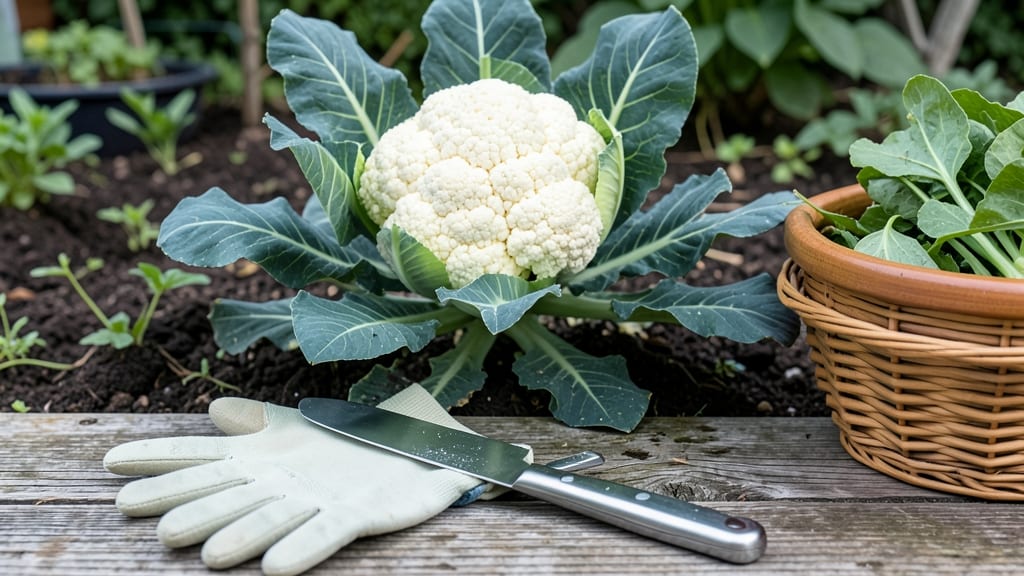
Cauliflower 🥬 is ready to be picked when its curds are firm, compact, and 6-8 inches wide—but timing this window is the difference between a tender head and a bitter, woody mess.
Picture this: you’ve nurtured your plants for months, and now the moment of truth arrives. One wrong move, and you’ll end up with a head that’s either too small or past its prime.
The secret lies in checking for tight curds, a uniform color, and leaves that start yellowing at the base—signs that tell you it’s time to harvest.
Most varieties reach maturity in 70-100 days, but weather, soil, and even your location in USDA Zone 6a can shift that timeline. If you miss the window, the curds loosen, turn yellow, or even split open—leaving you with a less-than-perfect harvest.
In this guide, I’ll walk you through the exact visual cues to look for, how to avoid common mistakes, and the best way to pick and store your cauliflower so it stays fresh and delicious. No more guesswork—just a foolproof way to enjoy your homegrown 🥬 at its peak.


How to identify perfectly ripe cauliflower curds
Knowing when to pick cauliflower is all about checking the curd—the dense, compact head that forms at the center. A perfectly ripe head should feel firm to the touch and measure about 6-8 inches in diameter.
The outer leaves should also begin to yellow slightly at the base, signaling maturity. If you miss this window, your curds can quickly turn woody or bitter, ruining the flavor and texture.
One of the most reliable signs of readiness is the tightness of the curds. Gently press the head with your thumb—if it feels solid and resistant, it’s ready. If the curds are loose or sparse, give the plant a few more days to mature.
The color should also be uniform and vibrant, whether it’s the classic white, purple, or green varieties. Patchy or dull colors mean the head isn’t fully developed yet.
Weather plays a huge role in cauliflower maturity. Cool, consistent temperatures (around 60-75°F) speed up growth, while hot or fluctuating weather can delay it.
If you’re growing in warmer climates, your cauliflower might take longer to mature—sometimes up to 100 days—compared to the standard 70-80 days in cooler regions. Always check the seed packet for variety-specific timing.
Don’t overlook the stem and leaves as indicators. A ready-to-harvest head will have a sturdy stem that doesn’t wobble when squeezed. The outer leaves should wrap tightly around the curd, almost like a protective blanket.
If the leaves start to spread open or the curd becomes visible through gaps, it’s a sign the head is overripe and past its prime.
| Sign of Readiness | Description | Action |
|---|---|---|
| Curd Size | 6-8 inches in diameter | Measure with a ruler or compare to a similar object. |
| Firmness | Solid and resistant to gentle pressure | Press with your thumb—shouldn’t dent easily. |
| Color | Uniform and vibrant (white, purple, or green) | Check for patches or dullness. |
| Leaf Wrapping | Tightly wrapped around the curd | If leaves spread open, harvest immediately. |
| Stem Strength | Sturdy and doesn’t wobble | Gently squeeze the stem near the base. |
| Outer Leaves | Slightly yellowing at the base | Yellowing signals maturity—don’t wait too long. |
Timing is everything when it comes to harvesting cauliflower. Most varieties take 70-100 days to reach maturity, but this can vary based on growing conditions.
For example, dwarf varieties like ‘Snowball Y’ mature faster (60-70 days), while larger heads like ‘Romanesco’ can take up to 100 days. Always keep an eye on your plants and check daily during the final week of growth to catch the perfect moment.
If you’re growing cauliflower in containers or raised beds, pay extra attention to the root zone. Overcrowding or poor soil drainage can delay maturity, so ensure your plants have enough space (18-24 inches apart) and well-draining soil.
If the soil stays too wet, the curds may split or rot before reaching full size. Mulching around the base can help regulate moisture and keep the soil cool, which is especially helpful in hot climates.
One common mistake is waiting too long to harvest, which leads to bitter, woody curds. If the head starts to flower or turn yellow, it’s past its prime. On the flip side, harvesting too early results in small, underdeveloped heads.
The key is to balance patience with action—once the curds meet all the readiness signs, grab your sharp knife or shears and harvest within 24 hours.
Pro tip: If your cauliflower heads are uneven in size, it might be due to uneven sunlight or nutrient imbalances. To fix this, rotate plants weekly to ensure even exposure and fertilize with a balanced 10-20-10 mix every 4-6 weeks during active growth.
This helps promote uniform head development and reduces the risk of misshapen curds.
Finally, always harvest on a dry, sunny day to prevent disease spread. Use a clean, sharp knife to cut the stem about 1 inch below the curd, leaving a few outer leaves intact to protect the plant.
This allows the cauliflower to continue photosynthesizing and may even produce a second, smaller head in some varieties.
Common mistakes that ruin your cauliflower harvest
Even experienced gardeners can miss the subtle signs that their cauliflower is overripe or damaged. One of the biggest mistakes is ignoring the curd density—if it feels loose or spongy when you gently press it, you’ve waited too long.
Overmaturity turns the curds yellow or brown, and the flavor becomes bitter and woody, making them inedible.
Another overlooked issue is underestimating pest damage. Tiny holes from cabbage moths or chewed leaves from slugs can go unnoticed until the head starts to split open.
By then, the damage is irreversible, and you’re left with a ruined harvest. Even a single night of slug activity can leave your plants looking ragged and stressed.
Here’s the harsh truth: cauliflower doesn’t wait for you. If you’re distracted by other garden tasks, you might return to find the head has already bolted or split. This is especially true in USDA Zone 6a, where sudden heat waves or drought can accelerate maturity.
The key is to check your plants daily once they near the 70-100 day mark.
⚠️ WARNING: Overlooking These Signs Will Ruin Your Harvest
Cauliflower is ready to pick when: The curds are firm and compact, 6-8 inches wide, and the outer leaves start yellowing at the base. If you see brown or yellow streaks on the curds or the head feels soft and hollow, it’s past its prime.
Never ignore: Tiny holes in leaves (cabbage moth larvae), chewed edges (slugs), or a split head—these are signs of irreversible damage. If you spot these, act fast: remove damaged leaves, apply neem oil, or replant if the head is already compromised.
🌱 Pro Tip: Harvest in the morning when the head is cool and crisp. Use a sharp knife to cut the stem cleanly, leaving a few leaves for photosynthesis.
One of the most frustrating mistakes is cutting the head too late because you assumed it would keep growing. Cauliflower stops developing once it reaches maturity, and any delay means tougher texture and less flavor.
If you’re unsure, test one curd—if it snaps cleanly when bent, it’s ready. If it bends without breaking, give it a few more days.
Don’t make the mistake of ignoring weather stress. Heat waves or drought can cause the head to bolt prematurely, sending up a flower stalk before the curds fully form.
To prevent this, keep the soil consistently moist but not soggy and provide afternoon shade during extreme heat. Mulching with straw helps retain moisture and keeps roots cool.
If you’ve already missed the harvest window, don’t panic. Some varieties, like Romanesco or Purple of Sicily, can still be salvaged if the outer leaves are trimmed and the head is stored properly.
For others, replanting a fast-maturing variety (like Snowball Y Improved) in late summer can give you a second harvest before frost sets in.
Remember, the goal is to harvest at peak freshness. A perfectly timed cauliflower should have tight curds, vibrant color, and a crisp texture. With these tips, you’ll avoid the common pitfalls and enjoy a bountiful, delicious harvest every time. 🥬