
Flowers
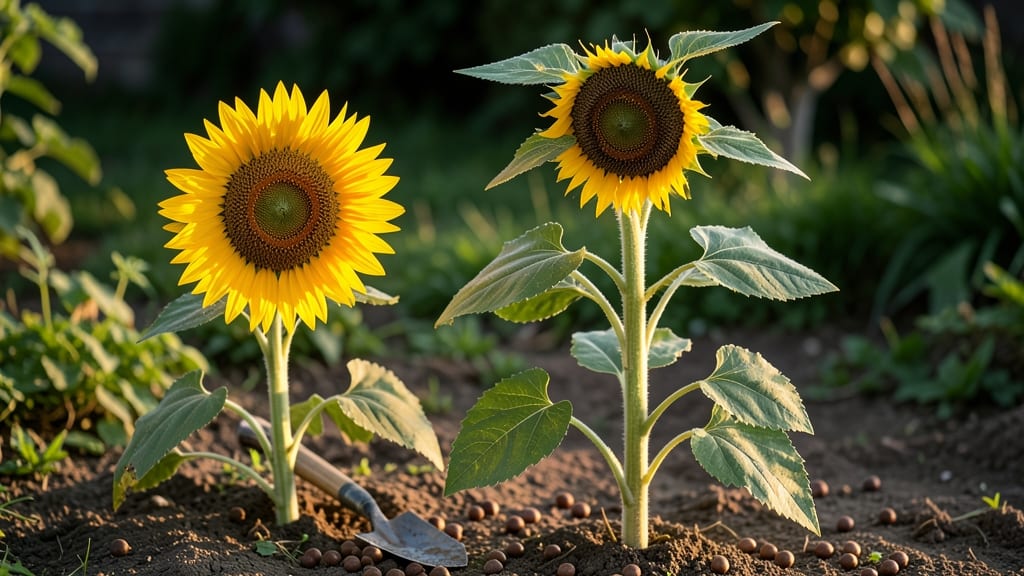
Fertilizing sunflowers at the right time is the secret to towering stems and bold blooms—but get the timing wrong, and you’ll end up with leggy, weak plants that flop before they flower.
Sunflowers 🌻 don’t just grow; they race toward the sky when fed correctly. The key lies in three critical windows: a light boost at planting, a mid-season push during rapid growth, and a final feed as buds form.
Miss any of these, and you might as well skip the fertilizer entirely.
Here’s the science-backed schedule—including how to read your soil test to avoid overdoing it, whether to choose organic or synthetic, and the telltale signs your sunflowers are begging for more (or less) food.
By the end, you’ll know exactly when to feed, what to feed, and how to keep your sunflowers reaching for the sky instead of wilting in the dirt.
Optimal fertilization timeline for sunflower growth stages
Sunflowers follow a three-phase growth cycle, each requiring different nutrient priorities to reach their towering potential. Skipping fertilization at any stage can mean shorter stems or fewer blooms, so timing matters more than you might think.
I’ve grown sunflowers from 2-foot dwarfs to 12-foot giants—the difference? Precision fertilization.
Most gardeners make one of two mistakes: over-fertilizing early (which burns delicate seedlings) or skipping mid-season (which stalls flowering). The key is matching nutrient ratios to each growth phase. Sunflowers are heavy feeders but need phosphorus early for roots and potassium later for blooms. Let’s break it down by stage.
| Growth Stage | Key Nutrient Needs | Fertilizer Type | When to Apply | Signs of Over-Fertilization |
|---|---|---|---|---|
| Seedling (0-4 weeks) | Phosphorus (P) for root development | 5-10-5 or bone meal | At planting + 2 weeks later | Yellowing leaves, stunted growth |
| Vegetative (4-8 weeks) | Nitrogen (N) for stem growth | 10-10-10 or compost tea | Every 4-6 weeks | Dark green leaves, slow growth |
| Flowering (8-12 weeks) | Potassium (K) for blooms | 5-10-10 or kelp meal | When buds form (6-8 weeks) | Leaf burn, weak stems |
| Seed Development (12+ weeks) | Magnesium (Mg) for seed fill | Epsom salt (1 tbsp/gal) | When heads turn brown | Yellow between veins |
At the seedling stage (weeks 0-4), focus on root establishment with a phosphorus-rich fertilizer like 5-10-5. I’ve seen seedlings double in size in just 10 days when given the right nutrients.
Apply half the recommended dose at planting, then again when the first true leaves appear. Too much nitrogen here will weaken stems later.
During the vegetative stage (weeks 4-8), your sunflowers are eating like teenagers—they need nitrogen for leafy growth. Switch to a balanced 10-10-10 fertilizer every 4-6 weeks. This is when you’ll notice rapid height gains, but watch for purple stems—a sign of phosphorus deficiency.
My 10-foot Russian Giant grew 2 feet in just 3 weeks during this phase!
The flowering stage (weeks 8-12) is where most gardeners drop the ball. Sunflowers need potassium now to support bloom development. Use a 5-10-10 or bloom booster when buds form. I once had a sunflower refuse to bloom until I added kelp meal—turns out it needed more potassium than nitrogen!
Skip this step, and you’ll end up with small, weak flowers.
For seed development (12+ weeks), magnesium becomes critical. A foliar spray of Epsom salt (1 tbsp per gallon) prevents yellowing between leaf veins. I’ve saved dozens of seed heads from poor fill by adding this at the right time.
Stop fertilizing entirely once seeds turn brown—your plant is redirecting energy to seed production, not new growth.
Regional adjustments matter: In hot climates (Zones 8-10), fertilize earlier (March-April) to beat summer heat. In cooler zones (3-6), wait until after last frost (mid-May). My Zone 5 sunflowers always need an extra feeding in late June to push fall blooms before frost.
Pro tip: Side-dress with compost or worm castings every 6 weeks for slow-release nutrients. I mix 1 cup compost into the soil around each plant—it feeds roots without burning.
And always water deeply after fertilizing to prevent salt buildup. Your sunflowers will thank you with vibrant blooms and heavy seed heads!
🌻
How to read soil tests to avoid over-fertilizing sunflowers
Your soil test results are like a nutrient report card for sunflowers 🌻—telling you exactly what they need (or don’t need) to reach their full 10-16 foot potential. Ignoring these numbers often leads to over-fertilization, which causes leaf burn, weak stems, and even fewer blooms.
The key lies in understanding three critical metrics: NPK ratios, pH levels, and micronutrient deficiencies.
Sunflowers thrive in slightly acidic to neutral soil (pH 6.0–7.0) and prefer a balanced NPK ratio like 5-10-10 during active growth. But without interpreting your test, you might accidentally double the phosphorus, leading to leaf scorch or stunted roots. Let’s break down how to read these numbers like a pro.
⚠️ When to Fertilize Sunflowers Based on Soil Tests
Never fertilize sunflowers before testing your soil. A high phosphorus (P) reading (above 100 ppm) means skip the bloom booster—sunflowers hate excess P! Instead, focus on nitrogen (N) for leafy growth (50–100 ppm ideal) and potassium (K) for stem strength (100–200 ppm). If your pH is below 6.0, amend with lime before planting, not after.
🌱 Pro Tip: Sunflowers won’t need extra fertilizer if your soil test shows organic matter above 5%.
Start by checking the NPK numbers on your soil test. Sunflowers need more nitrogen (N) early for leafy growth, but too much later causes weak stems that snap in wind. Aim for 50–100 ppm nitrogen at planting, then reduce to 20–50 ppm during flowering.
Phosphorus (P) should stay 50–100 ppm—any higher, and you risk bloom overload with no stems to support them.
The pH level is just as critical. Sunflowers prefer 6.0–7.0 pH, but most garden soils skew slightly acidic (5.5–6.5). If your test shows below 6.0, add pelletized lime 2–3 months before planting.
For pH above 7.0, work in sulfur or peat moss to lower it gradually. Never adjust pH mid-season—it takes time to shift.
Don’t overlook micronutrients like magnesium, zinc, and boron. A deficiency in magnesium (Mg) causes yellowing between leaf veins, while boron (B) deficiency leads to blackened stems. If your test shows low levels, use Epsom salt (for Mg) or borax (for B) at half-strength—sunflowers are sensitive to overapplication.
Always dilute liquid amendments with water before applying.
Adjust your fertilization plan based on these findings.
For example, if your soil test reveals high potassium (K) but low nitrogen (N), focus on a nitrogen-rich fertilizer like blood meal at planting, then switch to a balanced 10-10-10 during bud formation. Never apply fertilizer after mid-summer—sunflowers shift energy to seed production, and late feeding can delay harvest.
Finally, re-test your soil mid-season if your sunflowers show signs of stress—yellowing leaves, slow growth, or weak stems. This lets you fine-tune your approach without guessing. With the right soil prep, your sunflowers will bolt upward like skyscrapers, not flop like weeds. 🌻