
Flowers
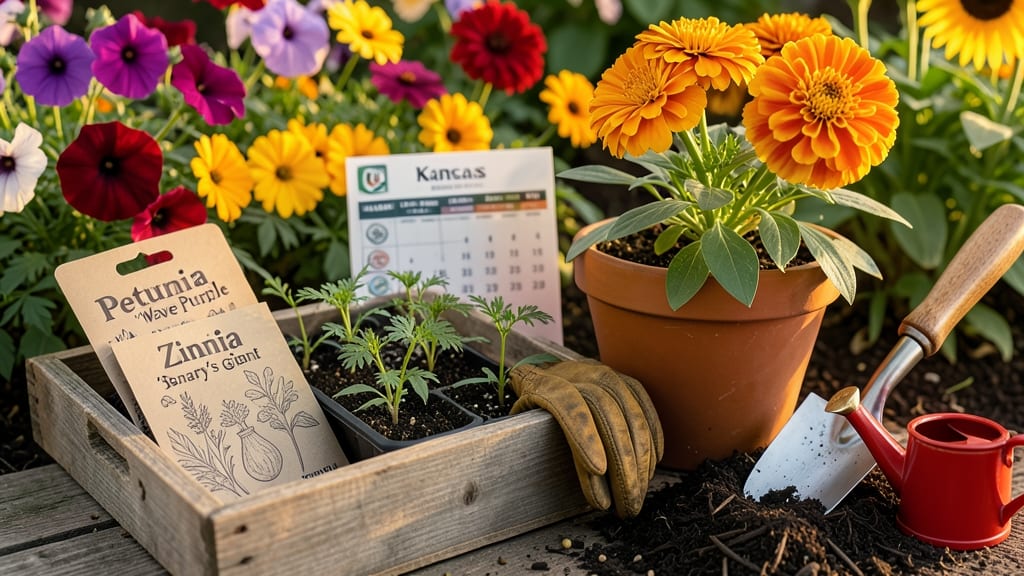
Planting flowers in Kansas at the right time means the difference between a vibrant garden and one that struggles to take root.
Timing is everything in Kansas gardening—plant too early, and frost will ruin your blooms; too late, and your flowers may never reach their full potential. Here’s your zone-by-zone guide to planting 🌸 flowers for vibrant, long-lasting gardens.
With USDA Zones 5b-7a, Kansas gardeners face a tight window between the last frost in mid-April and the brutal summer heat.
Annuals like marigolds and petunias thrive when planted in late spring, while perennials such as coneflowers and black-eyed Susans need an early start to establish roots before the heat sets in.
In this guide, you’ll find exact deadlines for spring and fall planting, soil prep tips, and the best flower varieties for Kansas’ unpredictable climate. Whether you’re in Wichita or Kansas City, these strategies will help you plant for perfection.
Kansas planting zones: when to start flowers by USDA Zone
Kansas spans USDA Zones 5b through 7a, meaning your planting deadlines vary depending on whether you're in western Kansas (warmer) or eastern Kansas (cooler).
The average last frost date ranges from mid-April in Zone 7a to late April in Zone 5b, while the first frost arrives between mid-October and early November. Timing your flowers correctly ensures they thrive, not just survive.
For spring-planted flowers, aim to get seeds or transplants in the ground 2-4 weeks before your last frost date. Fall planting should wrap up by 6-8 weeks before the first frost to allow roots to establish.
Soil temperatures also play a role—most flowers need at least 50°F soil to germinate, which typically happens by mid-April in Zone 7a but not until late April in Zone 5b.
Here’s a quick reference for your zone, including ideal planting windows, soil temperature thresholds, and common Kansas-friendly flowers to prioritize:
Annual flowers like marigolds and zinnias can handle being planted as early as 2-3 weeks before your last frost date, even if the soil isn’t perfectly warm. However, perennials and bulbs (e.g., tulips or coneflowers) need to wait until the soil reaches at least 50°F to avoid rot. For Zone 5b gardeners, this often means delaying spring planting until mid-April.
Fall planting offers a second chance for cool-season flowers like pansies or snapdragons. In Zone 7a, you can plant these as late as early October, while Zone 5b gardeners should finish by mid-September.
The key is to give plants 6-8 weeks to establish roots before winter sets in. Use row covers or mulch to protect tender varieties from early frosts.
If you’re unsure about your exact last frost date, check local weather records or use a frost calendar from your county extension
Best flowers to plant by season in Kansas (with exact dates)
Kansas gardeners know the struggle—planting flowers too early risks frost damage, while waiting too long can leave your garden sparse. The key is timing based on seasonal shifts and USDA Zones 5b-7a.
Spring-bloomers like tulips and daffodils need early starts, while heat-loving marigolds thrive when planted after the last frost. Below, I’ve broken down the exact dates and best varieties for each season to maximize your blooms.
For spring planting, focus on frost-hardy perennials and cool-season annuals. In summer, prioritize heat-tolerant flowers that won’t wilt under Kansas’ intense sun. Fall offers a second chance for bulbs and cool-season flowers, while winter prep sets the stage for next year’s garden.
Let’s dive into the seasonal calendar that’ll transform your Kansas garden into a year-round paradise.
- Early Spring (March 15-April 15): Plant tulips, daffodils, and crocuses as soon as soil is workable (40°F+). Perennials like coneflowers and black-eyed Susans can start indoors for transplanting after last frost.
- Late Spring (April 15-May 15): After last frost (April 15), sow annuals like marigolds, petunias, and zinnias. Transplant perennials and shrubs once soil warms to 55°F.
- Summer (June-August): Focus on heat-tolerant flowers like sunflowers, cosmos, and lantana. Succession plant annuals every 2-3 weeks for continuous blooms.
- Early Fall (August 15-September 15): Plant bulbs (e.g., tulips, daffodils) and cool-season annuals like pansies and snapdragons 6-8 weeks before first frost (Oct 15).
- Late Fall (October 1-November 15): Divide and transplant perennials like daylilies and hostas. Mulch heavily to protect roots from winter freeze-thaw cycles.
Each season in Kansas demands a different approach. Spring is all about early bloomers and root establishment, while summer requires drought-resistant varieties to survive the heat. Fall planting gives bulbs time to root before winter, and winter prep ensures your garden starts strong in spring.
For example, coneflowers and black-eyed Susans planted in early spring will thrive with minimal care, while marigolds sown in late spring will bloom nonstop until frost.
Spacing is critical in Kansas gardens. Annuals like marigolds need 12-18 inches apart for airflow, while perennials such as coneflowers can spread to 2-3 feet at maturity. Overcrowding leads to pests, diseases, and poor blooms, so always check plant tags for spacing guidelines.
In drought-prone areas, group plants with similar water needs to conserve resources.
Don’t forget about soil prep—Kansas’ clay-heavy soil benefits from compost and organic matter to improve drainage. Before planting, amend soil with 2-3 inches of compost and test pH (most flowers prefer 6.0-7.0). For container gardening, use a well-draining mix with perlite or sand to prevent root rot.
With these seasonal deadlines and planting tips, your Kansas garden will burst with color from spring to fall. Whether you’re a beginner or a seasoned gardener, nailing the timing ensures your flowers thrive, not just survive. Happy planting! 🌻