
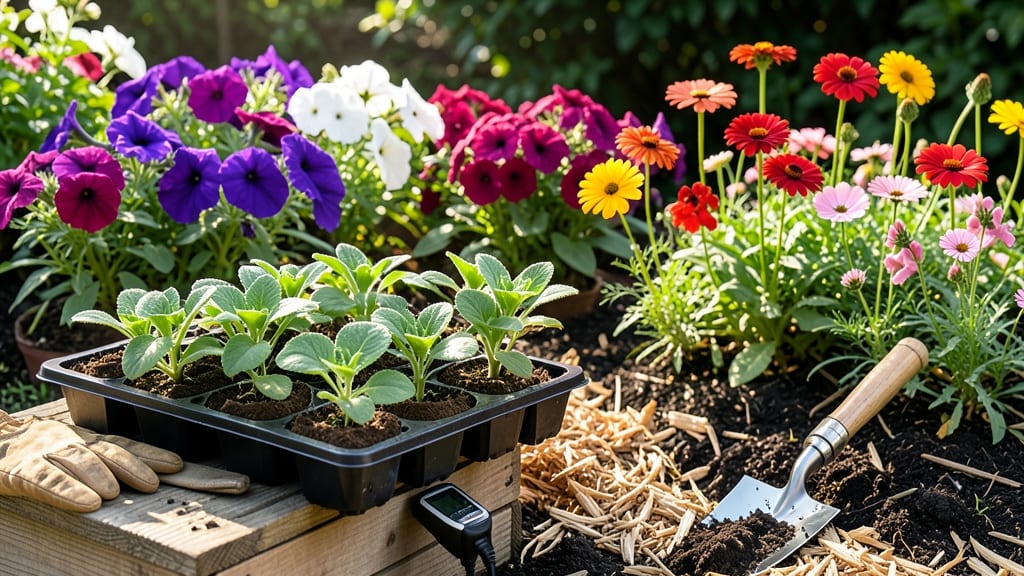
When to Plant Flowers in NC: Zone 7b Deadlines for Full-Bloom Success

Flowers

When to Plant Flowers in NC: Zone 7b Deadlines for Full-Bloom Success

Planting flowers in North Carolina at the right time means the difference between a garden that bursts with color and one that wilts before it blooms.

If you’ve ever waited eagerly for petals to unfurl, only to watch them wither under an unexpected frost or struggle in the summer heat, you know how critical timing is.

North Carolina’s Zone 7b climate offers a narrow window to get it right—and missing it can leave your garden looking half-hearted.

From the Coastal Plain’s humidity to the Mountains’ cooler evenings, each region has its own rhythm. Whether you’re sowing seeds for spring blooms or transplanting perennials in fall, the key is knowing when soil warms, frost dates shift, and which flowers thrive in NC’s heat.

Here’s your region-specific schedule to ensure every plant gets the perfect start.

You’ll discover the exact months to plant annuals, perennials, and bulbs—plus how to adjust for microclimates like Raleigh’s urban heat islands or Asheville’s high-altitude chill. Let’s turn your garden into a year-round showstopper, without the guesswork.

🌱 When to Plant Flowers
Jan ❄️
Feb ❄️
Mar 🌱
Apr 🌱
May 🌱
Jun 🌱
Jul ☀️
Aug ☀️
Sep 🍂
Oct 🍂
Nov 🍂
Dec ❄️
Ideal Time
Also Good

NC zone 7b flower planting calendar: month-by-month deadlines for best blooms

North Carolina’s Zone 7b offers a long growing season—typically from mid-March to early December—but precise timing prevents frost damage or heat stress. The average last frost date ranges from March 15 (coastal) to April 1 (mountains), while the first frost arrives between November 15-30.

Adjust these dates based on your microclimate: Raleigh leans toward earlier planting, while Asheville’s higher elevation delays warm-season crops.

For annuals, focus on cool-season varieties (like pansies and snapdragons) in early spring and heat-loving types (zinnias, marigolds) in late spring. Perennials thrive when planted in early spring or fall, while bulbs (daffodils, tulips) need fall planting for spring blooms.

Below, I’ve broken down the month-by-month deadlines for your NC garden, including regional tweaks for Raleigh, Charlotte, and Asheville.

Pro Tip: Use soil thermometers—most seeds need 60°F+ soil for germination. In Raleigh, aim for April 15 for warm-season plants, while Asheville gardeners should wait until May 1 to avoid late frosts. Heat-sensitive varieties (like impatiens) must go in after Memorial Day in all regions.

How to adjust planting times for NC’s microclimates: coastal vs. Piedmont vs. Mountains

North Carolina’s diverse geography creates three distinct gardening worlds: the humid Coastal Plain, the moderate Piedmont, and the cooler Mountains. What works for a Coastal Plain zinnias in Wilmington might fail in Asheville’s high-altitude gardens—or vice versa.

The key difference? Elevation shifts frost dates by weeks, while soil temperature lags behind air temperature in mountainous areas. Your neighbor’s April planting schedule could mean frost damage in your yard if you’re just 500 feet higher.

Let’s break down how to adjust your planting timeline based on where you live. The Coastal Plain (Zones 8a-8b) has longer growing seasons and warmer soils, while the Mountains (Zones 6b-7a) face shorter seasons and cooler nights.

Even within the Piedmont (Zone 7b), urban heat islands can push planting dates 2-3 weeks earlier than rural areas. Use this guide to match your microclimate—and avoid the heartbreak of wilted seedlings or stunted blooms.

🌱Pro Tip: Check the NC State Climate Office’s frost maps for your exact location. Coastal areas average 30-45 frost-free days earlier than the Mountains.

Month Plant Type Raleigh Deadline Charlotte Deadline Asheville Deadline Notes
March Cool-Season Annuals March 1-15 March 1-10 March 15-30 Pansies, snapdragons, lettuce (edging)
March Perennials March 15-April 15 March 20-April 10 April 1-15 Coneflowers, black-eyed Susans
April Warm-Season Annuals April 15-May 1 April 20-May 5 May 1-15 Zinnias, marigolds, petunias
May Heat-Sensitive Annuals After May 15 After May 20 After June 1 Impatiens, begonias, coleus
September Fall Bulbs September 1-15 September 1-10 September 15-30
Region Key Climate Factor Adjust Planting By Example Plant Shift
Coastal Plain Warmer soil, longer frost-free season Start 2-3 weeks earlier Impatiens: March 15 (vs. April 1 in Piedmont)
Piedmont (Zone 7b) Moderate temps, standard frost dates Follow last frost date (March 15) Zinnias: April 1 (after soil warms)
Mountains (Zones 6b-7a) Cooler nights, shorter season Delay 2-4 weeks later Marigolds: April 15 (vs. March 20 in Piedmont)
Urban Heat Islands Microclimate 5-10°F warmer Start 1-2 weeks earlier Petunias: March 1 (vs. March 15 in suburbs)

For heat-loving annuals like geraniums or coleus, the Coastal Plain’s early start pays off. But in the Mountains, opt for cold-hardy varieties like black-eyed Susans or Russian sage, which tolerate cooler soils.

Even within the Piedmont, elevation changes matter: A garden at 1,000 feet in the western Piedmont may need a 2-week delay compared to Raleigh’s lower elevation.

🌿Soil Temperature Matters More Than Air Temp: Use a soil thermometer to confirm readiness. Coastal soils hit 60°F (ideal for warm-season flowers) by mid-March, while Mountain soils may not reach it until mid-April.

Plant too soon, and roots will struggle to absorb water—leading to leggy, weak stems and fewer blooms.

Adjust your schedule for fall planting too. Coastal gardeners can sow cool-season flowers like pansies as early as September 15, while Mountain gardeners should wait until October 1 to avoid early frosts.

Pro tip: Mulch heavily in fall—it buys you 2-3 extra weeks of growing time by insulating roots.

☀️Final Rule: If your yard gets more shade or wind (common in Mountain coves), add another 1-2 weeks to your planting timeline. Microclimates within microclimates mean even small adjustments can mean the difference between a bountiful border and a brownout**.

Test a few plants early, and let their growth guide your full-season schedule!

★★★★★5.0(10 reviews)
Categories Flowers