
Flowers
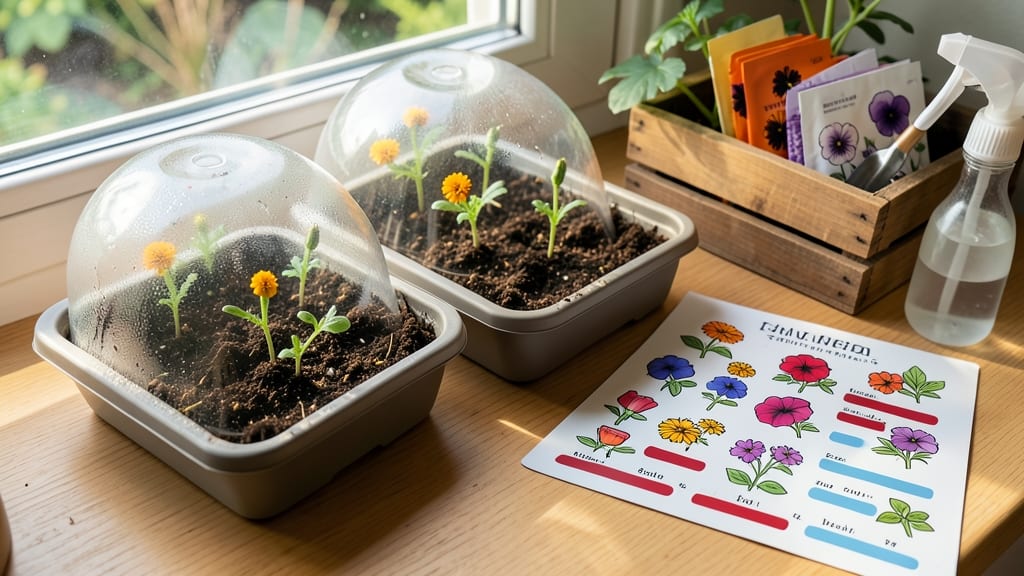
Starting with **the right *when to start flower seeds indoors chart*** ensures your 🌸 blooms arrive on schedule—miss the window, and you risk leggy seedlings or flowers that bolt before summer even begins.
Picture this: You’ve spent weeks nurturing delicate seedlings, only to transplant them too late and watch them struggle in the heat. Or worse, you rush them and end up with tiny, weak plants that never reach their full potential.
The difference between success and disappointment often comes down to timing—and a little planning.
This zone-specific chart breaks down exactly when to start flower seeds indoors for USDA zones 3 through 10, accounting for frost dates, flower maturity, and regional climate quirks. Whether you’re growing annuals like marigolds or perennials like coneflowers, the right start date is the foundation of a thriving garden.
Below, you’ll find a clear countdown calendar, key adjustments for high-altitude zones, and the most common mistakes to avoid—so you can confidently say goodbye to guesswork and hello to a garden bursting with color.
Zone-by-zone flower seed starting timeline chart
Getting your flower seeds indoors at the right time ensures strong, healthy seedlings ready for transplanting when the weather warms up. Miss the window by even a few weeks, and you risk leggy, weak plants that struggle to bloom.
This chart breaks down the optimal indoor starting dates for popular flowers across USDA hardiness zones 3-10, accounting for your local frost dates and plant maturity timelines.
Each zone has unique challenges—Zone 3 gardeners need to start early to beat late frosts, while Zone 10 growers can extend seasons with staggered plantings. Below, you’ll find a clear timeline for annuals, perennials, and bulbs, including when to sow, transplant, and harden off seedlings for peak performance.
Pro Tip: Always check your last frost date (use the USDA Plant Hardiness Zone Map) and adjust these dates by ±2 weeks if your microclimate runs warmer or colder than average. For example, high-altitude zones (like Zone 5 at 5,000 ft) may need seeds started 4-6 weeks earlier than the chart suggests.
For perennials and bulbs, timing shifts slightly. Most perennial flowers
Key factors that adjust your flower seed starting dates
Getting your flower seed starting dates right isn't just about checking a calendar—it's about understanding how your local climate, flower maturity timelines, and temperature fluctuations all interact.
For example, a 60-day marigold needs a completely different start date than a 90-day sunflower, even if they share the same frost-free window.
In my zone 6a garden, I’ve learned the hard way that rushing a long-season variety like hollyhocks (120 days) can leave me with sad, stunted plants by summer.
The first factor is your last frost date, which varies wildly even within the same USDA zone. A high-altitude location in zone 6 might have frost lingering until June 1, while a valley just 50 miles away could be frost-free by May 15.
Then there’s flower maturity time—annuals like pansies (50 days) can start just 4-6 weeks indoors, while perennials like black-eyed Susans (90 days) need an 8-10 week head start. Ignoring these differences is how I ended up with bolted lettuce and leggy basil in my first garden!
Microclimates add another layer of complexity. A south-facing wall can create a 10°F warmer microclimate than your yard’s average, allowing you to start 1-2 weeks earlier.
Meanwhile, high-altitude zones (like Denver at 5,280 ft) often have cooler soil temps, so I adjust my start dates 2 weeks later than the standard chart suggests.
Even something as simple as indoor heat fluctuations from a nearby radiator can trick seedlings into growing too fast—leading to weak stems that flop when transplanted.
- 🌡️ Temperature Rules: Maintain 65-75°F soil temps for germination. Use a heat mat for slow starters like snapdragons (need 70°F+).
- ❄️ Frost Date Flexibility: Subtract flower maturity days from your last frost date—e.g., 60-day zinnias = start 60 days before frost. For 90-day dahlias, add 2-3 weeks buffer.
- 🏔️ High-Altitude Adjustments: Add 10-14 days to start dates if your elevation is 3,000+ ft. Example: Zone 5 at sea level starts peony seeds in March; at 6,000 ft, wait until April 1.
- 🌿 Microclimate Tweaks: Start 1-2 weeks earlier in sunny microclimates (e.g., near fences/walls). Delay by 1 week in shady or windy spots.
- 📅 Staggered Planting: For long-season crops (e.g., cosmos, 100+ days), start half indoors 8 weeks before frost and half 4 weeks before frost for extended blooms.
Another critical factor is seedling care consistency. I’ve found that overwatering in the first 2 weeks can cause damping off, while underwatering leads to weak roots that struggle when transplanted. My trick?
Use a moisture meter for the first 30 days—if the top inch is dry, it’s time to water. Also, light is non-negotiable: Seedlings need 12-16 hours of light daily. Without it, they’ll stretch toward your window like teenagers reaching for candy, becoming leggy and top-heavy.
I solved this by investing in LED grow lights on a timer, which cut my stretching issues by 80%.
Don’t forget about transplant shock. Even the most perfectly timed seedlings can fail if they’re not hardened off properly. I start 7-10 days before transplanting by moving trays outside for 2-3 hours daily, gradually increasing time.
For heat-sensitive flowers like petunias, I avoid hardening off in 90°F+ weather—instead, I do it in the early morning or evening to prevent stress. This small adjustment has saved me from losing dozens of seedlings to wilting in past seasons.
Finally, regional climate quirks can throw off even the best-laid plans. In my area, unpredictable spring rains can delay outdoor planting by 2-3 weeks, so I always have a backup batch of seeds started 2 weeks later as insurance.
And if you’re in a humid climate (like the Southeast), fungal diseases like powdery mildew can strike fast—so I avoid overhead watering and use neem oil as a preventative spray.
By accounting for these factors, you’ll turn guesswork into garden gold**—and enjoy a summer bursting with blooms instead of bolting disappointments.