
Flowers
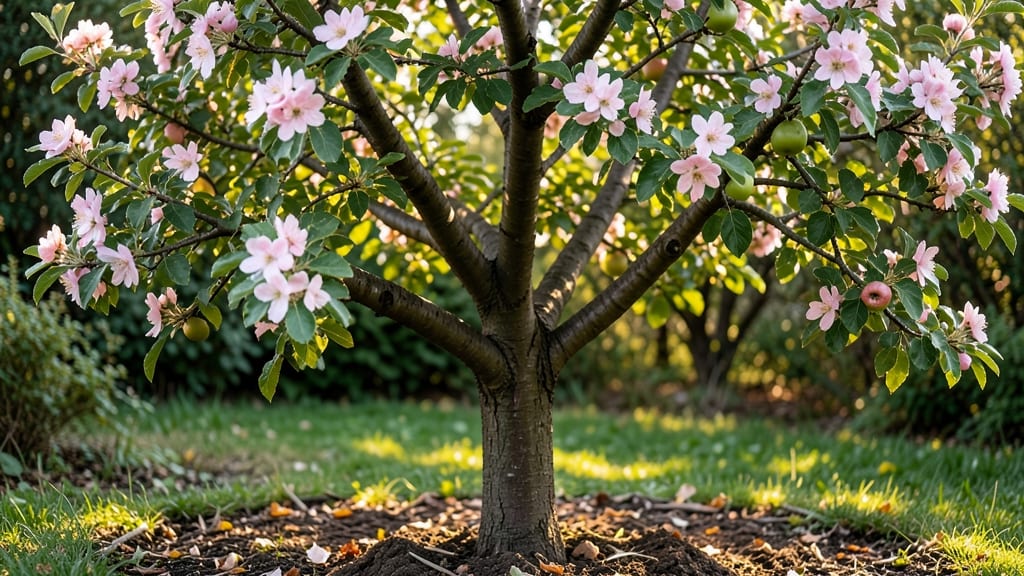
Apple tree flowers turning into fruit depends on the right pollination process, timing, and care—here’s how to make every blossom count 🍎.
Did you know that 90% of apple tree flowers never develop into fruit? The secret lies in understanding how pollination works and what your tree really needs to set fruit successfully. Without the right conditions, those delicate blossoms simply drop away, leaving you with empty branches.
From self-pollinating varieties to the role of bees and weather, small details like temperature, sunlight, and even pruning can make or break your harvest. In this guide, I’ll walk you through the science, show you how to boost pollination, and help you avoid common mistakes that waste your tree’s energy.
Ready to turn those pretty spring flowers into a heavy harvest? You’ll learn when to fertilize, how to hand-pollinate if needed, and what to watch for when blossoms start falling. Let’s get your apple tree working smarter, not harder.
The science behind apple tree flower pollination and fruit development
Every spring, apple trees burst into pink and white blossoms, creating a stunning display—but only a fraction of those flowers will become fruit. The reason? A complex pollination process that requires precise timing, ideal conditions, and sometimes a little help from nature (or you!).
Understanding how apple tree flowers transform into fruit is the first step to maximizing your harvest, whether you have a single tree or an orchard.
Apple tree flowers are hermaphroditic, meaning each bloom contains both male and female reproductive parts. However, most apple varieties rely on cross-pollination—where pollen from one tree fertilizes the flowers of another—to produce fruit.
This is why many gardeners with just one apple tree end up with sparse harvests. The science behind this process involves flower anatomy, environmental cues, and even genetic compatibility between varieties.
Here’s how it works: When a bee or other pollinator visits an apple blossom, it picks up pollen grains from the anthers (male parts) and transfers them to the stigma (female part) of another flower. Once pollinated, the flower’s ovary begins to develop into a tiny fruit.
But this is just the beginning—fruit set depends on more than just pollination. Temperature, sunlight, and even the tree’s overall health play critical roles in whether those fertilized flowers will mature into apples.
The first challenge is flower drop, where many blooms fall off naturally before setting fruit. This is normal—apple trees are selective about which flowers they invest energy in. However, if more than 50% of flowers drop, it’s often a sign of poor pollination, stress, or environmental issues.
For example, cold spring nights below 40°F can damage pollen or reduce bee activity, while extreme heat above 85°F can cause flowers to wither before pollination occurs.
Not all apple trees require cross-pollination. Some self-pollinating varieties, like 'Liberty' or 'Enterprise', can produce fruit with just one tree, though yields may be lower.
However, most popular varieties—such as 'Fuji', 'Gala', or 'Granny Smith'—need a second tree of a compatible variety within 50-100 feet for optimal fruit set.
Even then, genetic compatibility matters; planting a 'Red Delicious' next to a 'Golden Delicious' won’t work because their flowering times or pollen types don’t align.
Once pollination succeeds, the real work begins. The fertilized ovary starts producing auxin hormones, which signal the tree to develop the fruit. During this phase, the tree must balance nutrient allocation—directing energy to growing apples while maintaining leaf production for photosynthesis.
This is why pruning and fertilization in early spring are critical. Too many fruits on a branch can lead to small, underdeveloped apples, while too few means wasted energy. The tree’s goal? Produce 6-12 apples per foot of branch for optimal size and quality.
Environmental factors continue to play a role even after pollination. For instance, consistent rainfall during fruit set can cause blossom end rot or crack apples, while drought stress can lead to premature fruit drop. Similarly, pest pressure—like apple maggot flies or codling moths—can damage developing fruit, reducing yields.
Even wind pollution from nearby roads can weaken flowers, making them less receptive to pollination. These factors explain why some years yield abundant harvests while others produce barely any fruit, despite identical care.
One of the most surprising aspects of apple tree pollination is how
How to boost pollination for maximum apple fruit production
If your apple tree is loaded with blossoms but few fruits develop, the issue likely lies in pollination success. Even healthy trees struggle when bees aren’t around or environmental conditions aren’t ideal.
The good news? With a few targeted strategies, you can dramatically improve fruit set—even with just one tree in your yard.
First, let’s address the biggest hurdle: 90% of apple flowers fail to become fruit due to poor pollination. This happens when pollen isn’t transferred between flowers, often because of weather, lack of pollinators, or tree health issues.
The key is creating an environment where every blossom has the best chance to develop into an apple.
- 🐝 Step 1: Attract pollinators like bees and butterflies with native flowering plants (e.g., lavender, clover, or dill) near your tree.
- 🌿 Step 2: Hand-pollinate if bees are scarce—use a soft paintbrush to transfer pollen between flowers on cloudy, dry mornings.
- ✂️ Step 3: Prune your tree in late winter to improve airflow and sunlight, which boosts flower production and accessibility for pollinators.
- 💧 Step 4: Water deeply once a week during bloom to prevent stress, and add balanced fertilizer (10-10-10) in early spring.
- 🌡️ Step 5: Monitor weather—cool, dry days (50–70°F) are ideal for pollination. If rain washes away pollen, hand-pollinate again.
For gardeners with only one apple tree, cross-pollination becomes tricky since most varieties need another tree for optimal fruit set. Planting a second tree with compatible varieties (e.g., ‘Honeycrisp’ and ‘Gala’) ensures better pollination.
If that’s not possible, hand-pollination is your best bet—just grab a small brush and gently transfer pollen between flowers.
Companion planting is another game-changer. Surround your apple tree with bee-friendly plants like borage, alyssum, or marigolds to attract pollinators. These plants also deter pests like aphids, which can reduce flower health. Place them within 10–15 feet of your tree for maximum effect.
Don’t overlook tree health—stressed trees produce fewer flowers and weaker fruit. Ensure your apple tree gets 6–8 hours of sunlight daily, deep watering, and a balanced fertilizer in early spring. Avoid over-fertilizing with nitrogen, which promotes leafy growth at the expense of flowers.
Finally, keep an eye on blossom drop, a natural process where excess flowers fall to focus energy on developing fruit. However, if you see sudden, heavy drop (more than 50% of blossoms), it may signal pollination failure, pest damage, or environmental stress.
Adjust your approach accordingly—whether that means hand-pollinating or improving tree conditions.