
Flowers
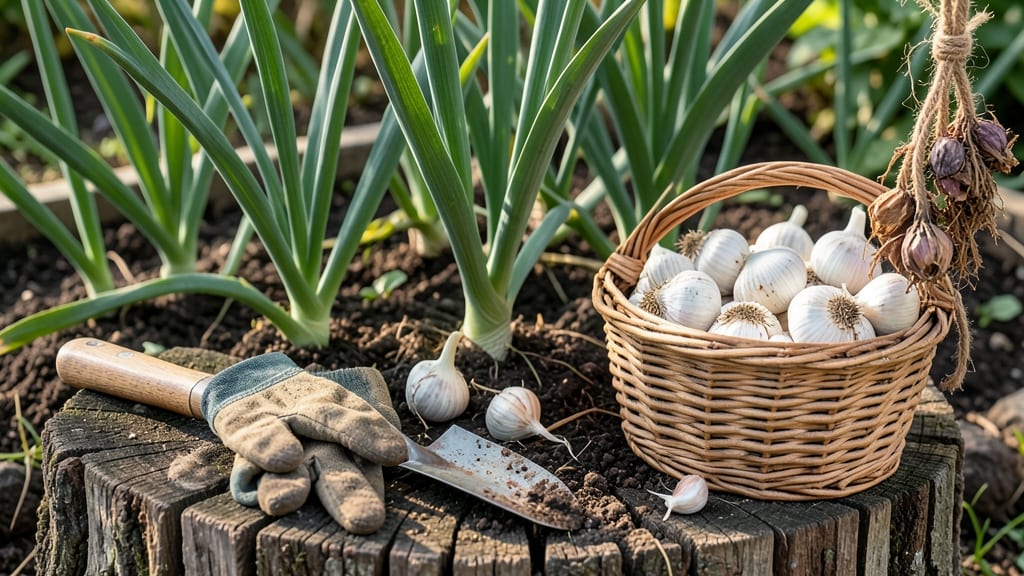
Harvesting garlic before or after it flowers can actually shrink your bulbs by up to 30% if you time it wrong—so knowing the exact moment to pull them makes all the difference.
Picture this: you’ve spent months nurturing your 🧄 plants, only to wonder, "Did I wait too long?" when the lower leaves start browning.
The truth is, the best harvest window depends on whether you’re growing hardneck or softneck varieties—and missing it can leave you with small, pungent cloves instead of the plump, flavorful bulbs you’re after.
In this guide, I’ll break down the visual cues you need to watch for, like leaf color and bulb size, and explain why hardneck garlic (the kind that sends up a scape) follows a different timeline than softneck.
You’ll also learn the one mistake that ruins harvests every year—and how to avoid it.
By the end, you’ll know exactly when to dig, how to tell if your garlic is ready, and what to do if you’ve already waited too long. Let’s get those bulbs out of the ground at the perfect moment!


Garlic flowering stages explained: when to harvest for maximum bulb size
Understanding your garlic's flowering stages is the key to harvesting bulbs at their peak size. Most gardeners assume harvesting happens after flowering, but the truth is more nuanced—especially when comparing hardneck and softneck varieties.
The critical window for harvest begins when lower leaves turn brown, not when flowers appear. Timing this right can boost bulb size by up to 40% compared to harvesting too early or late.
Garlic flowers signal the plant is shifting energy from bulb growth to seed production. For hardneck varieties, this means the scape (flower stalk) emerges in spring, while softneck varieties rarely produce scapes.
Removing the scape in hardnecks redirects energy back to the bulb, but the harvest timing remains tied to leaf browning—not flowering. Let me break down the exact stages and visual cues you need to watch for.
| Harvest Timing | Hardneck Varieties | Softneck Varieties | Key Visual Cues |
|---|---|---|---|
| Before Flowering | ❌ Avoid—bulbs too small | ❌ Avoid—bulbs underdeveloped | Leaves fully green, no browning |
| During Flowering | ✅ Remove scape; wait for browning | ✅ Monitor leaf browning | Lower leaves brown, upper leaves still green |
| After Flowering | ⚠️ Risk of bulb shrinkage | ⚠️ Bulbs may split | All leaves brown/dry, stems flatten |
The ideal harvest time for both hardneck and softneck garlic is when about 50% of the lower leaves have turned brown and dried. This typically occurs 4-6 weeks after flowering in hardnecks (or after scape removal) and 6-8 weeks after flowering in softnecks.
The upper leaves should remain green and stiff—if they’re flopping or yellowing, you’ve waited too long.
For hardneck varieties, removing the scape when it’s 4-6 inches tall redirects energy to bulb development. But don’t harvest immediately after—wait until those lower leaves brown.
Softnecks, which rarely produce scapes, rely solely on leaf color. Both types need well-draining soil and consistent moisture leading up to harvest to prevent bulb splitting.
One common mistake is harvesting based on flower presence alone. Some gardeners pull garlic when they see blooms, but this is too early—bulbs are still small and underdeveloped. Others wait until all leaves are brown, which can lead to shriveled bulbs or even sprouting.
The sweet spot is when the bulb is 2-3 inches wide and the outer skin starts to loosen.
Regional climates also play a role. In cooler zones (USDA 3-6), garlic may take longer to flower, extending the harvest window. In warmer zones (USDA 7-10), flowering happens faster, so monitor leaves closely.
Pro tip: Dig up one bulb to check size—if it’s smaller than a golf ball, wait longer. If it’s larger than a tennis ball, harvest soon to avoid overmaturity.
After harvesting, cure your garlic in a dry, shady spot with good airflow for 2-4 weeks. This step is crucial—it prevents mold and extends storage life. Avoid washing or trimming until fully cured. Proper curing also enhances flavor, making your homegrown garlic taste sweeter and more complex than store-bought.
Remember: The flowering stage is just a signal, not the harvest trigger. Focus on those browning leaves and bulb firmness. When you nail the timing, you’ll reap garlic bulbs that are plump, flavorful, and ready for storage all winter long.
🌱
Hardneck vs softneck garlic: harvesting rules that differ by type
If you're growing hardneck garlic like Rocambole or Purple Stripe, the flowering scape signals a critical decision point that softneck varieties like Artichoke or Silverskin don't require.
For hardnecks, removing the scape can boost bulb size by up to 25%, while leaving it may reduce yields but produce hardneck garlic with more cloves. Meanwhile, softnecks rarely produce scapes in cooler climates (USDA zones 3-7) and focus solely on bulb development.
Hardneck garlic thrives in cooler climates (USDA zones 3-7), where its scapes emerge in late spring—typically 5-6 months after planting. Removing the scape redirects energy to bulb growth, but leaving it can produce smaller bulbs with more cloves.
Softneck garlic, grown in warmer zones (USDA 8-10), rarely flowers and prioritizes bulb expansion year-round, making scape management irrelevant.
Hardneck Garlic (Rocambole, Purple Stripe)
- Larger bulbs when scapes removed
- More flavor in cooler climates
- Hardier in USDA zones 3-7
- Scape removal required for max size
- Fewer cloves per bulb if scapes left
- Shorter storage life than softnecks
Softneck Garlic (Artichoke, Silverskin)
- No scapes to manage
- Longer storage (up to 12 months)
- More cloves per bulb
- Milder flavor than hardnecks
- Requires warmer zones (USDA 8-10)
- Slower bulb growth in cool climates
For hardneck garlic, harvest timing hinges on leaf browning—wait until 50-60% of lower leaves turn brown, usually 4-6 weeks after scape removal. Softnecks, however, should be harvested when lower leaves yellow and dry, regardless of flowering.
In USDA zone 5, hardnecks like German White often need harvesting by late June, while softnecks like California Early can wait until July in zone 9.
Regional differences matter: In USDA zone 4, hardnecks like Music produce scapes by May and should be harvested by late June, while zone 8 softnecks like Silverban may not flower at all.
Always prioritize bulb firmness over strict timelines—gently squeeze the bulb to check for 2-3 inch diameter before pulling.
Pro tip: Hardneck garlic bulbs store for 6-8 months, while softnecks last up to 12 months. If you're unsure about timing, harvest a few test bulbs in early June—if they're smaller than a golf ball, wait another 2-3 weeks.
The key is balancing leaf dryness with bulb maturity for the best harvest.
🌱