
Flowers
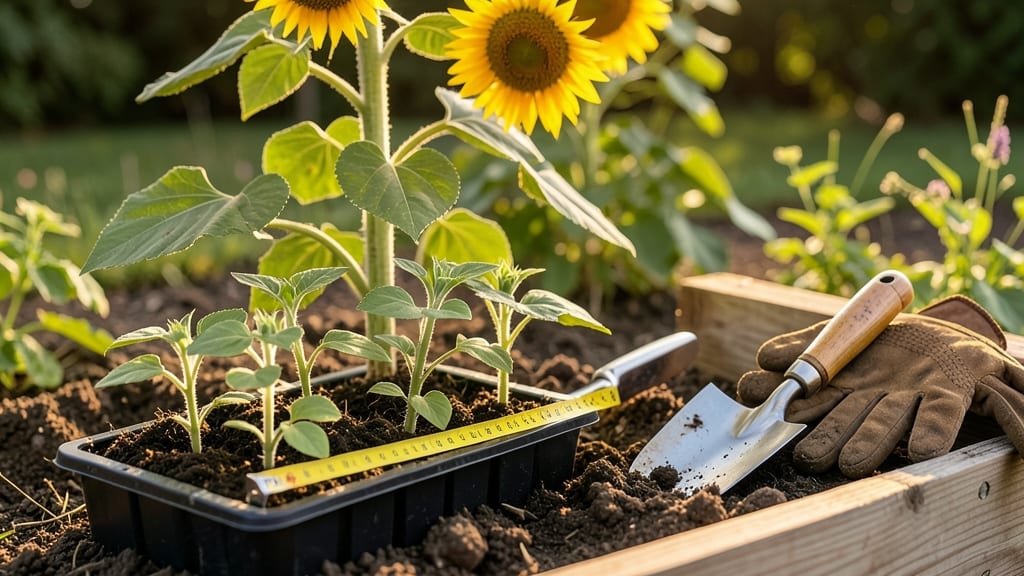
To plant sunflowers the right way, you’ll need to know how far apart should sunflowers be planted—typically 12 to 24 inches apart, depending on the variety. Dwarf types need less room, while giants like 'Mammoth' demand extra elbow space for their towering ambitions.
Sunflowers aren’t just beautiful—they’re nature’s skyscrapers, but only if you give them the right space to reach their full towering potential. Plant them too close, and you’ll end up with weak stems and disappointed blooms.
This guide breaks down the exact spacing for dwarf, semi-dwarf, and giant varieties, plus how to adjust for soil type and climate so your sunflowers grow strong and straight. No more guessing—just science-backed spacing for the tallest, healthiest stems.
You’ll also learn how to spot overcrowding early, fix common mistakes, and even save space with companion planting. Ready to grow sunflowers that reach for the sky? Let’s get started.
Optimal sunflower spacing by variety: dwarf vs. giant sunflowers
Sunflowers thrive when given the right amount of space to grow strong stems and vibrant blooms. The spacing requirements vary dramatically between dwarf varieties and giant sunflowers, so knowing the exact measurements can make or break your harvest.
Too close, and your plants will compete for sunlight and nutrients, leading to weak stems that flop over—a gardener's nightmare for those towering varieties!
For dwarf sunflowers like 'Teddy Bear' or 'Moulin Rouge', tight spacing works because they top out at just 1-3 feet tall. But for giant varieties like 'Mammoth' or 'Russian Giant', you need to give them room to spread their roots and reach their full 10-14 foot potential.
Let’s break down the science-backed spacing for each type to ensure your sunflowers grow like champions.
Why spacing matters: Proper spacing ensures each plant gets enough sunlight for photosynthesis and adequate airflow to prevent fungal diseases. It also reduces competition for water and nutrients, leading to healthier stems and larger blooms. Think of it like giving each sunflower its own personal sunbeam!
Here’s the key rule: Space sunflowers based on their mature height. A general guideline is to allow 12-18 inches of space for every foot of height at maturity.
This means a 3-foot dwarf needs 3-5 feet of space, while a 12-foot giant requires 12-20 feet between plants. But let’s get specific with the numbers.
When planting dwarf sunflowers, you can get creative with spacing. For example, 'Little Becka' or 'Peppermint Twist' can be planted just 12 inches apart in a container or a small garden bed, making them perfect for urban gardeners or balcony planters.
Just ensure they get at least 6 hours of sunlight daily to avoid leggy growth.
For giant sunflowers, the stakes are higher—literally! Varieties like 'American Giant' or 'Russian Giant' need 6 feet of space to avoid shading each other.
If you’re growing them in rows, space the rows 8 feet apart to allow for easy access and to prevent the plants from leaning into each other. This spacing also helps with harvesting seed heads later in the season.
Pro tip: If you’re growing sunflowers for seed production, increase the spacing to 5-6 feet apart for giant varieties. This gives the plants room to develop larger seed heads and reduces the risk of disease spread.
Think of it as giving your sunflowers a luxury apartment instead of a cramped studio!
Don’t forget to consider your soil type when spacing. In clay soil, which drains poorly, you might need to space plants slightly wider to prevent root competition. Conversely, in sandy soil, where nutrients wash away quickly, closer spacing can help retain moisture and nutrients in the root zone.
Always amend your soil with compost before planting to give your sunflowers a strong start.
Finally, if you’re growing sunflowers in windy areas, increase the spacing by 20-30% to reduce the risk of lodging (when stems fall over). You can also use stakes or cages to support taller varieties.
This extra space ensures your sunflowers stay upright and continue basking in the sun like the champions they are.
With the right spacing, your sunflowers will reward you with taller stems, bigger blooms, and healthier seeds. So grab your measuring tape, mark your rows, and give those sunflowers the room they deserve to shine
How to adjust sunflower spacing for soil type and climate
Your sunflower spacing needs to change based on your soil type and local climate. Heavy clay soil compacts easily, while sandy soil drains too fast—both can stress sunflowers if you don’t adjust their space. Even windy regions require wider rows to prevent stems from bending or breaking under pressure.
For clay soil, increase spacing by 20-30% to allow roots to spread without suffocating.
In sandy soil, reduce spacing slightly since water drains quickly, but add mulch to retain moisture. Drought-prone areas benefit from wider rows to minimize competition for water, while humid climates may need tighter spacing to prevent fungal issues.
Tall varieties like 'Russian Giant' (up to 14 feet) need 24-36 inches between plants and 3-4 feet between rows. For wind-prone zones, plant in double rows spaced 18 inches apart, with 3 feet between row pairs. This creates a natural windbreak while maximizing sunlight exposure.
🌱 Adjust Sunflower Spacing by Soil & Climate
| Soil Type | Spacing Adjustment | Climate Factor | Action |
|---|---|---|---|
| Clay Soil | +20-30% | Compacted Roots | Space 18-24" |
| Sandy Soil | -10-15% | Fast Drainage | Space 12-18" |
| Drought-Prone | +30-50% | Water Stress | Space 24-36" |
| Windy Areas | Double Rows | Stem Lodging | 18" apart, 3' between rows |
💡 Pro Tip: Always mulch to improve soil structure and reduce water evaporation.
If you live in a high-wind area, consider staking tall varieties or planting them near a fence for support.
For heavy rain regions, raise beds slightly to prevent waterlogging, which weakens stems. Organic matter like compost improves clay soil’s drainage while helping sandy soil retain moisture—both adjustments reduce the need for extreme spacing changes.
For giant sunflowers in drought conditions, space plants 3 feet apart in rows 4 feet apart. This creates a microclimate where roots can access deeper water reserves. In humid climates, reduce spacing to 18 inches but ensure excellent airflow to prevent mildew.
Always test your soil’s drainage before planting. Dig a hole, fill it with water, and time how long it takes to drain. If it’s slower than 4 hours, amend with sand or perlite and increase spacing. For sandy soil, mix in compost to improve water retention without overcrowding.
With these adjustments, your sunflowers will grow straight and strong, reaching their full potential—no matter your soil or climate. Happy planting! 🌻