
How To
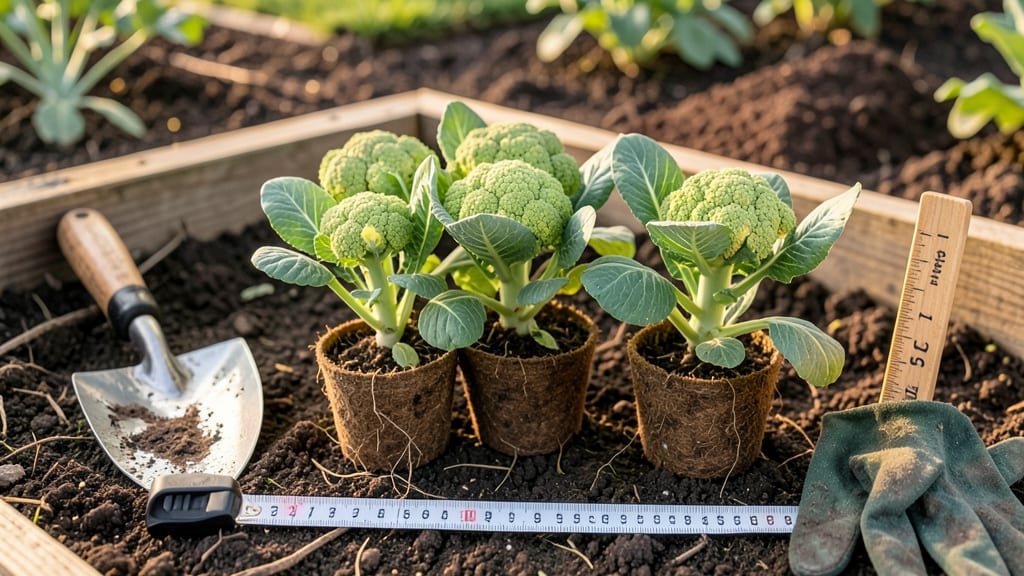
To plant cauliflower 🥬 the right distance apart ensures bigger heads, fewer pests, and a harvest you’ll actually want to eat—no more sad, stunted curds!
Struggling to grow perfect cauliflower heads? Proper spacing isn’t just about aesthetics—it directly impacts yield, disease prevention, and head size. Get the science-backed spacing rules to maximize your harvest this season.
Most gardeners space cauliflower 18–24 inches apart in rows that are 2–3 feet apart, but the exact distance depends on your variety. Compact types like ‘Snowball Y’ can squeeze into 12-inch spacing, while giant Romanesco need 30+ inches to avoid crowding.
Below, I break down spacing by variety, how to adjust for your soil, and companion plants that boost growth—so you can finally grow cauliflower that looks (and tastes) like it belongs in a grocery store.


Cauliflower spacing guidelines by variety and growth stage
Getting the cauliflower spacing right is one of the most critical steps for growing large, healthy heads. Too close, and you'll end up with small, misshapen curds and increased disease risk.
Too far apart, and you waste garden space. The ideal spacing depends on your cauliflower variety, whether you're direct sowing or transplanting, and your garden layout.
For most heading cauliflower varieties, proper spacing ensures good air circulation, which prevents rot and fungal diseases like downy mildew. Compact varieties need less room than large-headed types, and broccoli-like varieties (like broccolini) have different spacing needs.
Let's break down the science-backed guidelines to help you plan your cauliflower bed like a pro.
🌱
| Variety Type | Transplant Spacing (inches) | Direct Sowing Spacing (inches) | Row Spacing (feet) | Notes |
|---|---|---|---|---|
| Compact Varieties (e.g., 'Snowball Y Improved', 'Purple of Sicily') | 12-18" | 18-24" | 1.5-2" | Ideal for small gardens; heads under 6". |
| Standard Varieties (e.g., 'Snowball', 'White Magic') | 24-30" | 30-36" | 2-3" | Most common; heads 6-8". |
| Large Varieties (e.g., 'Romanesco', 'Chef's Choice') | 30-36" | 36-48" | 3" | Heads 8"+; needs extra space. |
| Broccoli-Like (e.g., 'Broccolini', 'Calabrese') | 18-24" | 24-30" | 1.5-2" | Taller, bushier growth; harvest multiple heads. |
| Succession Planting (All Types) | Same as above | Same as above | 1.5-2" | Plant every 2-3 weeks for continuous harvest. |
When transplanting cauliflower seedlings, the spacing between plants is crucial for head development.
For example, 'Snowball Y Improved', a compact variety, thrives with 18 inches between plants, while 'Chef's Choice', a large variety, needs 36 inches to develop its massive heads. Row spacing is equally important—aim for 2-3 feet between rows to allow for easy movement and airflow.
If you're direct sowing cauliflower seeds, you'll need to give them more room initially since they'll grow into their mature size. Seedlings should be 24-36 inches apart when planted directly, depending on the variety.
This extra space accounts for thinning later if needed, which is a common step to avoid overcrowding as plants mature.
One critical factor often overlooked is how spacing affects disease resistance. Crowded plants create a humid microclimate that traps moisture, promoting fungal diseases like black rot. Proper spacing ensures good air circulation, reducing the risk of leaf spots and mold.
For instance, 'Purple of Sicily', a compact variety, still needs 18 inches between plants to prevent these issues.
For container gardening, spacing becomes even more critical since you're limited by pot size. In a 5-gallon container, you can fit one compact cauliflower plant with 12-18 inches of space. Larger varieties will need 7.5-gallon or bigger containers with 24 inches of spacing.
Always ensure containers have drainage holes to prevent root rot, a common problem in crowded or poorly drained pots.
Another pro tip: interplanting with fast-growing crops like radishes or lettuce can maximize your garden space while waiting for cauliflower to mature. These companion plants use up early space and can be harvested before the cauliflower needs full room.
This technique is especially useful for small gardens or urban gardeners with limited space.
Finally, remember that soil fertility and moisture also play a role in how well your cauliflower responds to spacing. Well-fed plants with consistent watering can handle slightly tighter spacing without sacrificing head size.
However, poor soil conditions will stress plants, making them more susceptible to disease in crowded conditions. Always amend your soil
Common mistakes that stunt cauliflower growth (and how to fix them)
If your cauliflower heads are smaller than expected or your plants look stressed, spacing mistakes are likely the culprit. Overcrowding doesn’t just limit head size—it invites fungal diseases like clubroot and attracts pests like cabbage moths. The good news? Fixing spacing issues is simple once you know the red flags.
Poor air circulation is another silent killer. When plants are too close, humidity lingers on leaves, creating the perfect conditions for rot. I’ve seen gardens where cauliflower plants were packed like sardines, only to watch them develop black rot within weeks. The solution? Wider rows and proper plant placement.
Let’s tackle the most common spacing mistakes head-on. First, the biggest offender: ignoring variety-specific spacing needs. Not all cauliflower is created equal—compact varieties like ‘Purple of Sicily’ need 12-inch spacing, while giant types like ‘Romanesco’ demand 30+ inches. Misjudging this leads to stunted growth or wasted space.
⚠️ How Far Apart to Plant Cauliflower
Standard spacing: 18–24 inches apart in rows 2–3 feet apart
Compact varieties: 12 inches apart (e.g., 'Snowball Y')
Giant varieties: 30+ inches apart (e.g., 'Romanesco')
Row spacing: 2–3 feet for air circulation
Fix overcrowding: Thin seedlings to correct spacing at 4–6 weeks
Another mistake? Skipping row spacing adjustments for your climate. In humid regions, wider rows (up to 3 feet) improve airflow. Meanwhile, in dry areas, tighter rows (down to 18 inches) help retain moisture. I once grew cauliflower in Arizona—too-tight rows led to wilting despite daily watering.
Companion planting can also save your crop. Pair cauliflower with dwarf beans or thyme to deter pests naturally. Avoid planting near tomatoes or potatoes, which compete for nutrients and attract similar pests. A well-planned layout can double your yield while reducing stress on your plants.
Finally, don’t forget to thin seedlings early. Overlooking this step means you’re left with crowded plants that never reach their full potential. Use sharp scissors to snip seedlings at soil level, leaving the strongest stems. This small step can mean the difference between grocery-store-quality heads and sad, undersized curds.
With these fixes, your cauliflower will thrive—no more stunted growth or pest problems! 🥬