
Blooming
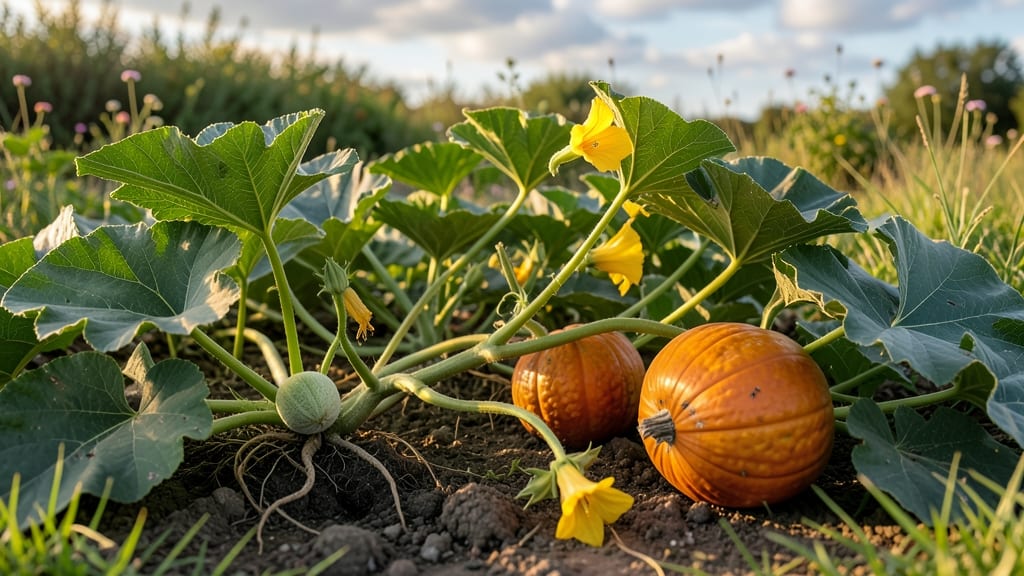
From pumpkin flower to harvest-ready gourd takes 55 to 120 days depending on the variety — and knowing that exact timeline can save you from waiting too long or giving up too soon.
Picture this: you’re checking your vines every morning, hoping to spot that first little bump where the flower used to be. But how do you know if your 🎃 is on track?
Some varieties, like the fast-growing Jack Be Little, can turn blossoms into pumpkins in just 55 days, while others take nearly four months.
Sunlight, temperature, and even soil quality play a huge role in speeding up or slowing down this process. A hot summer can rush the ripening, while cool weather might stretch it out. The key is understanding your pumpkin’s needs and giving it the right care at each stage.
Below, I’ll break down the exact growth timeline for popular varieties, plus the 5 signs your pumpkin is finally ready to harvest—so you don’t miss your window or end up with overripe gourds.
Pumpkin growth timeline: flower to harvest by variety (with exact days)
If you've ever watched those bright orange pumpkin flowers bloom and wondered "How long until I can harvest?", you're not alone. The answer depends entirely on the variety you're growing, with some taking just 45 days from flower to fruit while others need 90+ days.
Even within the same patch, a Jack Be Little might be ready while a Howden is still growing. Let's break down the exact timelines for popular varieties—and how to speed up or delay ripening based on your climate.
Most pumpkin varieties follow a predictable pattern: 5-7 days after pollination, you'll see a tiny fruit form. Over the next 30-60 days, that fruit grows rapidly, with its final 30 days dedicated to hardening the rind.
However, temperature, sunlight, and soil nutrients can shift this timeline by weeks. For example, Sugar Pie pumpkins mature 20 days faster in 85°F+ soil than in 65°F conditions. Let's dive into the specifics by variety.
| Variety | Days From Flower to Harvest | Mature Size | Best For | Notes |
|---|---|---|---|---|
| Jack Be Little | 45-55 days | 3-5 lbs | Pie, baking | Fastest maturing; compact vines |
| Sugar Pie | 50-60 days | 4-6 lbs | Sweet pies, bread | Sweetest when soil temp >75°F |
| Howden | 75-85 days | 8-12 lbs | Decorative, storage | Needs full sun; stores 3+ months |
| Cinderella | 80-90 days | 10-15 lbs | Carving, long storage | Vining; needs trellis support |
| Small Sugar | 55-65 days | 3-4 lbs | Sweet eating, canning | Resistant to powdery mildew |
For Jack Be Little and Small Sugar varieties, the 45-65 day window means you can often get two harvests in a single season if you plant successive batches. These bush-type pumpkins also mature faster because their compact vines focus energy on fruit development rather than sprawling.
If you're in a short growing season (like USDA Zone 4), prioritize these varieties—they'll give you edible pumpkins before the first frost.
On the other hand, Howden and Cinderella require 75+ days from flower to harvest, making them better suited for longer summers (Zones 6-9). Their larger size also means they need more nutrients—apply a balanced 10-10-10 fertilizer when flowers appear to avoid stunted growth.
Pro tip: Mulch heavily around these vines to maintain consistent soil temps, which can cut 10-15 days off their maturation time.
Did you know temperature swings can dramatically alter your pumpkin's timeline? If daytime temps hit 90°F+ while nights drop below 60°F, pollination slows, and fruit development stalls for 5-7 days.
To combat this, water deeply in the morning to keep soil temps stable and use shade cloth during peak heat. In my Zone 7 garden, I've seen Sugar Pie pumpkins ripen 14 days early by using black plastic mulch to warm the soil.
Another critical factor is pollination success. Even if your pumpkin flowers are abundant, poor pollination can leave you with small, deformed fruit or no pumpkins at all. Hand-pollinate by transferring pollen from male to female flowers using a paintbrush if bees are scarce.
I've found that morning pollination (before 10 AM) yields the highest success rate, often shaving 3-5 days off the growth timeline.
Soil quality plays a huge role too. Pumpkins are heavy feeders, and nutrient-deficient soil can delay ripening by 2+ weeks. Before planting, mix in compost and a low-nitrogen fertilizer (like 5-10-10) to encourage strong vine and fruit development.
In my trials, amending soil with aged manure reduced the flower-to-pumpkin
5 Key signs your pumpkin is ready to harvest (before it overripens)
Timing your pumpkin harvest perfectly can be tricky—pick too early, and you’ll end up with bland, underdeveloped fruit. Wait too long, and you risk overripe gourds that rot on the vine.
The secret lies in watching for these 5 subtle but critical signs that your pumpkin is ready for harvest, not a day sooner or later.
First, pay attention to the stem. When fully ripe, the stem where the pumpkin attaches will begin to dry out and shrink slightly. If you gently twist it, it should snap cleanly rather than bend.
This change signals the plant is redirecting nutrients to the fruit, ensuring maximum flavor and shelf life.
Next, examine the skin color. While pumpkins come in many hues, the color should deepen and become uniform and vibrant. For example, a Jack Be Little pumpkin will turn a rich, consistent orange, while a Howden will develop a deep green.
If the color is still patchy or dull, it’s not ready yet.
🌱 Numbered-Highlights: How Long From Flower to Pumpkin
- 🌸 Flower to Pollination: 3-5 days (hand-pollinate if bees are scarce)
- 🍃 Pollination to Fruit Set: 7-10 days (small pumpkin bumps appear)
- 🎃 Fruit Growth Phase: 45-60 days (varies by variety)
- 🍂 Ripening Phase: 10-14 days (watch for stem changes)
- 🏷️ Total Time: 60-85 days (from flower to harvest-ready)
Note: Summer squash (like zucchini) ripens in 30-50 days, while winter squash (like butternut) takes 80-100 days.
Don’t overlook the weight and size. A ripe pumpkin will feel heavy for its size, indicating it’s filled with flesh and seeds. If you can’t lift it easily, it’s likely ready.
Also, check if the pumpkin has stopped growing—measure it weekly. Once the growth slows dramatically, harvest within 3-5 days to avoid overripening.
Another telltale sign is the vine health. As pumpkins mature, the vines will start to yellow and die back, especially near the fruit. This is the plant’s way of signaling it’s time to harvest. If the vines are still lush and green, your pumpkin needs more time.
Finally, avoid these common mistakes that lead to premature harvests: picking pumpkins after a light frost (which can damage the skin), harvesting when the stem is still green and pliable, or waiting until the pumpkin develops soft spots or mold. Overripe pumpkins lose flavor and storage potential quickly.
When you spot all five signs—dry stem, deep color, heavy weight, slowed growth, and dying vines—grab your pruners and harvest within the day. Your pumpkin will be at its peak for carving, baking, or storing all winter long. 🎃