
Watering
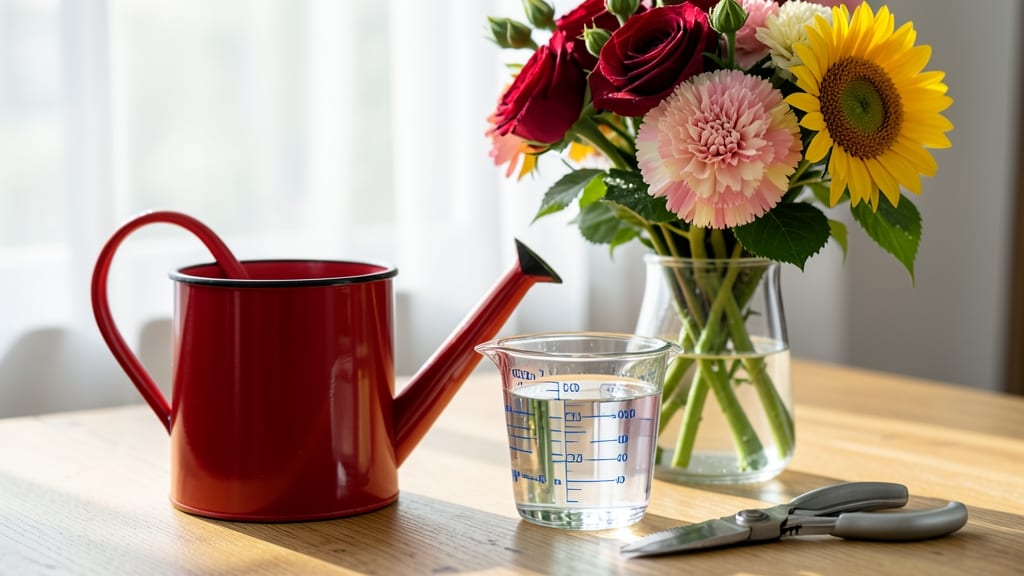
Flowers in a vase need 1-2 cups of fresh water every 1-2 days to stay vibrant, but the real trick is how you maintain it—not just the amount.
Struggling to keep your cut flowers 🌸 looking fresh past three days? You’re not alone. The secret isn’t just adding water—it’s about cleaning the vase, trimming stems at the right angle, and even using the right water temperature.
These small adjustments can add days, even weeks, to your bouquet’s life.
Different flowers have different thirst levels—roses demand more than tulips, and summer heat means more frequent changes. But the biggest mistake? Ignoring the water quality. Cloudy, bacteria-laden water is the silent killer of vase life, and it starts faster than you think.
In this guide, I’ll break down the exact watering routine for your favorite blooms, plus five pro florist tricks to refresh your vase like a pro. You’ll learn how to spot overwatering (yes, it’s a thing), revive wilting stems, and even use household items to extend freshness.
Daily water requirements for cut flowers in a vase
Cut flowers thrive when given the right amount of water, but many of us overlook the science behind hydration that keeps them fresh. Most flowers need 1-2 cups of water daily, but the exact amount depends on the type of bloom and vase size.
For example, roses and lilies drink more aggressively than tulips or carnations, which helps them last longer. Understanding these needs ensures your bouquet stays vibrant for at least 7-10 days, sometimes even longer!
Seasonal changes also play a role in how much water your flowers need. During hot summer months, evaporation increases, so you may need to top off water twice daily. In contrast, cooler winter months reduce water loss, allowing you to stretch water changes to every 48 hours.
Pay attention to the water level—if it drops by more than 1 inch overnight, your flowers are thirstier than you think!
Here’s the key: Water quality matters just as much as quantity. Tap water with high chlorine or fluoride can shorten vase life, while filtered or distilled water helps flowers last longer. Always use room-temperature water—cold water shocks stems, while warm water speeds up bacterial growth.
A quick tip: Let tap water sit out for 24 hours before using it to reduce harmful chemicals.
| Flower Type | Daily Water Needs | Vase Size | Water Change Frequency | Seasonal Adjustments |
|---|---|---|---|---|
| Roses | 2-3 cups | Medium-large (12+ inches) | Every 24 hours | Increase by 50% in summer |
| Lilies | 1.5-2 cups | Medium (8-12 inches) | Every 48 hours | Reduce by 30% in winter |
| Tulips | 1-1.5 cups | Small (4-8 inches) | Every 3-4 days | Minimal change year-round |
| Carnations | 1 cup | Small (4-6 inches) | Every 5-7 days | Stable needs year-round |
| Sunflowers | 3-4 cups | Large (14+ inches) | Every 24 hours | Increase in heat |
Vase size directly impacts how often you need to refill water. A small vase (4-6 inches) holds less water, so flowers dry out faster. Opt for a larger vase (12+ inches) to give thirsty blooms like roses or sunflowers enough hydration.
Pro tip: Use a clear vase to monitor water levels—if the water looks cloudy or smells foul, it’s time for a full change, not just a top-off!
Don’t forget to trim stems every 2-3 days at a 45-degree angle. This fresh cut allows flowers to absorb water more efficiently, preventing air bubbles from blocking the stem. Pair this with a floral preservative (available at garden centers) to extend vase life by up to 50%.
These preservatives contain sugar and acid to nourish flowers and prevent bacterial growth.
Watch for visual cues that indicate your flowers need more water. Drooping petals, wilted leaves, or stems that feel dry are clear signals. However, be cautious of overwatering, which can cause root rot or mold.
If your vase develops a slime layer or funky odor, dump the water immediately and clean the vase with vinegar or
5 Proven techniques to refresh flower water like a florist
As a florist, I’ve learned that 90% of vase life problems stem from poor water maintenance—not just how much you add, but how you refresh it. The key is a routine that mimics professional care, starting with the water itself.
Tap water often contains chlorine or bacteria that can shorten your flowers' lifespan by 3-5 days. Let it sit out for 24 hours before using, or use filtered water for the best results.
Another critical step is cleaning your vase before each use. Even a thin film of old water or bacteria can clog stems and block hydration. Use a 1:1 vinegar-water solution to scrub, then rinse thoroughly.
This simple habit can double your bouquet’s freshness by preventing bacterial growth at the stem base.
🌸
- Change water every 2 days—or daily in hot weather—to prevent bacterial buildup. Cloudy water = dead flowers.
- Trim stems at a 45-degree angle every 2-3 days to maximize water absorption and prevent air bubbles from blocking uptake.
- Add 1 tsp of sugar + 2 drops of bleach per quart of water to slow bacterial growth and feed the stems.
- Clean the vase with vinegar or soap before each use to remove old bacteria and debris.
- Use room-temperature water—cold water can shock stems, while warm water speeds up bacterial growth.
Let’s talk about floral preservatives, the secret weapon of florists. Store-bought versions contain sugar for energy, acidifiers to lower pH, and bleach to kill bacteria. But you can DIY one with 1 cup water, 1 tbsp sugar, 2 tbsp white vinegar, and 2 drops bleach.
This mix can extend vase life by up to 10 days for roses and carnations.
One of the most overlooked mistakes is not recutting stems. When stems seal after sitting in water, they can’t absorb fresh hydration. Use sharp shears or scissors to make a clean, angled cut every 2-3 days, even if the stems look fine.
This simple step reopens the stem’s pores and lets them drink like new.
Finally, location matters. Keep your vase away from direct sunlight, heat sources, and drafts. A cool spot with bright, indirect light (like an east-facing window) helps flowers last longer. And if you notice drooping petals by midday, it’s a sign they’re thirsty—time to refresh the water immediately.
With these techniques, your bouquets will stay fresh twice as long as the average vase life. The trick isn’t complicated—it’s consistent care that keeps the water clean, fresh, and stem-friendly.