
Flowers
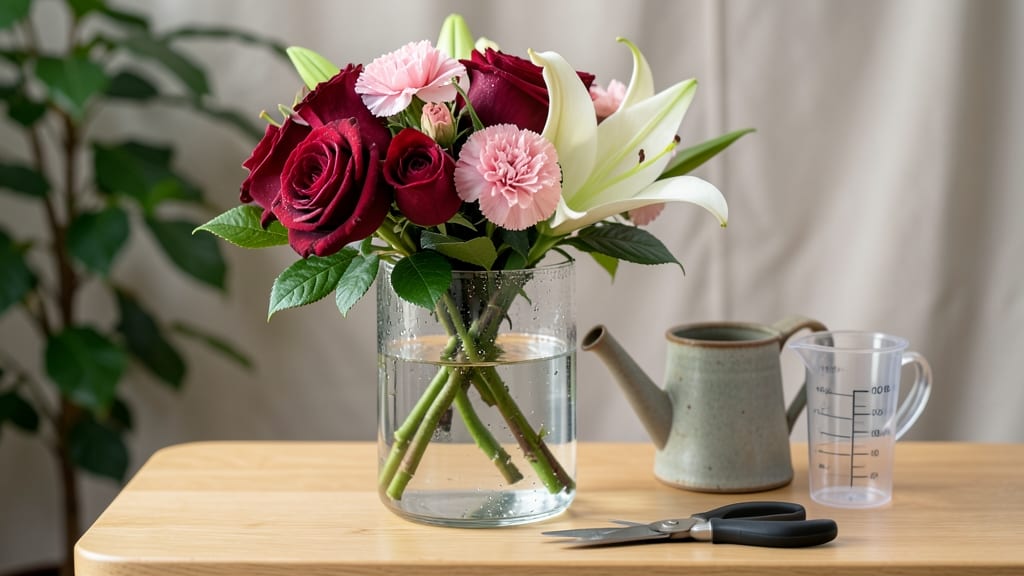
To keep your cut flowers 🌸 fresh and vibrant, the right amount of water in the vase is the secret weapon—typically 1-2 inches of fresh, clean water for most arrangements.
Struggling to keep your cut flowers fresh longer? The secret isn’t just the water—it’s the right amount in your vase, paired with proper care techniques. Too little and they wilt; too much and they rot. Finding that balance is easier than you think.
Different flowers have different needs—delicate blooms like roses or peonies drink more than hardy stems like alstroemeria. Even the vase material matters: glass holds moisture longer than ceramic, while additives like flower food can cut water usage by up to 50%.
In this guide, I’ll break down the exact water ratios for your vase, common mistakes that drain water too fast, and pro tips to make your bouquets last twice as long—no guesswork required.
The perfect water-to-flower ratio for maximum longevity
If you’ve ever watched your fresh-cut flowers wilt within days, you’re not alone. The key to extending their life lies in the water-to-flower ratio—a science-backed balance that keeps stems hydrated without drowning delicate blooms. Too little water, and they’ll droop; too much, and you risk bacterial growth.
Let’s break down the ideal ratios for different flower types and vase sizes to keep your bouquets vibrant for days (or even weeks).
Most gardeners assume "more water is better," but that’s a myth. The right amount depends on your flower stems (thick vs. thin) and vase material. Delicate flowers like peonies or tulips need precise hydration, while hardy stems like sunflowers or alstroemeria can handle more.
Even the vase size matters—narrow vases concentrate water, while wide ones dilute it faster. Let’s start with the golden rule for water levels.
Golden Rule: Fill your vase with enough water to cover 1-2 inches of stem at all times. For a standard bouquet of 10-15 stems, aim for 1-2 cups (240-480ml) of water initially. Thin-stemmed flowers (like roses or carnations) absorb water faster, so they need shallow, frequent refills, while thick-stemmed varieties (like gladiolas) can go longer between changes.
For delicate flowers, like roses or orchids, use a narrow vase (4-6 inches wide) with 1 cup of water. These flowers have high water demands due to their thin stems, which can’t absorb enough hydration from deeper vases.
Replenish the water daily to prevent wilting. Pro tip: Add a sugar packet (1 tsp sugar + 2 drops bleach per cup) to slow bacterial growth and extend freshness by 3-5 days.
If you’re arranging hardy stems, such as sunflowers or gladiolas, opt for a wider vase (8-10 inches) filled with 2 cups of water. Thick stems store water efficiently, so they can go 5-7 days between refills.
However, monitor the water level closely—stagnant water breeds bacteria, which clogs stems and causes premature wilting. Change the water every 3-4 days to keep your bouquet thriving.
Mixed bouquets require a balanced approach. Use a medium-sized vase (5-7 inches) with 1.25 cups of water and adjust based on the majority of your flowers.
For example, if your bouquet is 70% roses and 30% sunflowers, lean toward the delicate flower ratio and refill every 2-3 days. Always trim stems at a 45-degree angle before placing them in the vase to maximize water absorption.
Environmental factors also play a role. In hot, dry climates, flowers lose moisture faster, so increase your water volume by 20% and refill
Common mistakes that drain water too fast (and how to fix them)
Even with the perfect water ratio, your flowers can still dry out fast if you’re making these 5 hidden mistakes. Overcrowded stems, dirty vases, and stagnant water all speed up dehydration—sometimes within hours. Let’s fix these issues so your bouquets stay fresh for days longer.
First, I see gardeners pack vases too tightly. When stems crowd each other, they compete for water, leaving some stems starved. A vase filled beyond 70% capacity with stems creates a bottleneck—water evaporates faster, and bacteria thrives in tight spaces.
For a 12-inch vase, limit stems to 10-15, depending on their thickness.
Another silent killer? Dirty vases. Old sap, algae, or leftover flower food create a breeding ground for bacteria. Even a thin film can clog stems and block water uptake.
Always rinse vases with hot, soapy water and dry thoroughly before refilling. I swear by a 10-minute vinegar soak for stubborn residue—it cuts through grime without damaging glass or ceramic.
🚨 WARNING: These Mistakes Are Draining Your Flowers Faster Than You Think! 🚨
🌸 Mistake #1: Neglecting Water Changes
Stagnant water becomes a bacterial soup within 24 hours. Replace water every 2-3 days, even if it looks clean. Add 1 tsp of bleach per gallon when rinsing vases to kill hidden bacteria.
🌸 Mistake #2: Wrong Stem Cuts
Cutting stems at 45-degree angles is key—but only if done underwater. If you slice stems dry, they seal shut and stop drinking. Re-cut stems every 2 days to keep them absorbing.
🌸 Mistake #3: Ignoring Vase Material
Ceramic vases lose water 30% faster than glass due to porosity. For long-lasting hydration, use glass or stainless steel. Pro tip: Line ceramic vases with plastic wrap to slow evaporation.
🌸 Mistake #4: Skipping Flower Food
Homemade flower food (1 tbsp sugar + 2 drops bleach per quart) can double vase life. Without it, stems wilt in half the time. Even store-bought packets work—just follow the 1 packet per quart rule.
Don’t overlook the temperature of your water. Room-temperature water shocks stems, while lukewarm water (around 70°F) opens their pores for better absorption. I keep a small pitcher of warm water handy to refresh vases—it’s a game-changer for delicate blooms like orchids or lilies.
Finally, place your vase away from heat sources like radiators or sunny windowsills. Heat accelerates evaporation, causing flowers to wilt overnight. A spot near an east-facing window (indirect light) keeps stems cool and hydrated.
For extra longevity, mist flowers lightly with water once daily—it mimics morning dew and keeps petals crisp.
With these fixes, your flowers will stay vibrant for up to 2 weeks—no more wilting surprises! Start with just one change, like refreshing water daily or using flower food, and watch the difference. Your bouquets will thank you. 🌷