
Watering
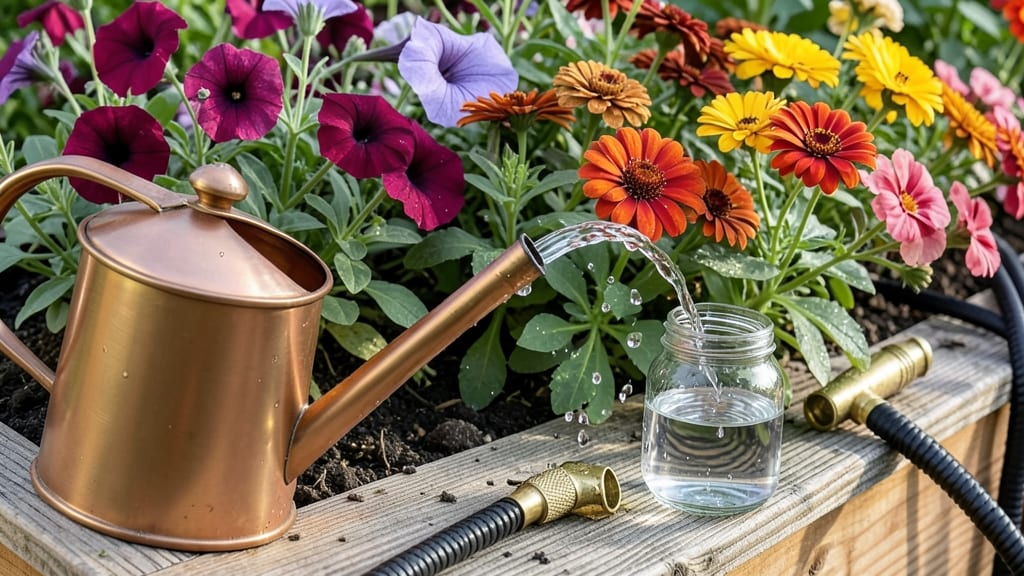
Watering outdoor flowers the right way means knowing how often to water outdoor flowers without drowning or starving their roots — and the answer depends on more than just sticking your finger in the dirt.
Overwatering or underwatering your outdoor flowers can kill them faster than pests or disease — so how do you strike the perfect moisture balance without guessing? The truth is, there’s no one-size-fits-all schedule.
Climate, soil type, and even the kind of flowers you’re growing all play a role in determining when to reach for the hose.
In this guide, I’ll break down the science behind soil moisture, show you how to adjust your watering routine based on your local conditions, and share simple tricks to avoid common mistakes that leave your flowers wilting or struggling.
By the end, you’ll know exactly when to water for perfectly moist soil that keeps your outdoor flowers thriving — no more guesswork, just healthy blooms all season long.
How often to water outdoor flowers: the 3-Zone soil test method
Guessing how often to water your outdoor flowers is like playing Russian roulette with their health—too much or too little can kill them just as surely as pests or disease.
Instead of relying on a rigid schedule, I use a 3-zone soil test method to determine when flowers truly need water. This approach accounts for root depth, flower type, and local climate, ensuring you water smartly, not blindly.
The key is testing soil moisture at three critical zones: the surface layer (0-1 inch), the middle layer (1-3 inches), and the root zone (3-6 inches). Most gardeners water based on surface dryness, but roots often struggle deeper down.
By checking all three zones, you’ll know exactly when to water—and when to hold back. This method works for annuals like petunias and perennials like lavender, adapting to their unique needs.
Here’s how to apply the 3-zone soil test method in real time, with adjustments for seasonal shifts and flower varieties:
| Zone | Depth | Test Method | Water When | Notes |
|---|---|---|---|---|
| Surface | 0-1 inch | Finger test or moisture meter | Dry but not cracked | Top layer dries fastest; annuals need frequent checks |
| Middle | 1-3 inches | Insert finger or screwdriver | Damp but not soggy | Critical for perennials; indicates root zone health |
| Root | 3-6 inches | Dig or use long probe | Moist but not wet | Deep watering target; adjust for clay vs sandy soil |
| Seasonal Adjustments | Spring/Fall | Test every 3-4 days | Water when middle zone is dry | Cooler temps = slower evaporation |
| Seasonal Adjustments | Summer | Test daily at peak heat | Water before surface dries | Heatwaves demand early morning watering |
| Flower Types | Annuals (e.g., marigolds) | Surface + middle zones | Water every 1-2 days in summer | Shallow roots; mulch helps retain moisture |
| Flower Types | Perennials (e.g., coneflowers) | Middle + root zones | Water every 3-5 days in summer | Deep roots; drought-tolerant once established |
Let’s break down how to perform the test. Start by clearing debris around your flowers and inserting your finger or a soil moisture probe into the surface zone. If it feels dry, don’t water yet—check the middle zone next.
Watering schedule cheat sheet: adjusting for flower type and weather
Mastering the perfect watering schedule for your outdoor flowers isn't about following a one-size-fits-all rule—it's about understanding each plant's unique needs and adjusting for weather fluctuations. Some flowers, like petunias, thrive with daily watering in summer, while drought-tolerant lavender can survive on weekly waterings even in heatwaves.
The key is balancing moisture without drowning roots or stressing plants during dry spells.
Start by checking your local climate zone and soil type—sandy soil drains faster than clay, meaning you'll need to water more frequently. Then, factor in seasonal changes: spring showers reduce watering needs, while winter dormancy often means cutting back entirely.
Below, I’ve broken down watering intervals for popular flowers and how to adjust for extreme weather.
Deep water 2-3 times per week in summer; reduce to once weekly in winter. Adjust for heatwaves: increase to daily if soil feels dry 2 inches down.
Water once weekly in summer; skip watering in winter. Drought-tolerant—overwatering kills it faster than dry spells!
Water daily in summer (morning only); reduce to every 2-3 days in spring/fall. Signs of thirst: wilting by midday.
Water every 2-3 days in summer; bi-weekly in cooler months. Heatwave tip: mulch to retain moisture.
Keep soil consistently moist—water 2-3 times weekly in summer. Rainy season: reduce to every 5-7 days.
Water deeply 2-3 times weekly until established. Young plants need more frequent watering to prevent wilting.
Water every 2-3 weeks; skip entirely in winter. Overwatering is the #1 killer—check soil before watering!
Spotting overwatering vs. underwatering is easier than you think. Overwatered flowers show yellowing leaves, mold at the base, or stems that feel mushy when touched. Underwatered flowers wilt by midday, have crispy leaf edges, or dry soil that pulls away from the pot.
For heatwave adjustments, water deeply in the early morning to reduce evaporation, and always mulch around the base to lock in moisture.
Pro tip: Use a moisture meter or the finger test—stick your finger 2 inches into the soil. If it’s dry, water; if damp, wait. This simple trick saves thousands of gallons of water yearly while keeping your flowers thriving.
Remember, adjustments are key—what works in summer won’t cut it in winter, and vice versa.
🌷