
Flowers
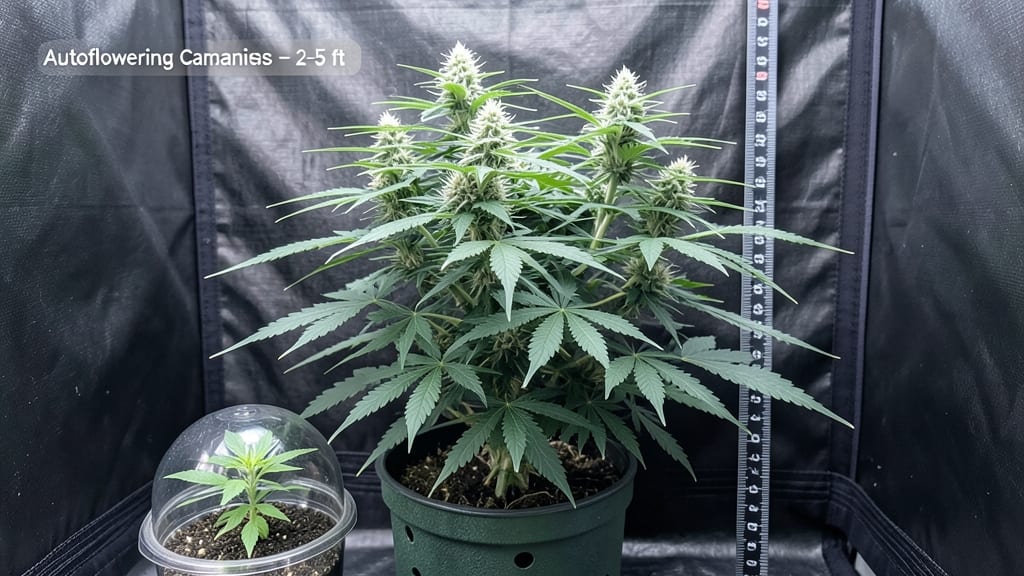
Autoflowers grow how tall do autoflowers grow between 1 and 5 feet, but the exact height depends on genetics, environment, and how you train them—so your closet grow might end up looking more like a jungle than a compact setup.
If you’ve ever picked a strain labeled "dwarf" only to watch it stretch toward the ceiling, you know autoflower heights aren’t set in stone. Some varieties like Blueberry Auto stay under 3 feet, while others like Gorilla Glue Auto can hit 5 feet or more if left unchecked.
Light exposure, pruning, and even container size play a bigger role than most growers realize. A 5-gallon pot restricts roots and keeps plants shorter, while a 12-hour light schedule can stretch them out faster than you’d expect.
Below, I break down the height ranges by variety, how to control growth naturally, and the myths that’ll mess up your space planning—so you can grow like a pro, not a guesser.


Autoflower height ranges by variety type: dwarf to giant
Autoflowering plants are famous for their speed, but their height ranges can vary dramatically depending on the variety and growing conditions. Some stay small enough for closet grows, while others reach heights that rival sunflowers.
Understanding these differences helps you optimize space and maximize yields—whether you're growing indoors or outdoors.
Outdoor autoflowers often grow taller than indoor plants due to unlimited sunlight and natural wind exposure. Indoor grows, however, let you control height with light schedules and pruning. For example, a Blueberry Auto might hit 3–4 feet indoors but stretch to 5+ feet outdoors.
Let’s break down the categories so you can pick the perfect fit for your setup.
🌿 Key Takeaway: Height isn’t just about genetics—light exposure, pruning, and container size play huge roles. A Gorilla Glue Auto could end up 2 feet shorter with proper training than its unpruned outdoor cousin.
| Variety Type | Indoor Height | Outdoor Height | Light Needs | Best For |
|---|---|---|---|---|
| Dwarf Varieties | 1–2 ft | 2–3 ft | 18+ hrs (Indoor) / Full Sun (Outdoor) | Closet grows, small spaces |
| Blueberry Auto | 2.5–3.5 ft | 4–5 ft | 18+ hrs (Indoor) / 6+ hrs Sun (Outdoor) | Beginners, high yields in small spaces |
| Auto Northern Lights | 3–4 ft | 5–6 ft | 18+ hrs (Indoor) / Full Sun (Outdoor) | Outdoor grows, cold climates |
| Gorilla Glue Auto | 3.5–4.5 ft | 5–7 ft | 18+ hrs (Indoor) / 6+ hrs Sun (Outdoor) | High yield, resilient to pests |
| Tall Varieties | 4–5 ft | 6–8+ ft | 18+ hrs (Indoor) / Full Sun (Outdoor) | Outdoor grows, large tents |
Dwarf autoflowers like Auto Blue Dream or Auto Critical Mass are perfect for small-space growers. These varieties typically stay under 2 feet indoors and 3 feet outdoors, making them ideal for balcony gardens or closet setups.
Their compact size also means they mature faster, giving you quicker harvests without sacrificing yield.
Medium-height autoflowers, such as Auto Northern Lights or Frisian Duck Auto, strike a balance. Indoors, they usually reach 3–4 feet, while outdoors, they can stretch to 5–6 feet.
These are great for grow tents or outdoor gardens with moderate space. Pruning can keep them even shorter if needed, but they still deliver impressive yields for their size.
Tall autoflowers like Gorilla Glue Auto or Auto White Widow are the giants of the autoflower world. Indoors, they can hit 4–5 feet, but outdoors, they often surpass 6 feet.
These varieties thrive in outdoor setups or large indoor tents. If you’re growing them indoors, plan for tall grow lights or training techniques to manage their height and prevent light burn.
💡 Pro Tip: If you’re growing outdoors, prune lower branches early to encourage upward growth and improve airflow. Indoors, adjust light schedules (e.g., shorter veg cycles) to keep plants shorter while maintaining yield. For example, a 12/12 light cycle can reduce height by 1–2 feet compared to a 24-hour veg schedule.
Light exposure is another critical factor. Outdoor autoflowers get unlimited sunlight, which can push them to their maximum height. Indoors, LED grow lights with a 18-hour schedule during veg will stretch plants taller, while lower light intensity (e.g., 12-hour veg) keeps them shorter.
For instance, a Blueberry Auto under 18-hour lights might grow 1 foot taller than one under 14-hour lights.
Container size also plays a role. Smaller pots (1–3 gallons) restrict root growth, leading to shorter plants. Larger pots (5+ gallons) allow roots to spread, encouraging taller growth.
If you’re growing outdoors, use 5-gallon pots for dwarf varieties and 7+ gallons for tall strains to avoid root-bound stress, which can stunt growth.
Finally, temperature and nutrients
How to control autoflower height naturally (without chemicals)
Autoflowering plants don’t respond to light cycles like photoperiod varieties, but that doesn’t mean you can’t influence their height. With the right techniques, you can keep tall autoflowers under control without resorting to chemical growth inhibitors.
The key is timing—intervening early in the vegetative stage gives you the most leverage to shape your plant’s structure.
Natural height control starts with understanding how autoflowers grow. Unlike photoperiod plants, they don’t stretch dramatically in response to light, but they still react to pruning, training, and container size.
For example, a 5-gallon pot restricts root growth, which naturally limits height, while a 12-hour light schedule can encourage more vertical growth than an 18-hour schedule.
🌱 Top 5 Natural Ways to Control Autoflower Height
- 1. Topping & Pruning: Remove the main cola to encourage bushier growth. Do this early (weeks 2–4) for best results.
- 2. LST (Low-Stress Training): Bend stems gently to create multiple main colas. Use soft ties to avoid damaging stems.
- 3. SST (Super Cropping): Pinch stems to force lateral growth. Best for tall varieties like Gorilla Glue Auto.
- 4. Container Size: Smaller pots (3–5 gallons) restrict roots, keeping plants shorter. Larger pots encourage taller growth.
- 5. Light Schedule: 18-hour light keeps plants compact; 12-hour light can stretch them slightly in flowering.
If you’re growing dwarf autoflowers like Blueberry Auto, you’ll see the most dramatic height reduction from pruning and container size. These varieties naturally stay under 3 feet, but aggressive training can keep them even shorter.
For taller autoflowers like Auto Northern Lights, focus on LST and SST to manage height without sacrificing yield.
Timing is everything—intervene too late, and you risk stunting flower production. Always prune or train plants before they enter full flowering. For example, if your autoflower starts flowering at week 6, aim to finish training by week 4 to avoid stressing the plant during its critical growth phase.
Pro tip: Combine techniques for maximum control. Use a 5-gallon pot for root restriction, then top the plant at week 3 to encourage bushier growth. This combo works especially well for indoor grows where space is limited. Just remember—autoflowers are sensitive, so avoid over-pruning or you’ll sacrifice yield.
With these natural methods, you can keep even the tallest autoflowers under 4 feet without chemicals. The best part? You’ll end up with a denser, bushier plant that produces more buds per square foot—making your grow space more efficient than ever.