
Size
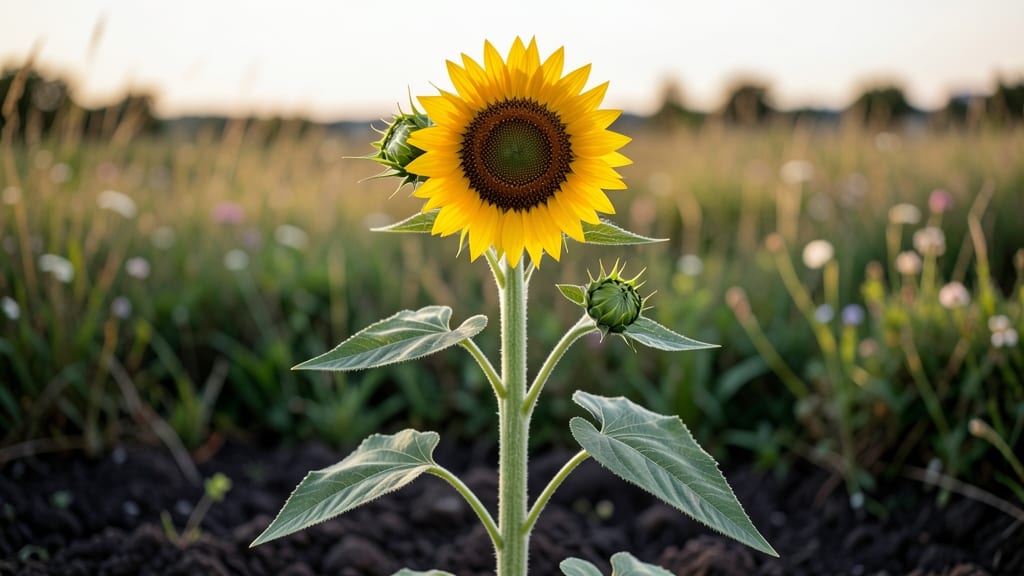
Transforming tiny seeds into towering sunflowers in just 80 to 120 days—that’s the magic of the sunflower grow time, a fast yet rewarding journey for any gardener.
Want to grow towering sunflowers that brighten your garden in just a few months? Understanding the sunflower grow time—from seed to full bloom—is the key to maximizing their stunning potential. Whether you're planting in Zone 6a or chasing a summer harvest, timing is everything.
Most varieties sprout in 7 to 14 days, then race toward flowering in 6 to 8 weeks, with full maturity arriving by late summer. But climate, soil, and even watering habits can shift that timeline—sometimes dramatically.
In this guide, I’ll break down the exact stages of sunflower growth, how to adjust care for faster or larger blooms, and the critical mistakes that stall progress. Ready to turn your garden into a sunflower spectacle?


Sunflower grow time stages: seed to full bloom timeline breakdown
Tracking your sunflower grow time from seed to full bloom helps you anticipate each growth stage and adjust care accordingly. Most varieties take 80-120 days to reach maturity, but understanding the week-by-week progression ensures you don’t miss critical milestones like sprouting or bud formation.
Sunflowers progress through distinct phases: germination (7-14 days), seedling growth (2-4 weeks), stem elongation (4-8 weeks), and flowering (8-12 weeks). Each phase requires specific care to prevent stunted growth or poor blooms.
Here’s a detailed breakdown of the sunflower grow time stages, including key actions to support healthy development at each phase.
| Stage | Days After Planting | Key Growth Milestones | Critical Care Tasks |
|---|---|---|---|
| Germination | 7-14 | First sprouts emerge; cotyledons (seed leaves) appear | Keep soil moist (not soggy); thin seedlings to 12" apart |
| Seedling | 14-30 | True leaves develop; stem strengthens | Fertilize lightly with 10-10-10; stake tall varieties if needed |
| Vegetative Growth | 30-50 | Rapid stem elongation; leaves grow larger | Water deeply 2-3x/week; monitor for aphids |
| Bud Formation | 50-70 | Flower buds form; stem stops elongating | Reduce nitrogen; increase phosphorus for blooms |
| Flowering | 70-100 | Petals open fully; pollen develops | Water at base; hand-pollinate if needed for seed production |
| Maturity | 100-120+ | Petals dry; seeds mature for harvest | Cut stems; dry seeds indoors for storage |
During the germination phase (7-14 days), your sunflower seeds need consistent moisture to break dormancy. Plant them 1 inch deep in well-draining soil and maintain a temperature above 50°F for optimal sprouting.
Once seedlings emerge, focus on thinning them to 12-18 inches apart to prevent competition. This early spacing ensures each plant has room to develop a strong taproot system, critical for later growth stages.
By week 4-6, your sunflowers enter the vegetative growth phase, where stems elongate rapidly. This is when you’ll notice the most dramatic height increases—some varieties can grow 2-3 inches per day under ideal conditions.
Around week 8, watch for bud formation at the stem’s top. This signals the transition to flowering. Reduce nitrogen-rich fertilizers now to encourage bloom development instead of leafy growth.
Full flowering occurs at 8-12 weeks, depending on the variety. Dwarf sunflowers may bloom faster (60-70 days), while giant varieties take closer to 120 days. During this phase, water at the base of the plant to avoid wetting petals, which can attract pests.
After flowering, the maturity phase begins as petals dry and seeds develop. Harvest seeds when the back of the bud splits and turns brown. Cut stems and hang them upside down in a dry, dark place to finish drying.
Factors that speed up or slow down sunflower grow time
Sunflowers thrive on speed, but their 80-120 day grow time can stretch or shrink dramatically based on just a few key factors.
As someone who’s grown sunflowers from 1-foot dwarfs to 12-foot giants, I’ve learned that sunlight, soil, water, and temperature aren’t just background details—they’re the control knobs for your sunflower’s growth timeline.
Imagine planting seeds in April with dreams of summer blooms, only to watch them languish in cool, cloudy weather or bolt prematurely in hot, dry conditions. The difference between a 60-day and 120-day grow time often comes down to these four variables.
Let’s break down how each one impacts your sunflowers—and what you can do to fine-tune their growth.
Key Factors Affecting Sunflower Grow Time
- 1. Sunlight Exposure: 6-8+ hours of direct sun cuts grow time by 20-30%. Partial shade delays flowering by 2-4 weeks. South-facing gardens are ideal for fastest growth.
- 2. Soil Quality: Well-draining, nutrient-rich soil (pH 6.0-7.0) speeds up growth. Poor soil or compacted clay can double germination time and stunt stem development.
- 3. Watering Frequency: Consistent moisture (1-2 gallons every 3-5 days) prevents stress. Underwatering adds 10-15 days to bloom time; overwatering causes root rot and delays growth.
- 4. Temperature: Ideal 70-85°F dayside temps accelerate growth. Below 50°F, germination slows to 21+ days. Heatwaves above 90°F can cause bolting (premature flowering).
Pro Tip: Use black plastic mulch to warm soil faster in spring, cutting 10-14 days off grow time.
Let’s start with the most critical factor: sunlight exposure. Sunflowers are sun-worshippers, and their grow time shrinks dramatically when they get their full 6-8+ hours of direct sun daily.
I once grew Russian Giant sunflowers in a partially shaded spot, and their bloom time stretched to 110 days instead of the expected 90 days. The solution? Move them to a south-facing bed where they basked in full sun—resulting in 10-foot stalks in just 85 days.
Next, soil quality plays a surprising role. Sunflowers hate soggy roots but thrive in loamy, well-draining soil with a pH of 6.0-7.0. Amend heavy clay with compost or sand to improve drainage, or your seeds may take 3 weeks to germinate instead of the usual 7-14 days.
I learned this the hard way when my first attempt in compacted soil produced stunted, leggy plants that took 20% longer to flower.
Watering is another make-or-break factor. Sunflowers need deep, consistent watering—about 1-2 gallons every 3-5 days—but they hate soggy feet. Too little water stresses the plant, adding 10-15 days to bloom time, while too much causes root rot and delays growth.
My trick? Water early in the morning to reduce evaporation and fungal risks. This simple habit keeps my sunflowers hydrated without overdoing it.
Finally, temperature swings can throw off your sunflower’s internal clock. Ideal daytime temps are 70-85°F, but anything below 50°F slows germination to a crawl. In Zone 6a, I’ve seen seeds take 21+ days to sprout when planted too early.
On the flip side, heatwaves above 90°F can trigger bolting (premature flowering), shrinking your blooms and reducing their lifespan. Use shade cloth in extreme heat to protect young plants.
By mastering these four factors, you can cut weeks off your sunflower’s grow time—or extend it for bigger blooms—depending on your goals. Start with sunlight and soil, then fine-tune with water and temperature, and you’ll be harvesting golden sunflowers in record time. 🌻