
Flowers
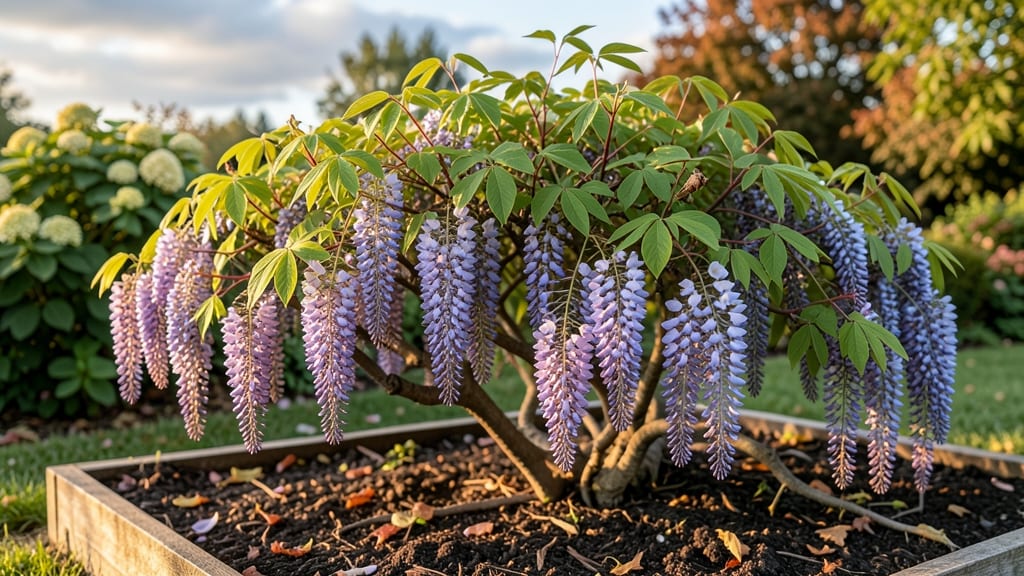
Wisteria flowers bloom in late spring to early summer, transforming your garden with cascading clusters of fragrant purple, white, or blue blooms—but the exact timing depends on your climate zone and variety.
Picture this: you’ve waited all winter for that first whiff of wisteria’s sweet perfume, only to find your plant still bare when your neighbor’s is already dripping with flowers.
That’s because USDA Zone 6a wisteria (like the classic Wisteria sinensis) typically blooms in May or June, while varieties in warmer zones may flower as early as April.
Beyond the calendar, factors like pruning, sunlight, and even last year’s growth can shift bloom time by weeks. The key? Understanding your plant’s signals—swollen buds in February, fresh leaves in March—and adjusting care to encourage those show-stopping blooms.
In this guide, I’ll break down the exact bloom windows by zone, share tricks to predict flowering, and reveal which varieties bloom earliest (or latest) so you can plan your garden’s most dramatic display.
Wisteria bloom timing by USDA climate zones: exact months to expect flowers
Wisteria's stunning fragrant blooms arrive at different times depending on your USDA climate zone. Whether you're in cold Zone 4 or warm Zone 9, knowing the exact bloom window helps you plan pruning, fertilizing, and even enjoy those purple cascades at the perfect moment.
Let's break down the month-by-month expectations for each zone.
Most wisteria varieties bloom in late spring to early summer, but temperature fluctuations and regional microclimates can shift these timelines by 2-4 weeks. Southern gardeners often see blooms 2-3 weeks earlier than their Northern counterparts.
Understanding these variations ensures you're ready to prune after flowering and maximize next year's blooms.
In Zone 4, wisteria typically waits until late May to early June to bloom, as cold springs delay growth. If you're in Zone 5, expect blooms to arrive 2-3 weeks earlier, often between early May and late May.
The key difference? Zone 5 gardens often experience warmer soil temperatures earlier in the season, encouraging faster bud development.
Gardeners in Zone 6 enjoy one of the most reliable bloom windows, with mid-April to early May being the sweet spot. This zone benefits from moderate temperature swings, which trigger consistent flowering.
For those in urban heat islands, blooms may arrive as early as late March, while mountain regions often see delays until early May.
Southern gardeners in Zones 7-9 get the earliest blooms, with Zone 7 typically seeing flowers from late March to mid-April. The real early birds are in Zone 8 and 9, where February and even January blooms aren't
How to predict wisteria flowering: 5 proven tricks for gardeners
Predicting when your wisteria flowers will bloom isn't just guesswork—it’s a mix of science and observation. I’ve learned that plant age, last year’s growth, and even local temperature trends can shift bloom time by weeks.
For example, a 3-year-old wisteria in Zone 7 may bloom in early May, while a 5-year-old vine in Zone 5 might wait until late May or June.
If you’ve ever wondered why your neighbor’s wisteria blooms earlier than yours, the answer likely lies in pruning history or winter chill hours. Wisteria needs 600–900 hours below 45°F to set flower buds, and if your winters are too mild, blooms may arrive late—or not at all.
The good news? With these tricks, you can anticipate flowering and adjust care to encourage earlier, more abundant blooms.
5 Proven Tricks to Predict Wisteria Blooming
- 1. Check last year’s growth: Measure your vine’s new wood growth from last season. If it grew 12+ inches, expect blooms 4–6 weeks after buds swell (usually late April–May).
- 2. Monitor bud swell: Look for peanut-sized buds along stems in February–March. If buds appear by mid-March, blooms will likely arrive in May.
- 3. Track winter chill hours: Use a weather app to log hours below 45°F. Wisteria needs 600–900 hours—if you’re under 500 hours, blooms may be sparse or late.
- 4. Review pruning history: If you pruned heavily last fall, blooms may arrive 2–3 weeks later. Light pruning (removing 1/3 of old wood) encourages earlier flowers.
- 5. Adjust care for earlier blooms: Fertilize in early spring with 10-10-10 and ensure full sun (6+ hours). Mulch with compost to retain moisture and warmth.
Let’s say your wisteria is 4 years old and grew 18 inches of new wood last season. If buds swell by March 1st and your area hit 700 chill hours, you’re likely looking at late April–early May blooms.
But if you pruned aggressively in fall 2023, push blooms back by 3–4 weeks.
For gardeners in warmer zones (Zone 8–9), blooms often arrive in March–April, while cooler zones (Zone 4–6) may see flowers in May–June. The trick is to start fertilizing in February and water deeply in spring to jumpstart growth.
I’ve seen wisteria bloom 3 weeks earlier just by adding compost tea in early March!
If your wisteria still isn’t flowering after 5 years, it might need a hard prune in late winter to stimulate new growth. Just remember: patience is key—young vines focus on roots first, and blooms often take 3–5 years to appear.
With these tricks, you’ll be the first on your block to smell those sweet, cascading blooms! 🌸