
Flowers
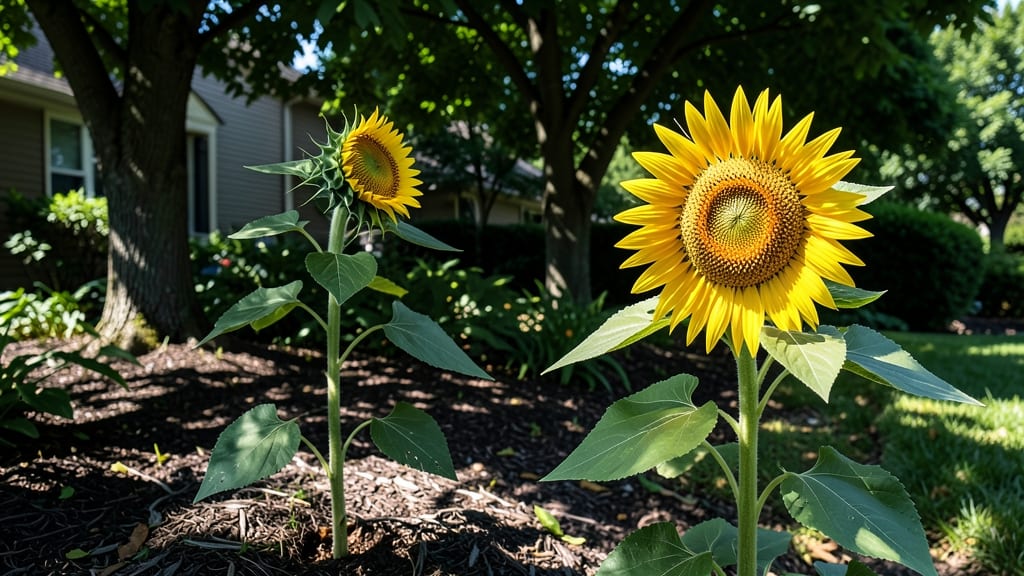
Sunflowers will grow in shade, but their success depends on the type and amount of shade your garden receives — and the right strategies to compensate.
Picture this: your backyard gets only a few hours of dappled sunlight, and you’re eyeing those cheerful 🌻 faces in your seed packet. Don’t write them off yet! While sunflowers thrive in full sun, some varieties and smart gardening tricks can help them flourish even in partial shade.
The key is understanding how shade affects their growth. Too little light means leggy stems, smaller blooms, and weaker plants, but with shade-tolerant varieties, proper spacing, and a little extra care, you can still enjoy sunflowers that bring joy to your garden.
In this guide, I’ll walk you through the best shade-tolerant sunflower varieties, how to assess your garden’s light conditions, and practical tips to maximize their growth—so you can turn even the shadiest corner into a sunflower sanctuary.


How much shade can sunflowers tolerate before struggling?
Sunflowers thrive in full sun, but many gardeners wonder if they can survive in partial shade. The answer depends on how much shade your garden receives and which growth stage we're discussing.
While sunflowers need 6-8 hours of direct sunlight for optimal growth, they can tolerate 3-4 hours of shade daily—though with noticeable trade-offs. Understanding these limits helps you set realistic expectations for your sunflower cultivation.
Sunflowers are heliotropic, meaning their flower heads follow the sun. In low light, this behavior becomes less pronounced, and the plant shifts energy toward stem and leaf production instead of flowering. This shift can lead to stunted growth, fewer blooms, and weaker stems prone to lodging.
The key is balancing shade tolerance with the plant’s natural light requirements to maximize your success.
Photosynthesis limitations play a major role here. Sunflowers rely on sunlight to produce energy, and chlorophyll production slows in shade. Without enough light, the plant struggles to develop strong cell walls, leading to leggy stems and smaller leaves. In extreme shade (less than 3 hours of sun), sunflowers may fail to flower entirely, producing only foliage.
Here’s how shade affects different growth stages: - Germination: Needs warmth and light to sprout; shade delays emergence. - Seedling stage: Requires bright light to prevent stretching and weakness. - Vegetative growth: Can tolerate partial shade but grows slower. - Flowering: Struggles in shade; blooms may be smaller or absent. - Seed production: Nearly impossible in deep shade due to energy deficits.
| Sunlight Condition | Growth Impact | Flowering Likelihood | Best Varieties |
|---|---|---|---|
| Full Sun (6-8+ hours) | Optimal height, strong stems, vibrant blooms | High (90%+ success) | All varieties |
| Partial Sun (3-4 hours) | Slower growth, shorter stature, weaker stems | Moderate (50-70% success) | Dwarf or hybrid types |
| Partial Shade (2 hours) | Leggy growth, minimal flowering, prone to lodging | Low (10-30% success) | 'Teddy Bear', 'Moulin Rouge' |
| Deep Shade (<2 hours) | Mostly foliage, no flowers, high risk of failure | None (0% success) | Not recommended |
To assess your garden’s light conditions, observe the area for 4-6 hours daily. Use a light meter or note how shadows move. If your space gets 3+ hours of direct sun, sunflowers can still thrive with the right variety selection and care.
For less than 3 hours, consider container gardening near a south-facing window or supplementing with a grow light for 4-6 hours daily.
Sunflowers in shade also face pest and disease risks. Weak stems attract aphids and spider mites, while damp conditions from limited airflow encourage powdery mildew. Monitor plants closely and prune affected leaves immediately. Circular pruning (removing lower leaves) improves airflow and reduces disease spread in shaded environments.
If your goal is edible sunflower seeds, shade tolerance becomes even more critical. Sunflowers need ample light to develop high-quality seeds. In partial shade, seeds may be smaller and less nutritious, though they’re still edible.
For ornamental blooms, shade-tolerant varieties like 'Autumn Beauty' or 'Russian Giant' (in containers) offer better results.
One often-overlooked trick is reflective surfaces. Place a white sheet or mirror near your sunflowers to bounce extra light onto leaves. This can boost photosynthesis efficiency by up to 20% in partially shaded areas. Combine this with regular fertilization (every 4-6 weeks) to compensate for slower growth.
Before planting, test your soil’s nitrogen levels. Sunflowers in shade benefit from extra nitrogen to support leafy growth. A balanced fertilizer (5-10-10) applied at planting and mid-season helps maintain vigor. Avoid over-fertilizing, though—this can lead to excessive foliage at the expense of flowers.
In summary, sunflowers can tolerate 3-4 hours of shade daily but will struggle below this threshold. For best results, choose shade-tolerant varieties, supplement light where possible, and prioritize soil health and pest control. With these adjustments, you can still enjoy vibrant sunflowers—even in less-than-ideal light conditions! 🌻
5 Proven strategies to grow sunflowers in shade or partial sun
Sunflowers thrive in full sun, but that doesn't mean they can't grow in partial shade. With the right strategies, you can coax these cheerful blooms to flourish even when sunlight is limited. The key lies in understanding their needs and adapting your approach to compensate for lower light conditions.
First, remember that sunflowers need at least 4-6 hours of direct sunlight daily to produce strong stems and vibrant blooms. In partial shade, growth will be slower, and stems may become weak, but that doesn't mean failure. Let's explore five actionable strategies to maximize your sunflower's potential in low-light conditions.
- 1 Choose shade-tolerant varieties like 'Teddy Bear' or 'Autumn Beauty' that handle partial shade better than standard types.
- 2 Plant in nutrient-rich soil with added compost to compensate for slower photosynthesis in shade.
- 3 Use reflective surfaces like white walls or mulch to bounce extra light onto your plants.
- 4 Space plants closer together (12-18 inches apart) to create a canopy that captures more light.
- 5 Prune strategically to remove weak stems and redirect energy to stronger growth.
Start by selecting shade-tolerant sunflower varieties specifically bred to handle less sunlight. Varieties like 'Teddy Bear' and 'Moulin Rouge' are excellent choices, as they produce smaller but more resilient blooms. These varieties also tend to have shorter stems, making them better suited for container growing in limited light.
Next, focus on soil optimization to give your sunflowers the best chance. Amend your garden soil with compost or aged manure before planting to boost nutrient availability.
Sunflowers in shade rely more on soil nutrients than photosynthesis, so well-fed soil can make a significant difference in their growth and blooming potential.
Consider using reflective mulches or surfaces around your sunflower patch. White gravel, light-colored mulch, or even a white-painted wall can reflect additional light onto your plants. This simple trick can increase light exposure by up to 20-30%, helping your sunflowers grow stronger stems and larger blooms.
When planting in partial shade, space your sunflowers closer together than you would in full sun. Instead of the usual 2-3 feet apart, plant them 12-18 inches apart.
This creates a denser canopy that captures more light at ground level, benefiting all plants in the cluster. Just be mindful of airflow to prevent fungal issues.
Finally, don't forget strategic pruning to maintain plant health. Remove any weak or leggy stems early in the season to redirect the plant's energy toward stronger growth. You can also pinch back the main stem just above a leaf node to encourage bushier growth with more blooms.
Regular pruning helps your sunflowers stay compact and healthy in low-light conditions.
With these strategies, you'll be well on your way to growing beautiful sunflowers even in partial shade. While they may not reach their full potential, the results will still be rewarding and bring joy to your garden space. 🌻