
Planting
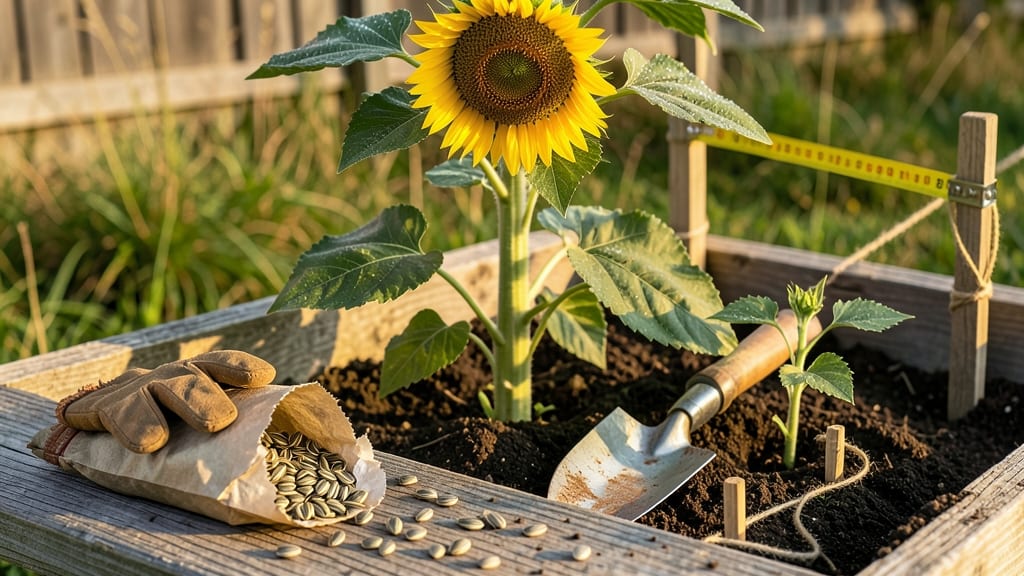
To plant sunflower seeds the right distance apart ensures towering, healthy stems and avoids the frustration of stunted blooms.
Sunflowers aren’t just nature’s cheerful giants—they’re also surprisingly picky about their personal space. Plant them too close, and you’ll end up with weak stems and crowded heads that struggle to face the sun. But get the spacing right, and you’ll unlock vibrant, sun-loving plants that thrive from spring to fall.
Most gardeners default to a one-size-fits-all approach, but sunflower varieties range from dwarf types (1–3 feet) to giants that reach 15 feet tall.
That means spacing needs to match the plant’s mature height—6–12 inches apart for dwarfs, but 18–24 inches for towering varieties—to give roots room to spread and stems the strength to stand upright.
In this guide, I’ll break down the exact spacing rules for your sunflower type, plus pro tips for soil prep, sunlight needs, and how to avoid common mistakes that lead to leggy or floppy plants. Ready to grow sunflowers that reach for the sky?


Optimal sunflower seed spacing by variety: dwarf vs. giant vs. standard heights
Sunflowers come in all shapes and sizes, but their spacing needs vary dramatically based on their mature height. Dwarf varieties like 'Teddy Bear' or 'Moulin Rouge' stay compact, while giant varieties like 'Mammoth' or 'Russian Giant' can reach towering heights of 12+ feet. Standard varieties like 'Autumn Beauty' fall somewhere in between.
Getting the spacing right ensures strong stems, vibrant blooms, and maximum yield without overcrowding risks.
One of the biggest mistakes I see is treating all sunflowers the same—planting giant varieties too close leads to weak stems that snap under their own weight, while dwarf varieties planted too far apart waste precious garden space.
The key is matching your spacing to the variety's mature height and root depth requirements. For example, a 12-foot sunflower needs deep soil and plenty of elbow room to develop a sturdy taproot.
Here’s the breakdown you need to avoid common pitfalls and maximize your sunflower harvest:
For dwarf varieties, I recommend planting seeds 6–12 inches apart in rows spaced 1.5–2 feet apart. This spacing works perfectly for container gardens or small plots, where you want a dense display of cheerful blooms.
The shallow roots of dwarf sunflowers don’t require deep soil, but they do need well-draining conditions to prevent rot. If you’re growing them in containers, ensure pots are at least 12 inches deep to accommodate their root systems.
When planting standard varieties, increase the spacing to 12–18 inches apart with rows 2–3 feet apart. This gives each plant enough room to develop a sturdy stem and a large, vibrant bloom.
Standard sunflowers are perfect for cut flower gardens, and proper spacing ensures you’ll harvest more stems without compromising quality. If you’re growing them for seed production, wider spacing (closer to 18 inches) allows for better airflow and reduces the risk of fungal diseases.
Giant sunflowers are the most demanding when it comes to space. Plant seeds 18–24 inches apart in rows 3–4 feet apart to give their massive taproots room to grow. These varieties need deep, fertile soil—at least 24 inches deep—to support their towering height.
If your soil is shallow, consider amending it with compost or planting in raised beds. Giant sunflowers are stunning focal points, but their weak stems can snap if crowded, so don’t skimp on space.
Another critical factor is soil preparation. Sunflowers hate soggy roots, so amend your soil with compost or sand if it’s heavy clay. For giant varieties, till the soil to a depth of at least 12 inches before planting to encourage deep root growth.
I also recommend adding a slow-release fertilizer at planting time to give your sunflowers a nutrient boost as they establish. This is especially important for giant varieties, which can deplete soil nutrients quickly.
Pro tip: If you’re growing multiple varieties in the same garden, plant the tallest sunflowers at the back of the bed and the shortest at the front. This creates a natural staircase effect that’s both beautiful and functional.
You’ll also avoid shading issues, as taller varieties can cast long shadows that stifle smaller plants. For maximum yield, consider staggered planting—sow dwarf varieties first, followed by standard, and finally giant varieties to ensure all get enough sunlight.
Finally, remember that sunflowers are heliotropic, meaning they follow the sun’s movement. Proper spacing ensures each plant has room to track the sun throughout the day without bumping into neighbors.
Common sunflower spacing mistakes and how to fix them
Even experienced gardeners sometimes struggle with sunflower spacing, leading to weak stems or underutilized garden space. The most common mistake? Planting seeds too closely, which forces sunflowers to compete for nutrients, sunlight, and water.
This competition triggers yellowing leaves and stunted growth, leaving you with sunflowers that barely reach waist height instead of towering over your fence.
On the flip side, spacing seeds too far apart wastes garden real estate, especially in small plots or urban containers. The key is balancing root development with plant density—something I’ve perfected after years of trial and error with my own sunflower patches.
Let’s dive into the warning signs and fixes for spacing gone wrong.
⚠️ Warning: Spacing Needs Adjustment in Poor Soil
If your soil is compacted, nutrient-poor, or lacks organic matter, your sunflowers will need extra space to compensate. In these conditions, increase spacing by 25–50% (e.g., plant dwarf varieties 9–15 inches apart instead of 6–12 inches). Poor soil restricts root spread, so give plants room to search for nutrients and stabilize their stems. Always amend soil with compost before planting to improve structure and fertility.
One of the first red flags of overcrowding is leggy, weak stems that lean or flop toward the ground. This happens when sunflowers stretch desperately for sunlight, but their thin stems can’t support their own weight.
Another telltale sign is small, underdeveloped flower heads that fail to face the sun—a classic symptom of nutrient starvation caused by too many plants sharing the same resources.
To fix overcrowding, start by thinning seedlings when they’re 2–4 inches tall. Use clean scissors or your fingers to snip or gently pull the weakest stems, leaving only the strongest plants.
For dwarf varieties, space remaining seedlings 6–12 inches apart, while tall varieties need 18–24 inches of breathing room. If you’re late to the game and seedlings are already crowded, consider transplanting the healthiest ones to a new location.
Under-planting, while less common, is equally frustrating. It leads to bare patches in your garden and missed opportunities for higher yields. To avoid this, sketch a simple grid on paper before planting: mark rows 2–3 feet apart and seeds 6–24 inches apart depending on the variety.
This visual plan ensures you maximize space without overdoing it. For small gardens, try interplanting sunflowers with shallow-rooted companions like bush beans or lettuce to fill gaps.
Pro tip: If you’re growing sunflowers in containers or raised beds, pay extra attention to spacing. Roots in confined spaces circle and compete for moisture and nutrients faster than in open soil.
Reduce spacing by 10–20% (e.g., plant dwarf varieties 4–8 inches apart) and monitor plants closely for signs of stress. Always use well-draining soil and large containers (at least 12 inches deep) to prevent root-bound issues.
Remember, sunflowers are forgiving plants, and even if you start with the wrong spacing, you can often correct it with thinning, pruning, or companion planting. The key is to act early—once stems mature, they’re far harder to adjust.
With the right spacing, your sunflowers will reach their full potential, turning your garden into a golden sea of joy. 🌻