
Planting
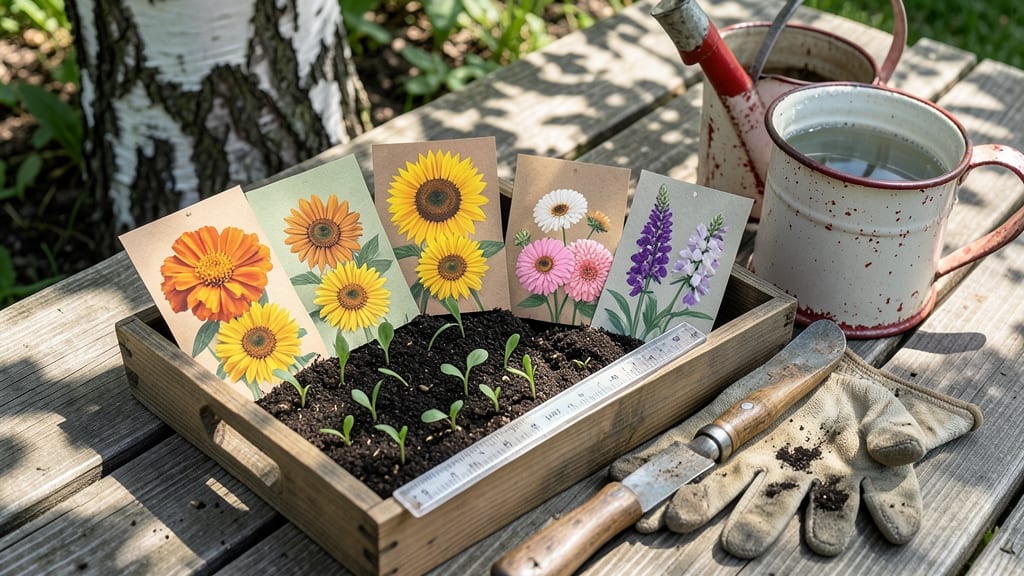
Planting flower seeds at the right depth ensures strong roots and vibrant blooms 🌸 — too shallow, and they’ll dry out; too deep, and they’ll suffocate.
Most gardeners guess, but the truth is simple: follow the 2-3 times the seed’s width rule, and you’ll see better germination rates. Tiny seeds like petunias need barely a sprinkle of soil, while large seeds like marigolds can handle a deeper burial.
This guide breaks down depth by seed size, covers soil prep, and reveals the one mistake that kills more flower seeds than any other.
By the end, you’ll know exactly how to plant every type of flower seed for faster growth and healthier blooms—no more wasted effort.


Optimal flower seed planting depths by seed size (science-backed guide)
Getting the planting depth right for your flower seeds is one of the most critical steps in germination. Too shallow, and seeds dry out before sprouting; too deep, and they struggle to reach the surface.
The general rule is to plant seeds at a depth equal to 2-3 times their diameter, but this varies dramatically by seed size. Understanding these differences can boost your germination rates from 50% to over 90%!
Seed size categories—tiny, small, medium, and large—dictate how deep you should plant them. For example, delicate petunia seeds (tiny) need only a light dusting of soil, while sunflower seeds (large) can handle deeper planting.
Soil composition also plays a role: sandy soil drains faster, requiring shallower planting, while clay soil holds moisture longer, allowing slightly deeper sowing.
Soil moisture and temperature are equally important. After planting, keep the soil consistently moist—never soggy—to encourage sprouting. For most flowers, aim for a soil temperature between 60-75°F (15-24°C) for optimal germination. If your soil is cooler, consider using a seedling heat mat to speed up the process.
| Seed Size Category | Planting Depth | Examples | Soil Tips |
|---|---|---|---|
| Tiny (< 1/16") | 1/8" (3mm) max | Petunia, Snapdragon, Lobelia | Use fine soil or vermiculite; keep moist |
| Small (1/16" - 1/8") | 1/4" (6mm) | Marigold, Zinnia, Basil flowers | Lightly cover; avoid compacting soil |
| Medium (1/8" - 1/4") | 1/2" (12mm) | Cosmos, Black-eyed Susan, Dianthus | Firm soil gently after planting |
| Large (1/4" +) | 1" (25mm) or 2-3x seed width | Sunflower, Hollyhock, Delphinium | Add compost for better drainage |
*Always check seed packet instructions for exceptions.
For tiny seeds like petunias or lobelias, use a fine mist spray bottle to settle them into the soil without burying them. Press them lightly into the surface to ensure contact with the soil.
If you're sowing in containers, use a seed-starting mix with perlite or vermiculite to improve aeration and moisture retention.
When planting medium-sized seeds, like cosmos or black-eyed Susans, press the soil gently around the seed to eliminate air pockets. This ensures consistent moisture and prevents the seed from drying out.
If you're direct-sowing in the garden, mark the rows with toothpicks or sticks to avoid disturbing the seeds when watering.
Large seeds, such as sunflowers or hollyhocks, benefit from deeper planting. These seeds contain enough stored energy to reach the surface on their own. For extra protection, consider adding a thin layer of mulch (like straw) after planting to retain moisture and deter pests. Avoid using heavy mulch, as it can compact the soil and suffocate emerging seedlings.
One common mistake is planting seeds too deeply in poor-draining soil. If your garden soil is heavy clay, amend it with compost or sand before planting. For sandy soil, mix in organic matter like peat moss to help retain moisture.
Always water gently after planting to avoid displacing seeds, especially for tiny varieties.
After sowing, maintain consistent moisture until germination. Use a spray bottle for delicate seeds and a watering can with a fine rose for larger seeds. Place a clear plastic dome or row cover over seedlings to create a mini greenhouse effect, which can speed up germination by 30-50%.
Remove the cover once sprouts appear to prevent mold growth.
Monitor your seeds for signs of fungal issues, like black mold or damping-off. If you notice these problems, reduce watering slightly and improve airflow around the seedlings. For high-risk seeds, consider using a fungicide spray designed for seedlings.
With the right depth and care, your flower seeds will sprout with confidence and grow into vibrant blooms!
Common mistakes that kill flower seed germination (and how to fix them)
Even with the right planting depth, flower seeds can fail to sprout if you make these three critical mistakes. The most common? Over-planting, inconsistent moisture, and burying seeds too deep. Each mistake disrupts the delicate balance seeds need to break through soil and establish roots.
I’ve seen gardeners waste entire seed packets because they didn’t realize how sensitive seeds are to these factors. The good news? Fixing them is simple once you know the science behind germination. Let’s tackle the biggest offenders first.
⚠️ callout-warning ⚠️
The #1 mistake is burying seeds deeper than 2-3 times their width. Tiny petunia seeds (1/16" wide) need only 1/8" of soil, while marigold seeds (1/4" wide) can handle 1/2" depth. Over-burial blocks light and oxygen, suffocating the seed.
Fix it: Use your finger to create a shallow trench or press seeds lightly into soil. For large seeds, make a small hole with a dibber.
Over-planting is another silent killer. Many gardeners sow seeds too closely, leading to crowded seedlings that compete for nutrients. This forces you to thin them later—a process that can damage delicate stems. Instead, follow the spacing guidelines on your seed packet and use a ruler for precision.
Moisture levels are just as critical as depth. Seeds need consistent dampness (not sogginess) to germinate. I’ve lost countless seeds by letting the soil dry out or drowning them with too much water.
The fix? Use a spray bottle for gentle watering and cover seeds with plastic wrap until sprouts appear.
Even after germination, light exposure matters. Some seeds, like basil, need light to sprout, while others, like snapdragons, can handle darkness. Check your seed packet—if it says "light required," keep soil barely covered. For others, a thin layer of mulch helps retain moisture without blocking light.
Finally, don’t ignore soil temperature. Most flower seeds germinate best in 65-75°F soil. If your garden is too cold, use a seedling heat mat or start indoors near a sunny window. Patience here pays off—rushing seeds into cold soil slows or stops germination entirely.
By avoiding these mistakes, you’ll see faster sprouts and healthier seedlings—no more wasted seed packets or disappointment. Start with one fix at a time, and watch your flower garden transform!