
Flowers
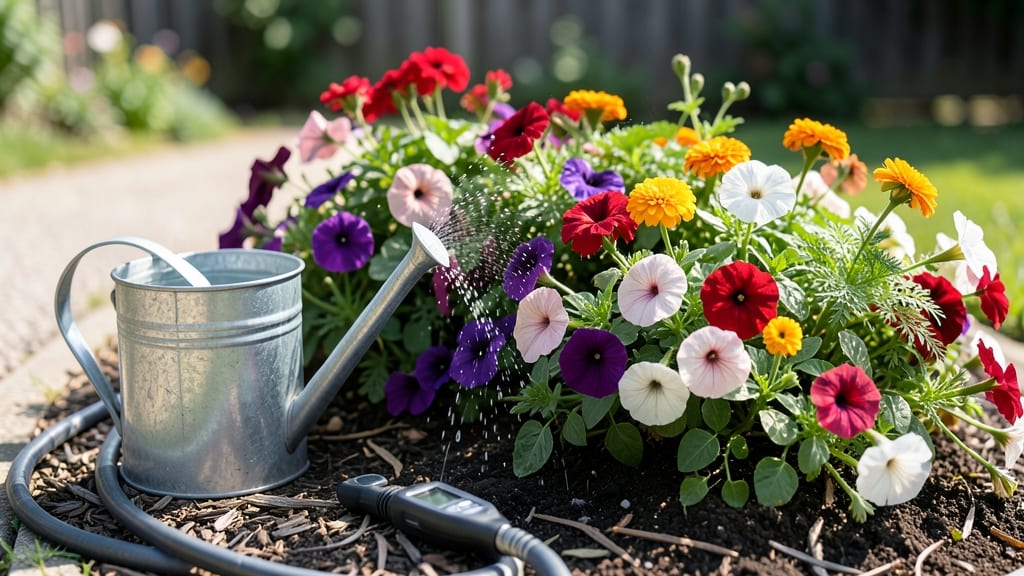
Watering flowers the right way means knowing how often to water them—because overdoing it drowns roots just as fast as letting them dry out.
Most gardeners guess their watering schedule, but science shows that consistent moisture (not soggy soil) is the secret to vibrant blooms. Whether you're growing roses or petunias, the timing changes with your climate, season, and even the type of flower.
In this guide, I’ll break down the exact watering schedule for common flowers, how to adjust for heatwaves or droughts, and the telltale signs you’re watering wrong.
By the end, you’ll know exactly when to reach for the hose—or when to hold back—and keep your 🌸 flowers thriving all season long.
Watering frequency by flower type: a plant-by-plant guide
Figuring out how often to water flowers can feel like guessing—until you know the science behind each plant’s needs. Some, like roses, crave deep, frequent hydration, while others, like succulents, barely need a sip every few weeks.
The key? Understanding your flower type, soil conditions, and climate. Let’s break it down so you can water with confidence, not guesswork.
Most gardeners overwater by default, thinking more moisture equals happier blooms. But overwatering suffocates roots, while underwatering stresses plants into wilting. The solution? A tailored schedule based on your flowers’ natural thirst. Below, I’ll share exact watering intervals, soil tests, and visual cues to keep your garden thriving—without the guesswork.
Pro Tip: Always water in the morning (before 10 AM) to reduce fungal risks and let foliage dry. Avoid evening watering, which traps moisture on leaves overnight. Now, let’s dive into the specifics for your favorite flowers.
| Flower Type | Watering Frequency | Soil Moisture Test | Visual Cues for Watering |
|---|---|---|---|
| Roses | 1–1.5 inches weekly (deep watering 2–3x/week) | Top 2–3 inches dry | Wilted leaves, crispy edges |
| Petunias | 1 inch every 2–3 days (daily in heat) | Top 1 inch dry | Drooping stems, yellowing leaves |
| Succulents (e.g., Aloe, Jade) | 1 inch every 2–3 weeks | Soil completely dry | Shriveled leaves, wrinkled stems |
| Lavender | 1 inch every 5–7 days | Top 1–2 inches dry | Grayish-green foliage, woody stems |
| Marigolds | 1 inch every 2–3 days | Top 1 inch dry | Wilting despite water, brown tips |
| Orchids (Phalaenopsis) | 1 inch every 7–10 days (soak & drain) | Potting mix dry to touch | Yellow leaves, root rot smell |
Roses are the thirstiest flowers on this list, needing deep watering 2–3 times per week to encourage strong root growth and vibrant blooms. Test their soil by sticking your finger 2–3 inches deep—if it’s dry, it’s time to water.
For petunias, which love moisture but hate soggy roots, aim for daily watering in summer heat. Their bright blooms wilt quickly when thirsty, so check them every morning.
On the opposite end, succulents and lavender are drought-tolerant powerhouses. Water them only when the soil is bone-dry, or you’ll risk root rot. A good rule? If your finger sinks easily into the soil, wait another day.
For marigolds, which are hardy but sensitive to overwatering, focus on consistent moisture—they’ll tell you when they’re thirsty by wilting dramatically, even if you watered the day before.
Orchids, like Phalaenopsis, are tricky because they hate soggy roots. Water them by soaking the pot for 10 minutes, then draining completely. Yellow leaves or a musty smell mean you’re overdoing it.
Pro tip: Use a clear pot to check root health—healthy roots are green, while rotten ones turn brown and mushy.
Beyond frequency, watering technique matters just as much. Always water at the base of the plant, not the leaves, to prevent fungal diseases like powdery mildew. Use a drip irrigation system or soaker hose for precision, especially for containers where soil dries out faster.
And don’t forget to mulch—a 2-inch layer of organic mulch retains moisture and keeps roots cool.
One final trick: Group flowers by water needs in your garden. Plant thirsty roses near a water source and drought-loving lavender in a sunny, dry corner. This way, you can water entire sections at once, saving time and ensuring no plant gets neglected.
With this schedule, your flowers will bloom longer, stay healthier, and reward you with vibrant colors all season.
Adjusting your watering schedule by climate and season
Your flower watering schedule isn’t one-size-fits-all—it shifts dramatically based on humidity, temperature, and rainfall. In drought-prone zones like Arizona, petunias may need watering every 2 days in summer, while in tropical climates like Hawaii, the same plants might only need weekly watering due to high humidity.
Seasonal changes also play a role: spring blooms demand more moisture, while winter dormancy reduces needs by up to 70%. Let’s break it down by climate and season so you never over- or under-water again.
First, check your local climate zone. The USDA Hardiness Zone Map helps, but humidity levels matter more for watering. For example, a Zone 7 garden in Florida (high humidity) will need 30% less water than a Zone 7 garden in California (low humidity).
Even within the same zone, microclimates—like a shady spot under a tree—can change watering needs. Always test soil moisture 1 inch below the surface before watering; if it’s damp, wait.
Seasonal shifts are the next critical factor. In spring, flowers like tulips and daffodils need 1–1.5 inches of water weekly to support new growth. By summer, heat increases evaporation, so annuals like zinnias may need daily watering in containers. Fall slows growth, reducing needs to every 5–7 days, while winter often calls for bi-weekly watering or none at all for dormant perennials.
For drought-tolerant zones, native flowers like lavender or yarrow thrive with minimal watering. Once established, they survive on rainfall alone in most climates. In contrast, tropical climates demand consistent moisture—think hibiscus or orchids, which wilt quickly if soil dries out.
Here, morning watering is key to prevent fungal diseases like powdery mildew, which loves humid evenings.
Don’t forget rainfall adjustments. If your area gets 1 inch of rain, skip watering for 2–3 days for most flowers.