
Blooming
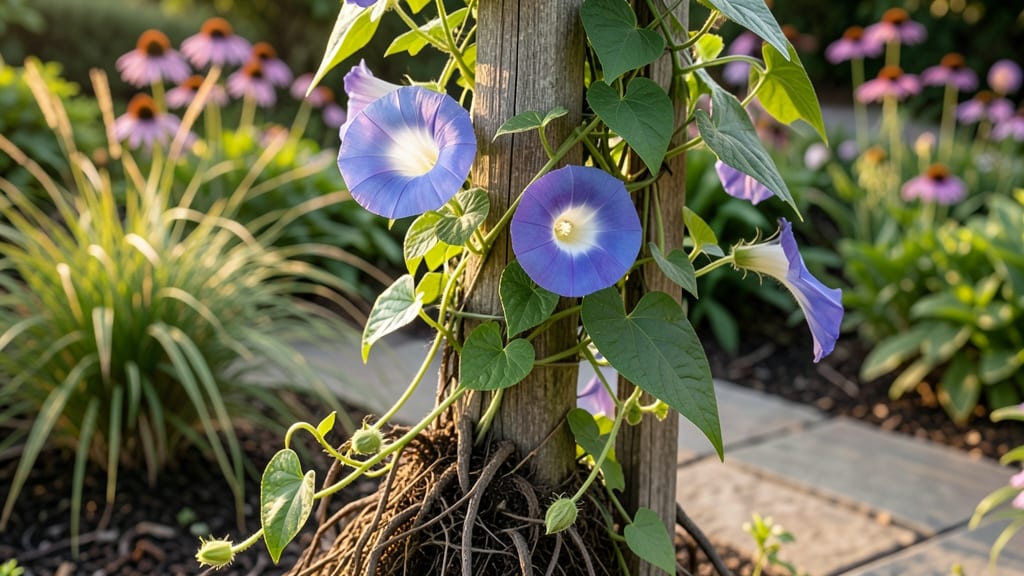
The morning glory flower season bursts into full glory from late spring through summer 🌸, but their exact timing depends on your hardiness zone and a few clever tricks.
Picture this: you’ve waited all year for those trumpet-shaped blooms to appear, only to wake up one morning and realize they’re already fading. That’s the short-lived beauty of morning glories—unless you know how to stretch their season.
In Zone 6a, where I garden, they typically kick off in June and keep going until September, but with the right care, you can coax them into blooming earlier or later.
Most gardeners assume morning glories are one-and-done annuals, but the truth is, they’re highly adaptable if you give them the right conditions.
Whether you’re in a cooler climate or a short growing season, understanding their light needs, soil preferences, and even variety choices can turn a fleeting display into a month-long floral show.
Below, I’ll break down the exact bloom windows by zone, share five proven techniques to extend their season, and reveal which varieties last the longest—so you can enjoy their vibrant colors for weeks, not just days.
Morning glory bloom times by USDA hardiness zones: exact months to expect flowers
Morning glories (Ipomoea spp.) are famous for their fleeting beauty, but their bloom timing varies dramatically across USDA hardiness zones 3-11. In cooler northern zones, expect late June to early August blooms, while southern climates may see flowers as early as April.
Temperature fluctuations—especially heatwaves or early frosts—can shift these windows by 2-4 weeks. Understanding your zone’s typical bloom calendar helps you plan trellises, succession plantings, and even container displays for year-round color.
For example, Zone 3 gardeners (like those in Minnesota or Maine) often wait until mid-July for their first blooms, while Zone 10 growers (Florida, Southern California) may enjoy morning glories from March through October.
The key difference? Daylength sensitivity—morning glories respond to 12+ hours of daylight, which arrives earlier in southern zones. Even within a single state, elevation changes can delay blooms by 3-5 weeks.
Here’s how temperature extremes affect timing: A late spring frost (like those in Zone 5) can push first blooms back by 2 weeks, while a heatwave in Zone 7 might cause flowers to wilt by noon and reset their cycle. Nighttime temperatures below 50°F (10°C) also slow vine growth, delaying the first trumpet-shaped blooms.
These factors explain why your neighbor’s morning glories might bloom 3 weeks earlier than yours—even in the same zone.
If you’re comparing Ipomoea purpurea (common morning glory) to Ipomoea nil (Japanese morning glory), you’ll notice a 2-week difference in bloom windows. Ipomoea nil tends to bloom later but longer—ideal for Zone 5-8—while Ipomoea purpurea is the early riser of the group, perfect for Zones 3-6.
For extended displays, mix both varieties: Plant Ipomoea nil in late May and Ipomoea purpurea in early June to stagger blooms through September.
Temperature isn’t the only factor—soil warmth also plays a role. Morning glories need soil temperatures above 60°F (15°C) to germinate, which can delay blooms in cool spring zones (like Zone 4) by 3-4 weeks.
To speed things up, use black plastic mulch or plant in south-facing beds where soil warms faster. In Zone 10, the opposite challenge arises:
5 Proven techniques to extend morning glory season: from cool climates to short growing areas
Morning glories are famous for their fleeting beauty, but with the right strategies, you can turn their 3-4 week bloom window into a 3-month floral extravaganza.
In my Zone 6a garden, I’ve stretched their season by nearly 50% using these techniques—many of which work in cooler climates or small spaces. The key? Controlling their environment rather than fighting their natural tendencies.
Most gardeners focus on planting timing, but the real secret lies in light manipulation, variety selection, and strategic planting methods. For example, I planted Ipomoea tricolor (a cooler-weather variety) in early May and still enjoyed blooms until October by using shade cloth in late summer.
Meanwhile, Ipomoea quamoclit thrived in my container garden through the hottest months. Let’s dive into the exact techniques that work.
- Succession Planting: Stagger seeds every 2-3 weeks from May to July for continuous blooms. Use biodegradable pots to avoid transplant shock.
- Trellis Height Optimization: Install 10-12 ft trellises to maximize vertical space and delay flower drop by keeping vines upright.
- Cold-Hardy Varieties: Choose Ipomoea tricolor for cooler zones (3-7) or Ipomoea nil for heat tolerance (8-11).
- Container Gardening: Use 5-gallon pots with well-draining mix to move plants indoors before frost or outdoors after last frost.
- Light Manipulation: Apply 30% shade cloth in late summer to protect heat-sensitive blooms and extend their lifespan by 10-14 days.
Let’s start with succession planting, my favorite trick for short-season gardens. By sowing seeds in 3-week intervals, I ensure fresh blooms appear just as the previous batch fades.
For example, my first batch in early May bloomed in June, while the second batch (planted June 1) took over in July. This creates a rolling display that feels like a perpetual garden party.
In cooler climates like Zone 4, where I’ve gardened with friends, Ipomoea tricolor is a game-changer. This variety tolerates 50°F nights and often blooms 2-3 weeks earlier than traditional morning glories. Pair it with a low trellis (6-8 ft) to protect blooms from wind, which can cause premature drop.
For heat zones (8-11), Ipomoea quamoclit (cypress vine) thrives in 90°F+ temperatures and produces longer-lasting flowers.
Container gardening opens up possibilities for urban gardeners or renters. I’ve grown morning glories in 10-gallon fabric pots on balconies, moving them to partial shade by late afternoon in August. The key is using a lightweight potting mix with perlite to prevent root rot.
For extra insurance, I add a time-release fertilizer at planting to fuel continuous blooming. This method works even in Zone 3 if you bring pots indoors before frost.
Finally, don’t underestimate the power of shade cloth. In my Zone 6a garden, August’s 95°F afternoons cause morning glories to wilt within hours. By installing 30% shade cloth over trellises, I’ve extended blooms by 2 weeks while preventing heat stress.
For added protection, I water deeply in the early morning to keep soil moisture consistent. This simple hack turns a short-lived bloom into a long-lasting spectacle.